🔄 Last checked 20 Jun 2026 · details and hours can change — check the venue before you go
📍 All restaurants on the map
Tap a pin for the spot + nearby stays
If you're going to talk about Bang Sue today, you have to start at Krung Thep Aphiwat Central Terminal, which many people still call by its old name, "Bang Sue Grand Station" — the largest railway station in ASEAN. Its high, open central hall and curved glass catching the late-afternoon light are so photogenic that it has become the neighbourhood's go-to photo spot. But Bang Sue isn't only about the new. Just past the station toward Bang Pho is the Wood Street in Soi Pracha Narumit, a wood-trading street about a kilometre long with over 200 shops selling timber, furniture, and carved work, with a craftsman-carved wooden gateway at the mouth of the soi as a check-in point. Walk a little further and you reach Gateway at Bangsue, the one main mall of this zone, cool with air conditioning, with restaurants, a cinema, and a walkway linked straight from the train. So the neighbourhood holds both the classic feel of an old woodworkers' community and the convenience of the new city in one place.
Another side of Bang Sue's appeal is its green spaces and temples with long histories. Wat Matchantikaram (Wat Noi) is an old royal temple from the late Ayutthaya period on Wong Sawang Road that still keeps its ubosot and original artwork for a quiet moment of worship. For temple-goers there's Wat Bang Pho Omawat, an old temple dating from the late Thonburi period with mural paintings of the Ten Jataka Tales and a laterite Luang Pho To, paired with Wat Yuan Bang Pho (Anamnikayaram), a Vietnamese-style temple with dragon-patterned columns, and the Chao Mae Thapthim Shrine of the Hainanese community, open for over 60 years. As dusk falls, stop by Tao Poon Market (Mani Phiman), which has become a lively after-work food market, and cap off the evening with a cold craft beer at Code Craft Beer Bar, the neighbourhood's regular hangout — sightseeing, eating, and worship all in one day.
Krung Thep Aphiwat Central Terminal (Bang Sue Grand Station)
Krung Thep Aphiwat Central Terminal, which many people still call "Bang Sue Grand Station," is the country's new main railway station, replacing Hua Lamphong from early 2023. What makes it the neighbourhood's landmark isn't just being the largest in ASEAN (26 platforms and more than 274,000 sq m of usable space), but the high, open central hall and curved glass walls that catch natural light so beautifully in the late morning, with light streaming in — so people keep dropping by to take photos, even when they have no intention of catching a train.
Who it suits — photographers, architecture lovers, people who like open, minimalist spaces, and of course anyone taking a long-distance train to Chiang Mai, Ayutthaya, or Hua Hin. The spot reviewers love most is the ticketing-level concourse with its soaring ceiling, rows of white columns, and the glass wall by the entrance doors that gives lovely light and shadow. Some say plainly that coming in the morning when it's quiet gets you photos like you're at an international airport.
Entry is free — you can walk all around the station, and the only real budget is your transport to get there, plus food inside the station if you want to try it. The best part is how easy it is to reach: take the MRT Blue Line to Bang Sue station and walk up through the underground link straight to it, or if you come by the Red Line commuter train, it connects directly into the station. It's open daily along the train schedule (roughly 4 a.m. to midnight), with the main air-conditioned zone on the ticketing level.
Good to know from real reviews — because the station is so large, some complain about the long walk to the platforms, so allow extra time and wear comfortable shoes. There are a few restaurants inside, but not as many as a mall; if you want a serious meal, walking over toward Prachachuen or taking the MRT to nearby Chatuchak is more convenient. Overall its Google score is around 4.4 stars, with praise for cleanliness, spaciousness, and modern design, and for being a free photo spot well worth the stop.
Bang Pho Wood Street (Soi Pracha Narumit)
If you like walking old neighbourhoods with a story, "Bang Pho Wood Street," or Soi Pracha Narumit, is one place Bangkok has nowhere else like. The whole soi, about 1 km long, is packed with over 200 wood shops and workshops — sawn timber, furniture, door and window frames, carvings, all the way to small home décor pieces. It began as a community of woodworkers of Chinese descent who moved in and settled from the era of riverside sawmills, and it has grown into one of the largest wood-trading hubs in Thailand to this day. It suits people doing up their homes, architects and interior designers sourcing materials, and anyone who wants to stroll, take photos, and see real craftwork.
The thing not to miss is the large "carved wooden gateways" at both mouths of the soi, designed by National Artist Ajarn Sutsakhon Chaisema, with intricate gilded patterns so fine they've become the area's check-in landmark. Many reviews agree that just standing in front of the gateway tells you how crafted the inside will be. Walk in and you'll see craftsmen planing wood, carving, and assembling furniture right there, with wooden dolls, carved animal figures, cutting boards, and home décor to browse at leisure. During festivals like Bangkok Design Week the neighbourhood gets especially lively.
Strolling and taking photos is free — there's no entry fee, and you only spend if you want to take something home. There's everything from small pieces in the low hundreds to furniture in the thousands or tens of thousands depending on the work. It's very convenient to reach: take the MRT Blue Line to Bang Pho station, leave via Exit 3A or 3B, and walk a few more minutes to the mouth of the soi. If you drive, you can park along the soi, but it gets fairly busy by day.
An important note: most shops are wood-trading businesses open on working hours, roughly Monday–Saturday 08:00–17:00, and usually closed on Sunday. If you mean to walk the whole street, come on a weekday or Saturday morning to afternoon, when you'll see craftsmen fully at work. This is also a neighbourhood the Tourism Authority of Thailand recommends, because you get shopping, craftsmanship, and the charm of an old woodworkers' community in the middle of the city all at once.
Gateway at Bangsue
If you're around Bang Sue, Tao Poon, Bang Pho, or Prachachuen and want somewhere to walk a mall without a long trip, Gateway at Bangsue is this neighbourhood's only answer. It's the main and largest mall in the zone, about 95,000 sq m in total, several floors high, open since 2018, and managed by the Asset World group (TCC affiliate). What people like most is the walkway linked straight from MRT Bang Pho (Blue Line), so you can walk right into the mall without stepping into the sun — ideal for locals, families bringing children, and anyone wanting a mall that's easy to walk and not as crowded as the city-centre ones.
The must-do highlight is on the 6th floor: HarborLand, a large indoor amusement park, along with RollerLand for skating and Laser Battle, a laser-tag zone — you can bring the kids to play all day. For film fans there's Major Cineplex with 6 screens on an upper floor; many reviewers say they come here because the cinema isn't crowded and seats are easy to book. For food there's plenty to choose from — MK, Ootoya, Hachiban Ramen, Tenya, Starbucks, KFC, and food-court shops. The ground floor has a Big C Food Place for full home groceries, plus HomePro S, Jetts Fitness, and a Sky Garden up top.
On cost, the mall itself is free to enter — you can walk around and take photos without spending — with 2 hours of free parking (extendable if you spend enough), and your per-head budget depends on what you eat and play. The HarborLand zone has a separate entry fee. Open daily 10:00–22:00. Real reviews on Google and TripAdvisor give it around 4.1, praising cleanliness, easy parking, and convenient access right by the MRT.
A small note: many agree that if you're coming to shop lots of brands, you may find fewer options than the big city malls. But if you're coming to eat, watch a movie, bring the kids to play, or buy home groceries, this place is complete and far more comfortable. Its real selling points are the location linked straight to MRT Bang Pho and the lack of crowds — you can genuinely stroll it in peace.
Wat Matchantikaram (Wat Noi)
If you're travelling around Wong Sawang–Bang Sue and want a quiet old temple most Bangkokians still don't know well, Wat Matchantikaram — which locals habitually call "Wat Noi" — is well worth a stop. The temple sits beside Khlong Bang Khen Mai in Soi Wong Sawang 11, Wong Sawang subdistrict, Bang Sue district. It's thought to have been founded in the late Ayutthaya period, originally a forest temple amid orchards of durian, betel, and orange, used by wandering monks for insight meditation before it was patronised and developed into an officially named temple.
The temple's name has a story worth hearing. Chao Chom Manda Thiang, a chief consort in the reign of King Rama IV, took up its upkeep from around 1874, building monks' quarters and various permanent structures. Later King Rama V bestowed the name "Matchantikaram," which means "the temple of Chao Chom Manda Thiang" (matchantik = thiang, meaning noon). The temple thus has the status of a Dhammayut temple long tied to the royal court. The highlights people come to see are the old ubosot over 120 years old, an old chedi, and the principal image named "Phra Nirantarai," beautifully gilded. Anyone who likes worship, merit-making, or capturing the architecture of an old temple in the middle of a community will enjoy it.
Another thing that makes this temple special beyond an ordinary community temple is the "forest meditation garden in the middle of the city," which the temple deliberately created as a shady green space for people to come sit in meditation, do walking meditation, or simply find a quiet corner to rest the mind. Many who have stopped by agree the atmosphere is cool and shaded, with plenty of trees, easy to stroll, and not crowded like the famous city-centre temples. Entry is free, with merit-making as your faith moves you; the only real budget is transport and offerings of flowers, incense, and candles. The temple is open daily around 08:00–17:00 — come on a weekday morning for the quietest atmosphere.
As for getting there, the temple is on Wong Sawang Road, not right by an MRT. The convenient way is to take the MRT Purple Line to Bang Son station or the Blue Line to Tao Poon station, then continue by bus, motorcycle taxi, or taxi a little further in. If you drive, there's parking at the temple. Good to know in advance: the old ubosot is currently under restoration, so some parts may not be fully open to view. If you're coming specifically to see the architecture, call or message the temple's Facebook first, and remember to dress modestly on entering the sacred grounds as is the custom at Thai temples.
Tao Poon Market (Mani Phiman Market)
If you want a market that has it all in one place without a long walk from the train, Tao Poon Market — which the official signs write as "Mani Phiman Market" — is the answer. It's right by MRT Tao Poon, just a few steps out of the station, exactly at the interchange of the Blue and Purple lines. It's a large market with a high roof covering the whole area, so you can walk comfortably even when it rains. By day it's a fresh market selling vegetables, fruit, meat, seafood, dry goods, clothes, and household items — as complete as any community market — but by late afternoon into the evening its true charm comes out.
The highlight is the "evening food market." Stalls start setting up from around 3 p.m., and once work lets out the crowds arrive at once, with the smell of food everywhere — grilled meatballs, mala skewers, spicy yum, noodles, khao kha mu, roast-duck rice, curry-and-rice takeaway bags, patongko, Thai desserts, an old coconut-milk ice cream shop, all the way to cold blended drinks. Many items start in the tens; some dry egg noodles start at 20 baht, which is very friendly on the wallet. Many reviews agree that for a few hundred baht you can eat your fill and take plenty home.
A point to know before you come: the market section is mainly for takeaway — there are few seats to sit and eat, though some stalls have chairs along the roadside. If you want to sit and eat comfortably, head into the row of shophouses where the noodle, khao kha mu, and ice cream shops are based. The best time to come is roughly four in the afternoon to seven in the evening, when the shops are all open and the atmosphere is at its liveliest. The stalls rotate differently each day, so you may not find every shop — that's the real charm of an evening market.
Entry is free, no charge, and you can come without much planning — just take the MRT to Tao Poon and walk in. If you drive, there's a parking lot, around 20 baht for the first hour and 30 baht for each hour after. Most shops accept QR scan payment for convenience. It suits people working around Bang Sue who want easy food after work, market-food fans who like to graze along, or anyone passing through the train interchange who wants a wallet-friendly dinner before heading home.
🛏️ Hotels in the Bang Sue Area · Book Ahead for a Better Price
Want to wake up and stroll Krung Thep Aphiwat Central Terminal or walk Bang Pho Wood Street from early morning without fighting traffic? Staying in the Bang Sue-Tao Poon-Chatuchak area is the most convenient, right by the MRT Blue Line and easy to travel on from anywhere. We've picked both popular hotels and value rooms near the train so you can compare prices from Agoda, Booking, and Trip.com in one place — choose the budget and location that fit before you book.
Wat Bang Pho Omawat
If you're strolling along the Chao Phraya riverside on the Bang Pho side and want a quiet corner that isn't a crowded tourist temple, "Wat Bang Pho Omawat" is an answer Bang Sue locals know well. It's an old temple from the late Thonburi period, around 1757, originally named Wat Phokharam before changing to its present name around 1939. It suits people who like merit-making, worship, photographing architecture, or finding a place to settle the mind near MRT Bang Pho without travelling far.
The must-do highlight is "Luang Pho To," a large laterite Buddha image brought from the old Wat Bang Lamphu, beautifully carved by Ayutthaya-era craftsmen and enshrined in the vihara — an image people around here revere and come to ask for blessings. Another point is the three-tiered ubosot roof, tiled with glazed tiles and adorned with cho fa, bai raka, and hang hong finials; inside are mural paintings of the Ten Jataka Tales and the life of the Buddha that many say bring a genuine sense of calm. The principal image in the ubosot is Luang Pho Sukhothai in the Subduing Mara posture.
The overall atmosphere is a quiet, shady community temple, not crowded, with an old chedi and a sermon hall to walk around. Entry is free, no charge, with merit-making as your faith moves you; the budget is just transport and offerings of flowers, incense, and candles. It's located in Soi Pracha Rat Sai 1 Soi 19, Bang Sue subdistrict, near the Chao Phraya on the Bang Pho side, easy to reach via the MRT Blue Line to Bang Pho station and then a short onward ride. It's open daily around 08:00–17:00.
This temple is popular among locals because it's an old temple that's still alive, with regular chanting, meditation practice, and festival merit-making events. A small thing to know: on holy days or festivals more people come to make merit than usual. If you want the quiet atmosphere and to photograph the lovely ubosot, come on a weekday morning, and dress modestly on entering the sacred grounds as is the custom at Thai temples.
Chao Mae Thapthim Shrine Bang Sue (Pracha Narumit)
Chao Mae Thapthim Shrine Bang Sue, which locals call the Chao Mae Thapthim Pracha Narumit shrine, is an old Chinese shrine tucked in Soi Pracha Narumit 30/1 in the Bang Pho Wood Street area. It's a spiritual centre for the Hainanese Chinese who immigrated and settled to do woodwork in this neighbourhood over 60 years ago. Anyone looking to ask for blessings on work, trade, and fortune will find this the pin that Bang Sue-Tao Poon-Prachachuen locals often visit to pay respects before starting something new. It suits both spiritual seekers wanting a lift and people who like walking old communities in quiet.
The highlight is the red-and-gold Chinese architecture, atmospheric and photogenic from nearly every angle — a finely carved wooden gateway, rows of long red lanterns, and dragon patterns on the roof. Inside are enshrined several forms of Chao Mae Thapthim, along with a fortune-stick divination spot for predictions. Reviews from visitors agree that it's a calm shrine, not crowded like the famous city-centre ones, with staff on hand to guide first-timers so they aren't confused about how to pay respects. The thing not to miss is asking for blessings on work and trade, which is this shrine's specialty, along with walking to see the carved woodwork around the shrine.
Entry to worship is free, no charge, with offering sets for sale at modest prices and QR Code payment accepted for convenience. There's parking on site for around 10 cars. The shrine is open daily 06:00–19:00. It's easy to reach from Krung Thep Aphiwat Central Terminal and MRT Bang Pho/Tao Poon, then a short onward ride into Soi Pracha Narumit.
It's popular because it's an old shrine that's still alive, tied to the Wood Street community, with an annual Chao Mae Thapthim procession featuring lions and dragons to enjoy. Good to know: dress modestly, and come mid-morning to afternoon for good light for photos. We recommend pairing the trip with a stroll along Wood Street and the cafés around Bang Pho in the same day.
Wat Anamnikayaram (Wat Yuan Bang Pho)
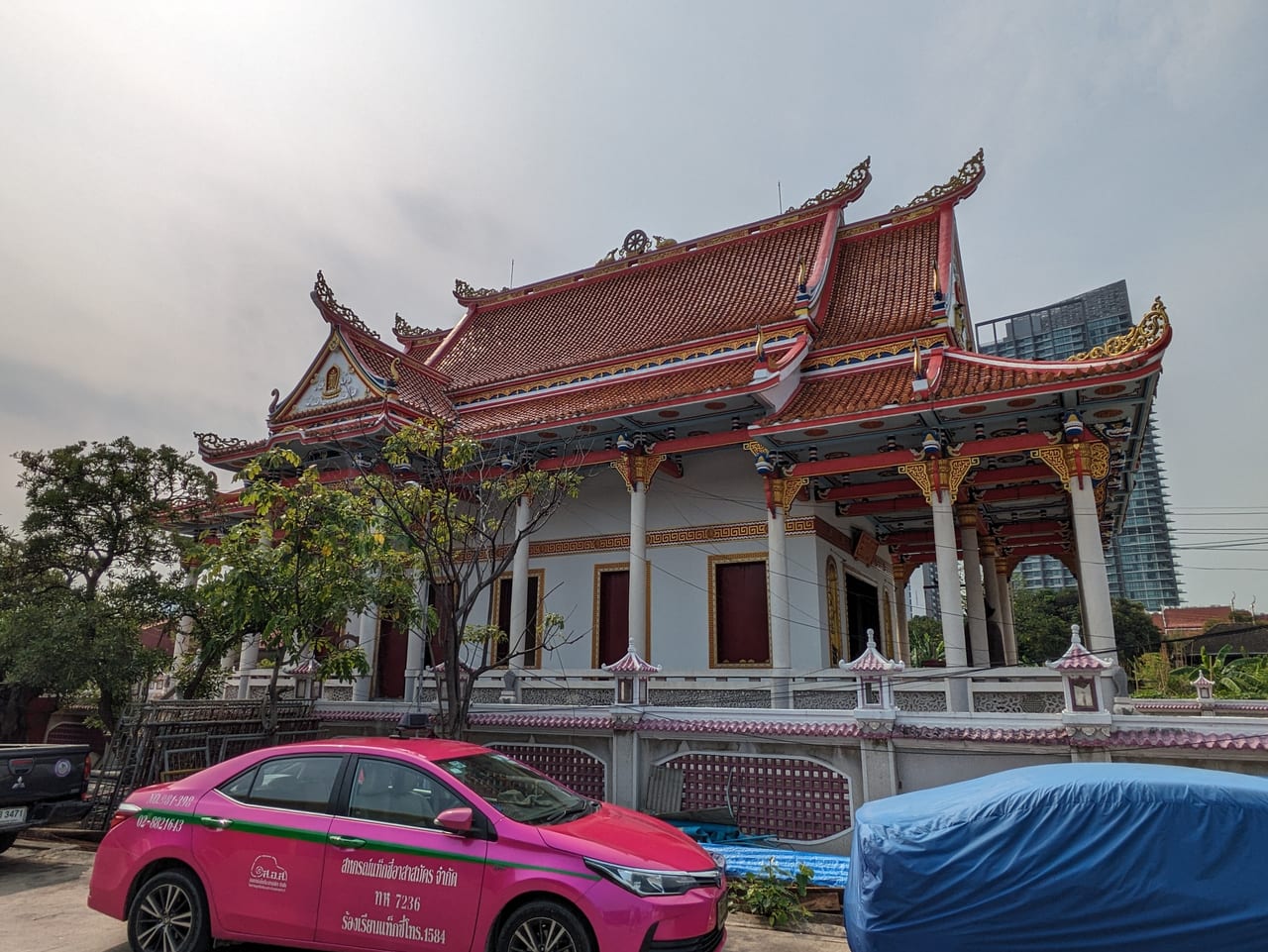
If you walk out of MRT Bang Pho and want a quiet corner unlike an ordinary Thai temple, Wat Anamnikayaram — which locals habitually call "Wat Yuan Bang Pho" — is the answer. This is a Vietnamese-sect Mahayana Buddhist temple (Annamese sect) built in the reign of King Rama I, around 1787, when Ong Chiang Sue sought refuge under royal protection and the Vietnamese who followed him helped build it. Later, in the reign of King Rama IV, it was bestowed the name "Anamnikayaram." It suits people who like historical-style temples, architecture photographers, and anyone wanting to worship and ask for blessings in a calm atmosphere in the middle of the city.
The must-do highlight is the genuine Vietnamese-style ubosot, hard to find in Thailand, with Vietnamese patterns on the pediment and columns; inside is enshrined a Vietnamese-style principal image flanked by Maha Kassapa and Ananda. Anyone coming specifically to pay respects to the Guan Yin bodhisattva will find her enshrined in a separate pavilion where you can light incense and ask for blessings in the Mahayana belief. Another spot people love to stand and look at is the octagonal chedi beside the Chao Phraya, built in the reign of King Rama III, shaded by a large Bodhi tree and decorated with glazed tiles — genuinely atmospheric and old.
Voices from visitors agree the temple is fairly quiet, not crowded, and easy to walk around, ideal for coming slowly without rushing. There's no entry fee — you can walk in to worship for free. It's located on Pracha Rat Sai 1 Road near the Bang Pho intersection, not far to walk from MRT Bang Pho, open for entry around 08:00–17:00 daily (sometimes earlier).
A small thing to know: this is a temple of the Thai-Vietnamese community that still holds ongoing religious activities, such as the Vu Lan festival (the Chinese-Vietnamese ancestor festival), so dress modestly. And being an old riverside temple, some parts are under care and restoration by the Fine Arts Department. It's one more historical corner of the Bang Pho area worth stopping at — one that many people drive past every day but never stop to see.
Code Craft Beer Bar
If you're around Bang Pho-Tao Poon and want somewhere close to sip craft beer without crossing town to Thonglor, Code Craft is the answer this neighbourhood talks about a lot. It's a small shophouse craft beer bar decorated in a minimalist black-and-white tone, seating about 20, just a few steps from MRT Bang Pho (Exit 2B). It suits craft beer fans, people working around Bang Sue Grand Station-Parliament who want a light drink after work, or groups of friends looking for a friendly, un-noisy late-night hangout.
The highlight is the 8-tap beer selection, rotating both Thai and foreign craft — Weizen, Stout, IPA, Lager to try, with the menu changing regularly so it never gets stale. If you're not sure what to order, just ask the owner, because many reviews praise the owner as friendly and good at recommending beers. There are also plenty of bottled and canned beers in the fridge. What many don't expect is the "homemade ice cream/gelato" made in several flavours, good for cutting the richness of the beer, along with easy food like fried rice, deep-fried larb, and grilled and fried snacks to line the stomach.
On budget, a glass of beer starts at around a hundred baht and up depending on the type, and a per-head budget of about 250-500 baht is enough to sit comfortably. You can pay by cash or QR scan (sometimes credit cards aren't accepted, so cash/PromptPay is more convenient). The bar opens in the evening until late, roughly 18:00-midnight daily; weekdays are quiet enough to sit and chill fully, while Saturdays-Sundays are a bit livelier.
What makes Code Craft popular is that it's practically the only craft beer bar in the Bang Pho area, with a location by the MRT so you can take the train home after a drink without driving. The atmosphere is warm, more like a regular's spot than a big pub. Good to know: the bar is small with limited tables, so on weekend evenings you may have to wait for a seat. If you drive, you can park along the road nearby (at certain times), or use the nearby Bang Pho Hospital parking for a fee.
Prachanukun Health Garden
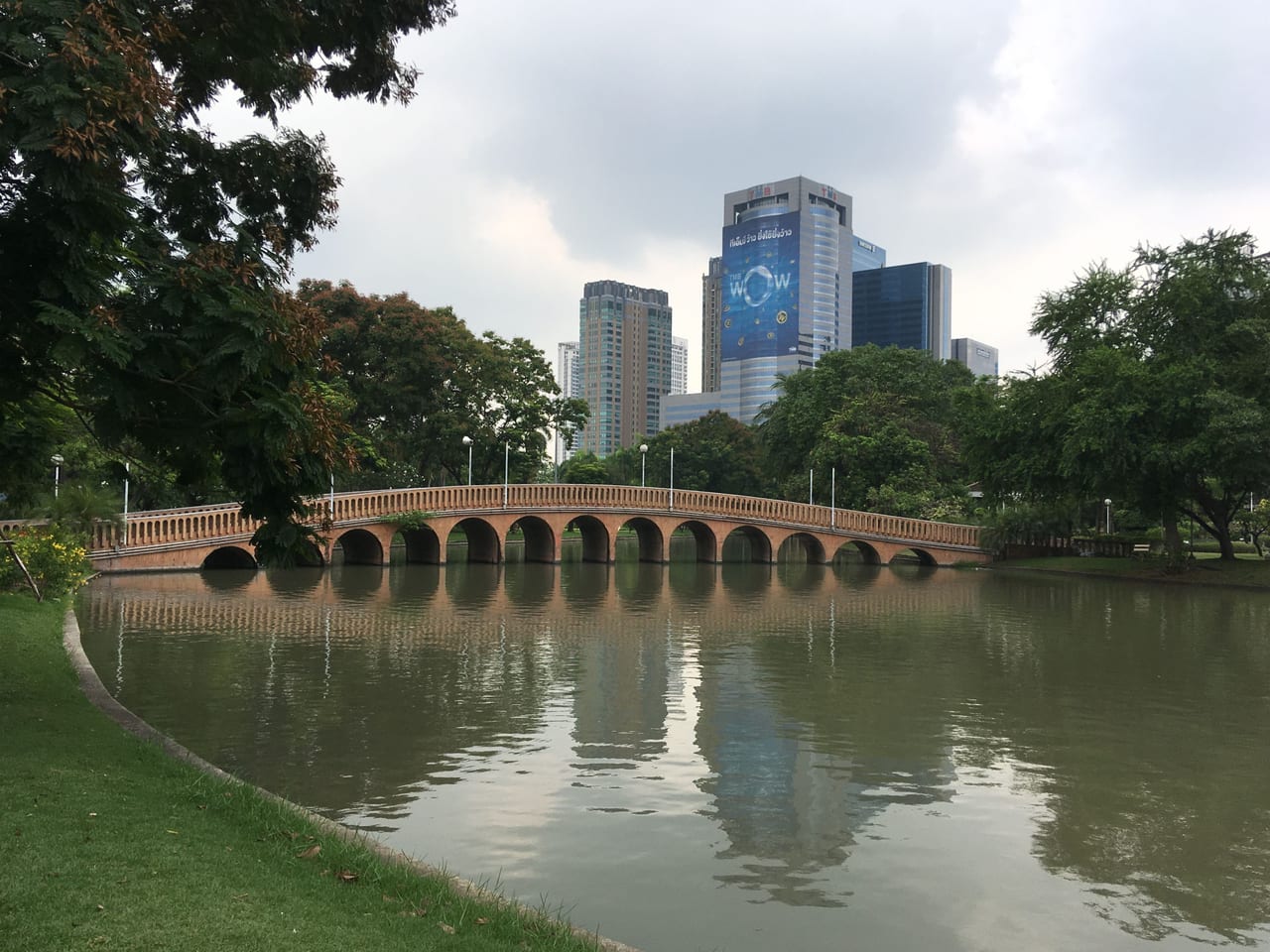
If you're around Prachachuen-Wong Sawang and want a place to exercise near home without paying for a gym, Prachanukun Health Garden has long been the answer for people in this neighbourhood. It's a small public park along Ratchadaphisek Road on the Bang Sue side, near Kasemrad Prachachuen Hospital, with an open ground for walking and running, outdoor exercise machines, a badminton court, and one of the liveliest aerobics areas on this side. It suits workers who want to sweat it out after work, families bringing older relatives for an evening stroll, or anyone wanting a green space to breathe near home without a long drive.
The real highlight is the evening: once the sun softens, the aerobics area starts up with music and an instructor leading around six in the evening every day. Reviews agree that the aerobics group here is very tight-knit, with members wearing the day's colours as a proper thing, and after the workout people often bring food to share. Some days a fried-meatball cart or snack cart parks up, creating a warm community atmosphere you can't find in the big parks. The thing not to miss is trying a round of evening aerobics, walking or running a lap of the ground, and following it with snacks in front of the garden.
The budget is very easy, because it's free — no entry fee — with the only cost being snacks if you want them. It's located in Soi Prachanukun, off Ratchadaphisek, easy to reach by bus and motorcycle taxi, and reasonably close to the MRT Purple-Blue lines in the Tao Poon-Bang Pho zone. The garden itself is open by day roughly 8 a.m. to 6 p.m., but the aerobics activity carries on into the evening.
It's popular because it's a free exercise space that's full of life — people here are genuinely close, not just an empty park. Good to know: it's a compact community garden, not a huge park like Suan Lumphini, so don't expect a lake or a long running track, and if you come in the evening after the activity ends, the garden lights start to dim, so head back before it gets late for safety. Bring your own water and come in the evening for the best atmosphere.
Visit Several Spots in One Trip — Book Tickets & Tours Ahead
To make the most of Bangkok without wasting time queueing on the spot, try booking entry tickets, half- or full-day tours, or guided trips through Klook and GetYourGuide ahead of time. There's everything from market and street-food tours to Chao Phraya river cruises and tickets to famous landmarks across the city. Booking online is easy to pay, with a confirmation on your phone — just show the QR to enter. That leaves you more time to explore than before.
💡 Know before you explore Bang Sue, Bangkok
The Bang Sue area runs along the MRT Blue Line (Bang Sue, Tao Poon, Bang Pho stations) and has the Red Line commuter train at Krung Thep Aphiwat Central Terminal. Moving between spots by train or a short Grab ride saves time and beats traffic better than driving yourself.
Most shops at Tao Poon Market, Wood Street, and street stalls take cash or PromptPay, so carry small notes. In the Gateway at Bangsue mall and the craft beer bar you can swipe cards as usual.
Aphiwat Terminal and Bang Pho Wood Street are easy to visit in the cool of the morning; Wood Street is best walked by day, while Tao Poon Market is liveliest in the evening, 16:00–19:00, and Code Craft Beer Bar opens in the evening. Ordering your route by time of day lets you cover everything without wearing out.
If you visit Wat Bang Pho Omawat, Wat Yuan Bang Pho, or the Chao Mae Thapthim Shrine, dress modestly — cover shoulders and knees — remove your shoes before entering buildings, and speak softly on sacred grounds. You can make merit as your faith moves you, with no entry fee.
Malls and larger shops usually have English signs/menus, but markets and small shops may be mostly Thai. Bring a translation app or point at a picture and you can order fine — most vendors are friendly and helpful.
Gateway at Bangsue offers 2 hours free parking, and Tao Poon Market has a parking lot charging around 20–30 baht. But on busy holidays, coming by MRT is more convenient and saves circling for a spot.
Plan a One-Day Bang Sue Trip
Start early at Krung Thep Aphiwat Central Terminal while it's still quiet, capturing the high central hall in the morning when the light is at its best, then stop at Wat Matchantikaram (Wat Noi), the old royal temple on the Wong Sawang side, before paying respects at Wat Bang Pho Omawat and Wat Yuan Bang Pho, both in the same Bang Pho zone. In the afternoon, stroll Wood Street in Soi Pracha Narumit, take photos with the carved wooden gateway, then escape the heat into Gateway at Bangsue with its 2 hours free parking for an early dinner in the mall, or go for the food at Tao Poon Market (Mani Phiman) during 16:00–19:00 when the market is at its liveliest. Cap off the evening with a cold craft beer at Code Craft Beer Bar near MRT Tao Poon. Every spot sits along the MRT Blue Line, so you can move between them by MRT or a short Grab ride with ease.
Explored Bang Sue all day and want to stay close without travelling far? We've picked stays in the Bang Sue-Tao Poon-Chatuchak area, both popular hotels and value rooms by the train, so you can compare prices before booking — and wake up ready to explore for another full day.
See Hotels in the Bang Sue Area