🔄 Last checked 28 Jun 2026 · details and hours can change — check the venue before you go
📍 All restaurants on the map
Tap a pin for the spot + nearby stays
Bueng Kan's appeal is that its highlights are rock and water — the kind you rarely see elsewhere — scattered across several zones. The Phu Sing zone in Tambon Khok Kong, Mueang district, is home to Three Whale Rock, three giant sandstone cliffs lined up like a whale family of parent and calves, jutting out as a spot for sunrise and the winter sea of mist, with wide-open views to the horizon. Move over toward Bueng Khong Long in the Phu Langka area and you enter the realm of Naka Cave and Naki Cave, boulders whose surfaces scale over like the coiled body and head of a naga — the most famous pilgrimage draw in upper Isan. For those who like to trek to waterfalls, Phu Wua on the Seka side has the Seven-Colour Waterfall and Tham Phra Waterfall, while in Si Wilai district there's Phu Thok with its wooden walkway spiralling seven tiers around a rock mountain, all built by hand. If you love a riverside mood, there's Wat Ahong Sila Wat, the Fifth Thai-Lao Friendship Bridge, the large lake of Bueng Khong Long, and the Mekong riverside walking street for an evening stroll. You can string it all together — pilgrimage, nature, and easy walking alike.
This list has the pins you shouldn't skip in Bueng Kan, like Three Whale Rock on Phu Sing, famed for its panoramic views and sea of mist — you ride a local truck up the mountain and then walk a little further to reach the ridge. Naka Cave at Wat Tham Chai Mongkhon, Phu Langka, has become a national pilgrimage phenomenon, with a steady stream of people coming to pay respects and ask the naga for blessings; it takes a fair bit of uphill trekking to reach the scaly dragon-boulder. And Phu Thok at Wat Chetiya Khiri Wihan, Si Wilai district, has a wooden walkway and staircase spiralling seven tiers around the mountain, built by hand without machinery — you walk along the cliff face up to the sixth tier, which gives a 360-degree view. For waterfalls, the Seven-Colour Waterfall in Phu Wua forest throws up spray that catches the sun in a rainbow, and Wat Ahong Sila Wat on the Mekong has the 'Navel of the Mekong', a deep whirlpool that's also a spot to watch the Naga fireballs at the end of Buddhist Lent. Scroll through the details spot by spot and map out your own route.
Three Whale Rock, Phu Sing

If there's one place that put Bueng Kan on the national map, it's this: Three Whale Rock on Phu Sing, three giant sandstone cliffs about 75 million years old rising out of the forest, arranged in descending sizes like a whale family of father, mother, and calf swimming through a sea of mist. The biggest 'father' rock sits in the middle, flanked by the mother and the small calf; seen from above with a drone, it really does look like whales. It suits anyone who wants wide-open panoramic views, taking in the Mekong and the Lao side to the far horizon.
The highlight people talk about most is standing on the back of the middle whale at sunrise. Many reviews agree this is the finest sunrise spot in Bueng Kan, especially in winter when a white sea of mist drifts across the valley. On the way, the truck stops at other points too — the Phu Sing dharma ground with its crouching-lion rock and the Luang Pho Phra Sing image, and the Tham Ruesi viewpoint near the car park — so you can cover several angles in one round.
Costs are low: entry is around 20–30 THB, and visitors aged 60 and over enter free, but you have to charter a villager's/volunteer's pickup up the mountain at 500 THB per vehicle, seating about 10 people, because the road up is narrow and steep and private cars cannot make the climb. Reviewers say it's worth hiring one, because the driver takes you around all the points and helps get good photos. The whole trip takes around 2 hours.
An important thing to know: there are no barriers on the rock, and the cliff edges are very steep — a fall means a deep drop — so don't walk past the line marked by the staff, especially on days when the rock is wet or the wind is strong. Also check the weather beforehand: in the rainy season the path gets slippery and it sometimes closes for maintenance. If you want great aerial shots, just ask about the staff's drone service — people who've been say that without a drone shot, you haven't really made it to Three Whale Rock.
Naka Cave (Wat Tham Chai Mongkhon, Phu Langka)
Naka Cave, or 'Wat Tham Chai Mongkhon, Phu Langka', within Phu Langka National Park in Bueng Khong Long district, Bueng Kan, is the most famous pilgrimage draw in upper Isan and a landmark-level attraction for the province. The highlight is a giant boulder whose surface cracks into scales resembling the coiled body and head of a naga on the mountain, formed by the sun-crack phenomenon in which rock erodes with temperature changes until it patterns like snake scales. Those who believe in the legend of Grandfather Ue Lue the Naga King often come to ask for blessings of fortune, while nature lovers come to trek and see the unusual rock. It suits anyone ready to put in the effort and wanting both merit and a view.
The one thing you cannot miss is the 'naga head', the snake-head-shaped boulder that's the auspicious photo spot of the cave, followed by the naga's body with its long continuous scaly surface, and the spot to pay respects to Luang Pu Wang. Most reviews agree the real thing is more magnificent than the photos, but they also warn it's 'genuinely tiring', because it's an uphill forest trail of roughly 1.4 kilometres, steep in stretches, taking about 4–5 hours round trip. Wear good-grip trainers, bring water, and save enough energy.
Costs are easy on the wallet: park entry is 20 THB for Thai adults, 10 THB for children, plus 10 THB accident insurance; foreigners pay 200 THB for adults and 100 THB for children. It's open daily around 06:00–14:00, and you must be off the mountain before dark. It closes for nature restoration from 1–31 May each year. An important thing to know is that daily numbers are capped — book ahead through the QueQ app (there's some walk-in quota, but the high season is extremely busy) so you don't waste the trip.
What makes Naka Cave popular enough to hit a 4.8 Google score is that it combines naga beliefs with geological wonder in one place. It sits in Tambon Pho Mak Khaeng on the Bueng Kan–Nakhon Phanom border, often paired with Tat Wiman Waterfall and Phu Thok. Come in the morning to avoid the sun and the crowds. Anyone with a heart condition or who can't manage a mountain climb should assess their fitness first, because there's no vehicle service on the way up — you walk it entirely yourself.
Phu Thok (Wat Chetiya Khiri Wihan)

Phu Thok, officially Wat Chetiya Khiri Wihan, is in Tambon Na Sabaeng, Si Wilai district — a solitary sandstone mountain rising from the plains that almost everyone who comes to Bueng Kan stops at. The standout feature is the wooden walkway and staircase spiralling seven tiers around the mountain, built entirely by hand without a single piece of machinery, taking several years to construct from the devotion of monks and villagers. It suits anyone wanting merit, a view, and a challenge in one place. If you enjoy climbing to high places and aren't too afraid of heights, this one will win you over.
The unmissable highlight is the stretch of wooden walkway along the cliff face, known as the 'nerve test', because one side is rock wall and the other is a deep drop with only a thin wooden rail. Many genuine reviews agree their legs shook and it felt precarious, but the moment you look up at the view, the tiredness lifts. The finest point is on the sixth tier, a 360-degree viewpoint over green rice fields and mountains all around. The fifth tier, the middle level, has a large sala and a Buddha image. From the fifth to the seventh tier is considered a heavenly realm where you should restrain body and speech, walk quietly, and pay respects along the way. On the seventh, topmost tier, trees block the view and there are warning signs about snakes, so most people prefer the sixth.
Entry is free with no ticket, and there's a car park. It's open daily around 06:30–17:00 (closed during Songkran week for safety). Walking up and down takes about 1–2 hours. There are no shops on the mountain, so bring your own water. Wear trainers or good-grip shoes, and dress modestly as this is a meditation temple.
The place is famous enough that the actress Bella once visited, and clips of the morning sea of mist show up on social media often. The Google score reaches 4.7 from thousands of reviews, reflecting that people who go really do like it. Note that some staircase sections are steep and the rails aren't very sturdy — don't swing on or lean against the outer rail; walk slowly and mind your footing. Anyone very afraid of heights can walk to the fifth or sixth tier, which is enough — you get a rewarding view without forcing yourself to the seventh.
Seven-Colour Waterfall (Ka-am Waterfall), Phu Wua

Seven-Colour Waterfall, formerly 'Ka-am Waterfall', is a sandstone waterfall in the Phu Wua Wildlife Sanctuary, on the Ban Don Siat side, Tambon Ban Tong, Seka district, Bueng Kan. Its standout is the Huai Ka-am stream that spreads down a sloping sandstone cliff tens of metres wide; when the spray catches the mid-morning to afternoon sun, it breaks into a rainbow — hence the name 'Seven-Colour'. It suits nature lovers who prefer wide rock-shelf waterfalls over tall, steep ones, and families wanting to bring children for a safe swim.
The unmissable highlight is walking along the stream to see all three tiers of the waterfall. From the car park it's about 800 metres in to the first tier, then a little further to the second and third tiers, which many people say are the prettiest and the clearest for spotting the rainbow. The charm here is the broad reddish-brown sandstone shelf to sit on, shallow pools to soak in, and some slippery spots that make natural slides to glide down. Foreign visitors' reviews agree it's a lesser-known spot that still has water to play in even outside the rainy season.
Budget-wise it's very easy, because there's no entry fee. At the entrance, beside Wat Pa Tham Bucha (Wat Phu Wua Seven-Colour Waterfall), there's a car park, toilets, and small food stalls. The prettiest, fullest time is late rainy season into early winter, and the rainbow shows clearest from about 10am to 2pm on clear days. It's located toward Seka–Bung Khla districts, and you can drive on from the Phu Thok/Phu Wua group, often planned into one route with Tham Phra Waterfall and Naka Cave.
Things to know: this place 'opens seasonally', and several reviews note that Google sometimes shows it as closed when you can actually still get in. It's best to come on a Saturday or Sunday in the rainy season; in the dry season there's so little water it isn't worth the trip. Some stretches of the trail require wading and there are slippery rocks, so wear non-slip rubber shoes, and carry your rubbish back out, as this is a conservation area.
Bueng Khong Long
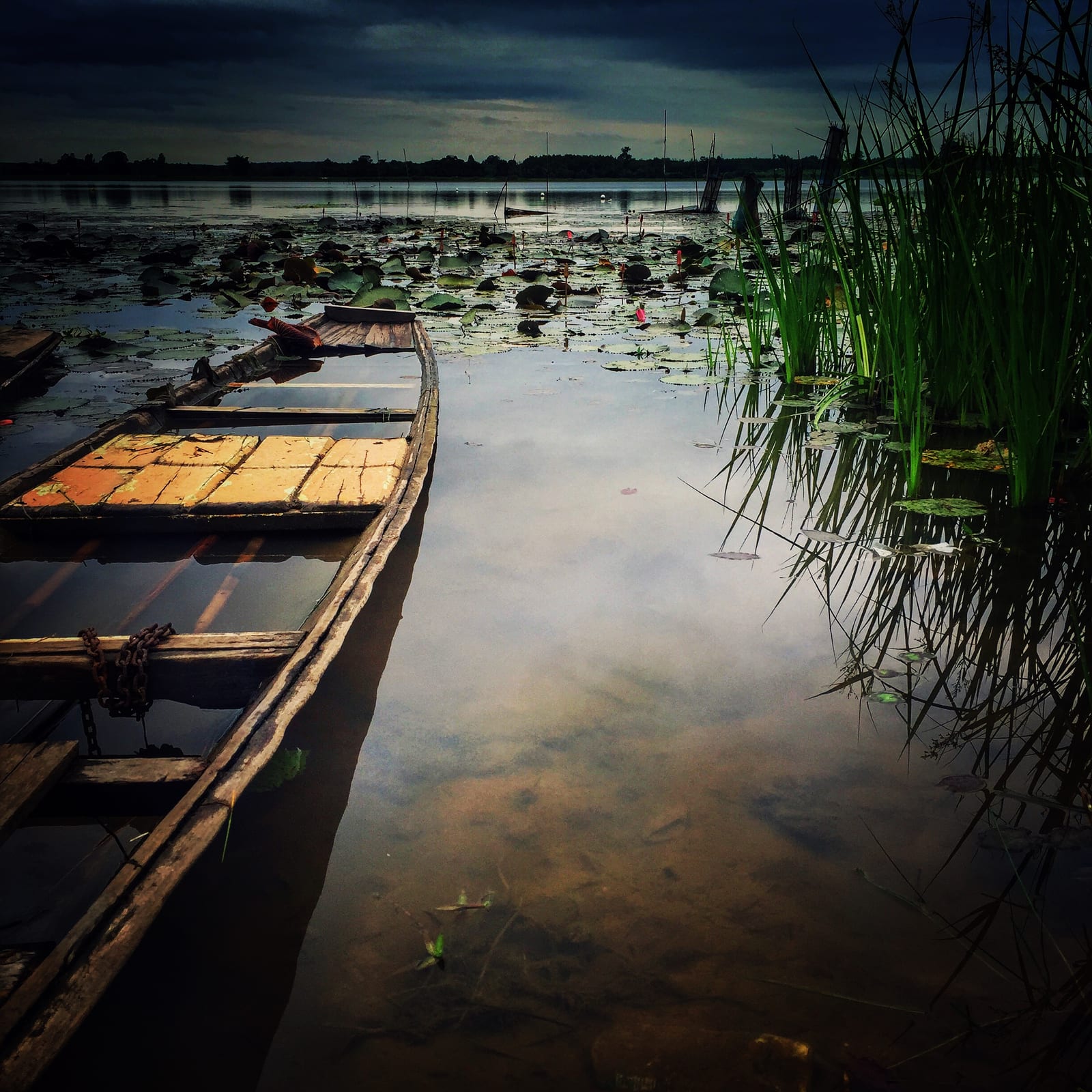
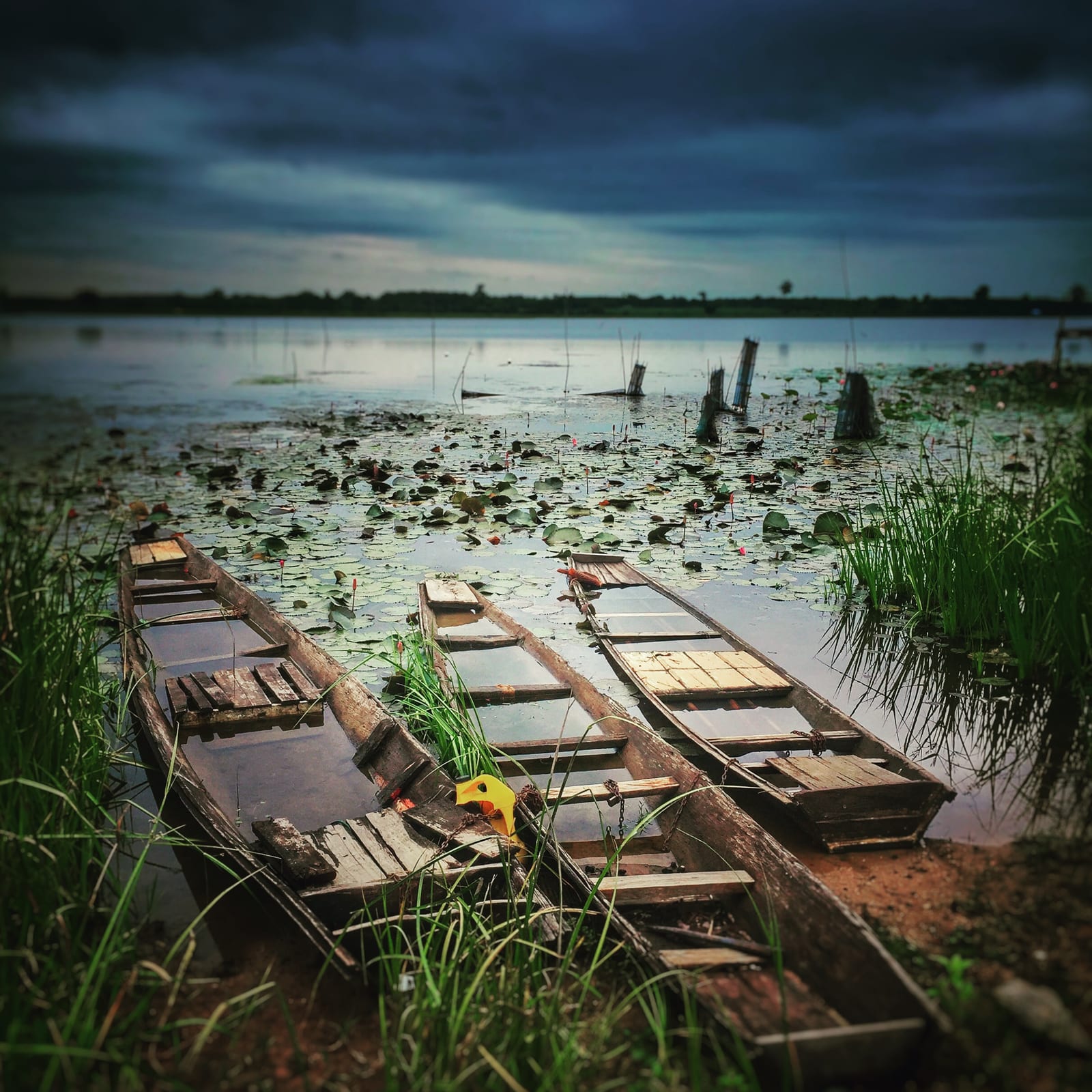
Bueng Khong Long is a large freshwater lake in the middle of Bueng Khong Long district, Bueng Kan, covering more than 8,000 rai, stretching as far as the eye can see. It's no ordinary lake, either, because it's been registered as a leading internationally important wetland (Ramsar Site No. 1,098). It's great for people who like quiet nature, birdwatchers, or anyone touring Bueng Kan by car who wants a lakeside spot to catch the breeze without competing for space. The point most visitors stop at is the lakeside public park, with a car park, walking paths, and the birdwatching tower as the star.
The unmissable highlight is the three-storey birdwatching tower, each floor with glass panels giving a 360-degree view over the water. Come in winter (about November to February) and you'll see migratory waterbirds gathered in flocks — teal, egrets, nearly 30 species in all. Another thing many people like is that in some seasons there's a field of sunflowers for selfies, plus a boat service to tour the lake for anyone wanting to get up close to the water.
The real standout here is the evening atmosphere. Most reviews agree the lakeside sunset is beautiful, the sky changing colour and reflecting off the water, with a cool comfortable breeze — a sunset spot that locals love to sit and relax at. The upside is free entry with no charge, open for strolling anytime, with parking, and just a short way out there are lakeside restaurants and cafés to sit at afterwards. The lake holds water year-round, so you can visit in any season.
A small note: this is a simple natural site, not a theme park or mall, so facilities are modest. If you're coming to birdwatch, bring your own camera or binoculars, and come early morning or evening for better birds and light than the harsh midday sun. Bring a hat and drinking water because the area is open, but if you like calm and wide water views, Bueng Khong Long is well worth the stop.
🛏️ Hotels in Bueng Kan — Stay by the Mekong in Town or Near the Mountain Trailheads
To make the most of Bueng Kan, try staying overnight. You can walk the Mekong riverside street in the evening, then head out before dawn to climb Three Whale Rock for the sea of mist while the crowds are still thin, or drive to pay respects at Naka Cave on Phu Langka without rushing. The most popular places cluster in Bueng Kan town by the Mekong, within walking distance of the walking street and near the Fifth Thai-Lao Friendship Bridge, with both in-town hotels and small resorts. If you're set on the Phu Langka–Bueng Khong Long route or the Phu Wua waterfall route, choosing a base near the spot you want to visit first thing in the morning is the most rewarding. Compare prices and reviews before you book.
🔍 Check Bueng Kan Hotel Prices (Agoda)Wat Ahong Sila Wat (the Navel of the Mekong)
If you come to Bueng Kan and want to start your trip with a spot that's truly distinctive to the province, Wat Ahong Sila Wat on the Mekong at Ban Ahong, Tambon Khai Si, is a pin many people rate as a highlight. The selling point is the area in front of the temple, believed to be the 'Navel of the Mekong', the deepest point of the river (said to be around 200 metres deep, unmeasured to the bottom). In the flood season the current swirls into a huge funnel; villagers say that if driftwood floats in here, it circles for about half an hour before drifting on. It suits pilgrims, nature-view lovers, and families wanting to bring children for an easy riverside stroll.
Beyond the Navel of the Mekong, the temple has several other things to walk and see: the riverside viharn housing Phra Phuttha Khuwanan Satsada, a large image with a lap width of about 4 metres; the naga king Sri Suttho; a long naga staircase; and a rock park with oddly shaped boulders and the Phra Upakhut cave. Most reviews agree the temple is spacious, clean, shaded, and very peaceful, with a cool river breeze; looking across to the far side you see the mountains of Laos lined up like a beautiful backdrop. Many say, 'you could sit and watch the Mekong here all day without getting bored.'
Budget-wise it's very easy, because entry is free, with just a merit-making box for what your faith moves you to give. It's open around 06:00–18:00 daily. It's located about 20 kilometres from Bueng Kan town, a 20–30 minute drive along the Nong Khai–Bueng Kan highway, with an easy turn into the temple and a spacious car park. Its popularity comes from being a temple, a Mekong viewpoint, and a place tied to naga legend all at once, especially at the end of Buddhist Lent when it's one of Bueng Kan's spots to watch for the Naga fireballs — so it's particularly packed then.
Things to know before you go: the clearest time to see the 'whirlpool' is the flood season (about August–October), while in the dry season (March–May) the water drops to reveal rocks emerging mid-river, beautiful in a different way. Come early morning or evening for the best light and air. As this is a temple, dress modestly and keep the peace, and mind small children near the bank because the water here really is deep and fast-flowing.
The Fifth Thai-Lao Friendship Bridge (Bueng Kan-Bolikhamxai)
If you're in Bueng Kan right now and want to bag a new landmark the whole province is talking about, the Fifth Thai-Lao Friendship Bridge (Bueng Kan-Bolikhamxai) is a pin you shouldn't miss. It's the newest bridge across the Mekong, officially opened on 25 December 2025. The bridge is 1.35 kilometres long, linking the Ban Don Yom side, Tambon Khai Si, Mueang Bueng Kan, over to Pakxan in Bolikhamxai province of Laos. The reason so many people stop for photos is the bridge pylons designed in the shape of a 'khaen', the traditional reed instrument of the Mekong basin — modern-looking but with a clear Isan flavour. It suits architecture fans and anyone wanting fresh riverside angles.
The real highlight is the wide-open view. Standing on the Thai side, you see the brown Mekong stretching out, both banks, and the faint shadow of the Lao mountains. People who've been agree the atmosphere is quiet and open, and coming in the late afternoon when the light softens is best — you can capture cars crossing the bridge against the sky and the tree line beautifully. Anyone who gets an aerial or drone angle will see the full grandeur of the bridge structure.
Budget-wise there's nothing to worry about: walking and photographing around the plaza on the Thai side is free. If you want to cross into Laos, you go through the border checkpoint during official hours with the usual crossing documents. It's located on the Bueng Kan bypass, not far from town by car, with a wide new road that's easy to drive and easy parking.
Things to know: the bridge only just opened, and the surrounding area isn't fully developed as a tourist site yet — some facilities are still being added. Bring water, a hat, and a sun umbrella, and check the checkpoint hours first if you intend to cross the border. Come in the morning or evening for more comfort than the harsh midday sun. People are flocking here because it's new, the latest gateway linking Thailand and Laos, and a landmark that in a single photo tells everyone you've reached Bueng Kan.
Bueng Kan Walking Street (Talat Tong Chom, Khao Mao Riverside Street)
If you're in Bueng Kan and it happens to fall on a Friday or Saturday, don't miss the 'Bueng Kan Walking Street', which locals call 'Talat Tong Chom, Khao Mao Riverside Street'. This is a walking street along the Mekong in front of the Bueng Kan municipal office, which the municipality has run since 2013 until it became the town's cultural street. It's great for anyone wanting to find a leisurely dinner while strolling in the Mekong breeze at sunset — whether you come solo, as a couple, or with the family, it's all fun.
The food here is hearty homestyle Isan fare. Many reviews agree there are skewered prawns, shellfish, crab, and fish; rot duan (Isan sausage); stuffed pa thong ko; local sweets; through to seasonal fruit and souvenirs like phasin sarongs, local textiles, and the province's OTOP products. You can graze your way from one end of the street to the other. The unmissable part is the riverside photo spot as the sky changes colour, along with the buskers and folk performances that pop up in stretches along the whole street.
Budget-wise it's very easy on the wallet: free entry with no charge, snacks starting at just a few baht per skewer — you can eat your fill without denting your wallet. It's located on Khao Mao Road, along the Mekong in front of the municipality, Mueang Bueng Kan, easy to find and an easy walk from town. It opens only on Fridays and Saturdays, from around 16:00, but it really gets going about 6pm through to around 9pm.
A small note: it's only open Friday–Saturday, so it'll be quiet on a weekday — check the day first. In the evening the sky is lovely and the Mekong breeze is cool, but in the rainy season it may sometimes close depending on the weather. Come a bit earlier for comfortable walking room without the crush, and to catch the sunset over the Mekong before the market fills up in the evening.
Tham Phra Waterfall (Phu Wua)
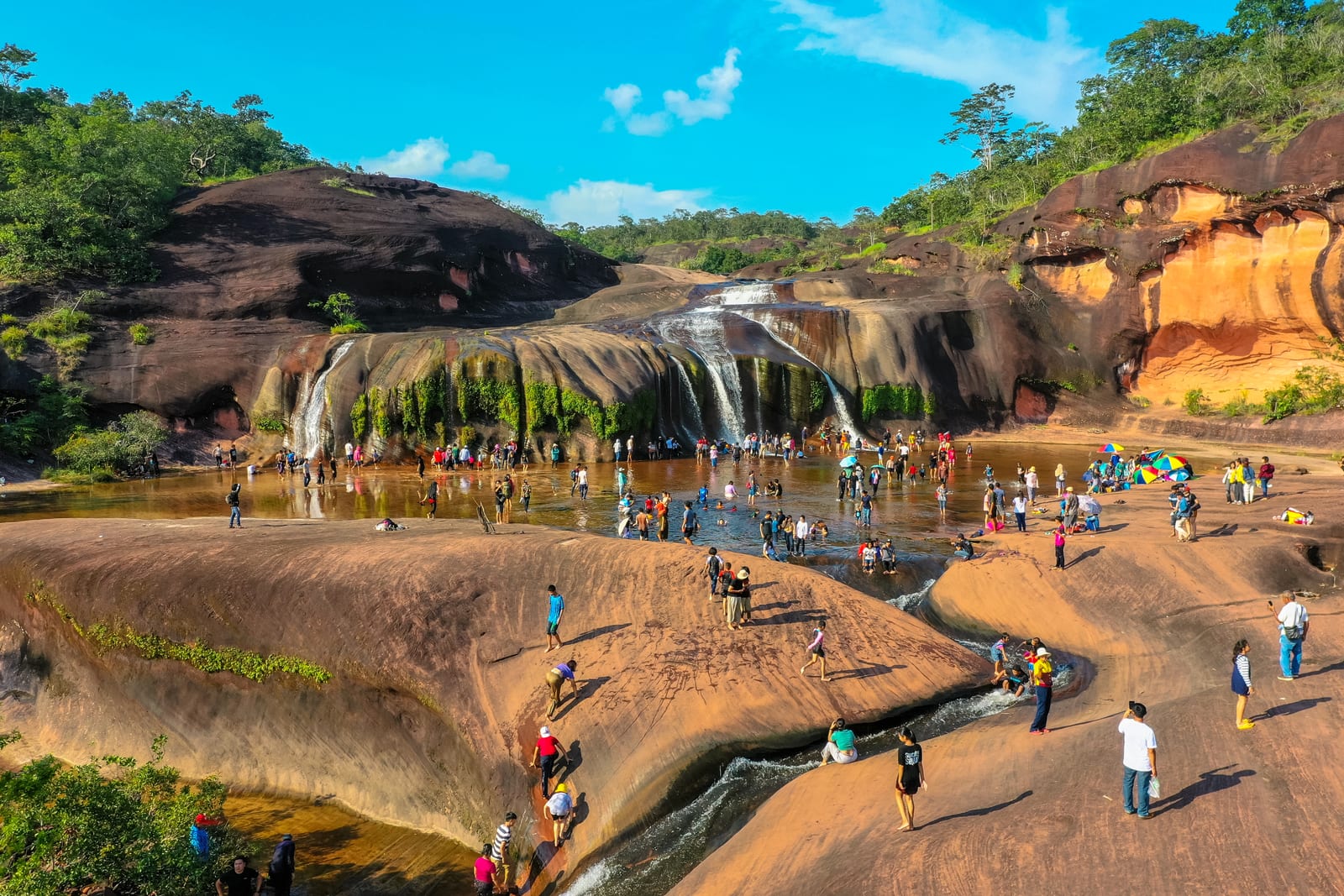
Tham Phra Waterfall is a three-tier sandstone waterfall hidden deep in the forest of the Phu Wua Wildlife Sanctuary, at Ban Tham Phra, Tambon Sok Kam, Seka district. It's one of Bueng Kan's most talked-about attractions in the rainy season. It suits people who like rough-and-ready nature, families wanting to bring children for a swim, and groups of friends up for light adventure. What sets it apart from ordinary waterfalls is the open sandstone shelf hundreds of metres wide, with water spreading thinly over layered rock into strange, beautiful patterns. Many reviews agree it feels like finding a genuine natural water park in the middle of the forest.
The unmissable highlight is the 'natural slide', a rock groove worn slick by the flowing water, where children and adults alike can sit and slide down — the shot people bring back most in their clips. There's also a wide rock shelf to sit and soak on, and photo angles with the water spread across the cliff face. Reviews warn that the water volume depends on the season; if you want to see it full and enjoy the slide, come from the middle to the late rainy season, because in the dry season there's little water and some spots close.
Getting there is part of the charm. You drive to the pier first, then take a boat across for about 10 minutes, then walk in a little further to reach the falls. There are Pier 1 and Pier 2 to choose from. Costs aren't high: the boat is around 50 THB for adults and 30 THB for children, plus a sanctuary entry fee of around 30 THB for Thai adults and 20 THB for children (foreigners pay more per the wildlife sanctuary rates). A budget of a low few hundred baht per person is plenty for a comfortable visit.
It's open around 08:30–16:30, and it's a seasonal waterfall, usually opening for the tourist season from mid-June once the water picks up. Things to know: check with the page or ask before travelling, because the open/close dates depend on each year's water levels. Wear non-slip shoes, watch out for slippery rocks when using the slide, and bring waterproof gear because you'll definitely end up in the water. It's about 60 kilometres from Bueng Kan town, and you can pair it with Three Whale Rock or other Phu Wua waterfalls in one trip.
Naki Cave (Phu Langka National Park)
Naki Cave is a pilgrimage highlight paired with Naka Cave, within Phu Langka National Park (the northern Phu Langka zone, on the Tambon Phai Lom, Ban Phaeng side, which connects to Bueng Khong Long district, Bueng Kan). The selling point is a cluster of large sandstone rocks whose surface cracks into ridges resembling coiled naga scales, with a boulder shaped like a naga head for another photo. Geologists explain the scale pattern comes from the 'sun crack' phenomenon, where the rock surface fractures as temperatures shift back and forth, but for believers it's the trace of a naga. It suits people who like short forest walks, pilgrims wanting to ask for blessings, and anyone wanting an easier-walking version of Naka Cave.
The charm many reviews agree on is that it's 'much easier to walk than Naka Cave'. The trail is about 3 kilometres round trip; the first stretch is a leisurely nature study path past several waterfall tiers, then a final scramble of around 300 metres with ropes to help. It takes about 2–4 hours in total depending on your fitness. In the cave there's a green jade naga-canopy Buddha image to pay respects to, plus views of the forest and the mountain ridge with the Mekong in the distance. Many say it's worth the effort spent.
Costs are very easy on the wallet: park entry is 20 THB per person, 30 THB for a car and 20 THB for a motorcycle, and you must have a staff guide (up to 5 people per guide), with the guide fee as a tip. The key point is that Naki Cave opens seasonally: in 2025 it opened 1 July–31 October, 07:00–15:00 (closed for maintenance in June). Always call the park to check before you go.
It's on the rise thanks to the Mekong-basin naga craze and the earlier fame of Naka Cave; as people started coming to Bueng Kan–Nakhon Phanom, Naki Cave became a follow-on spot where celebrities and public figures like to come and ask for blessings. Things to know: come in the morning to avoid the queue and the sun, wear non-slip trainers, bring drinking water, and be prepared for a bit of climbing at the end — but compared with Naka Cave it's far friendlier on the legs.
🎟️ Bueng Kan Tickets and Tours — Cover Several Spots with a Guide, Book to Skip the Queue
Bueng Kan's attractions are spread across several districts, and some require riding up a mountain or trekking — like Three Whale Rock, Naka Cave, and the waterfalls in Phu Wua forest. If you'd rather not drive yourself or worry about getting lost, booking a guided tour that covers several spots in one trip makes things much easier — arranging the mountain truck, walking the Naka Cave trail, and looping the riverside spots all in a day. Book tickets and tours ahead through Klook or GetYourGuide so you don't have to gamble on queues at the gate. Compare prices and reviews before you book.
💡 Know Before You Go: Bueng Kan
Bueng Kan has no airport and no Grab, and its attractions are spread across several districts with limited public transport. Most people fly into Udon Thani or Nakhon Phanom and then rent a car, which is the most flexible way to loop Three Whale Rock, Naka Cave, Phu Thok, and the Phu Wua waterfalls.
The road up Phu Sing is steep and rough, and private cars cannot make it — you park at the service point and charter a local truck up for around 500 THB per vehicle, plus entry of around 20–30 THB. Go before dawn to catch the sunrise and the winter sea of mist.
Attraction entry fees, the mountain truck, the boat across to Tham Phra Waterfall, the riverside walking-street food, and most temple donation boxes take cash. Carry small bills. ATMs are easy to find in town, but very scarce at out-of-town spots and up the mountains.
Naka Cave and Naki Cave require a fair bit of uphill forest trekking, Phu Thok is a seven-tier wooden walkway spiralling a cliff, and the Phu Wua waterfalls require a walk on from the car park. Wear good-grip shoes, bring water, and go in the morning while it's still cool. People afraid of heights may need to steel themselves along the cliff-face walkways.
Naka Cave (Wat Tham Chai Mongkhon) and Naki Cave are sacred sites that require registration before you go up. Cover shoulders and knees, keep your voice down, and don't climb or step on the naga rocks. In high season it gets crowded, so go early or check the entry rounds first.
Bueng Kan is a small province, and outside the main attractions, English signs and menus are rare. Bring a translation app to help, or point at photos to order food at the market and walking street — you'll get by. Most people here are kind and patient with visitors.
Plan Your Bueng Kan Trip to Get the Most Out of It
Bueng Kan is a fun trip, but the highlights are spread across several districts, so organising your route by zone saves the most time. The riverside town zone is easiest to cover: Wat Ahong Sila Wat (the Navel of the Mekong) in Tambon Khai Si and the Fifth Thai-Lao Friendship Bridge are in the same area, and then you can come into town for the Mekong riverside walking street in front of the municipality on a Friday–Saturday evening, eating Isan food in the river breeze. Three Whale Rock on Phu Sing in Tambon Khok Kong is best visited before dawn to catch the sunrise and the winter sea of mist; here you have to ride a local truck up the mountain at 500 THB per vehicle, then walk on.
If you have several days, then drive further out. The Bueng Khong Long–Phu Langka zone covers Naka Cave (Wat Tham Chai Mongkhon), which requires a fair bit of uphill forest trekking, Naki Cave in Phu Langka National Park, and a stop at the large lake of Bueng Khong Long with its birdwatching tower. The Seka–Phu Wua zone is the waterfall route: the Seven-Colour Waterfall and Tham Phra Waterfall, which requires a boat crossing then a walk, prettiest in the late rainy season. And Phu Thok at Wat Chetiya Khiri Wihan in Si Wilai district is the spot to walk the seven-tier wooden walkway spiralling the mountain, for which you should save energy and time. Grouping the spots that lie in the same direction into the same day makes for the most rewarding trip.
Bueng Kan is fun even as a day trip, but staying overnight in town by the Mekong lets you walk the riverside street in the evening, then drive up to Three Whale Rock before dawn for the sea of mist while the crowds are thin, or head out to pay respects at Naka Cave on Phu Langka without rushing. Compare prices and reviews for Bueng Kan hotels before you book.
🔍 Check Bueng Kan Hotel Prices (Agoda)