🔄 Last checked 27 Jun 2026 · details and hours can change — check the venue before you go
📍 All restaurants on the map
Tap a pin for the spot + nearby stays
The appeal of Phichit is that it's a small riverside city on the Nan where the sightseeing is relaxed but the good stuff is packed close together. Most of the highlights are in Phichit town, a few minutes' walk or drive apart. In the city centre is Bueng Si Fai, one of the largest freshwater lakes in the country, turned into a riverside public park with a cycling track around it, a statue of Phaya Chalawan — the giant crocodile that has become the province's symbol — and a sunset reflecting off the water so pretty that people never stop stopping to take photos. On the Nan River side is Wat Tha Luang, home to Luang Pho Phet, the province's treasured Buddha image, and not far away is Phichit Old Town Park, shaded by large trees, with Chalawan Cave from the Krai Thong legend. Turn just outside the city and you reach Wang Krot Old Town, a riverside market of timber shophouses more than a hundred years old. There's something for pilgrims, old-town fans, cafe-goers, and vintage photographers alike.
This list has the pins you shouldn't miss when in Phichit — Luang Pho Phet at Wat Tha Luang, a royal temple whose Chiang Saen-style bronze Buddha draws Phichit locals and pilgrims to pay their respects; the Old Town Park, which keeps Chalawan Cave, the Krai Thong-Chalawan sculptures, and the ancient Wat Mahathat Lanka-style chedi all in one place; Phichit Railway Station, a neo-classical building in pastel cream and pink from the reign of King Rama V that ranks among Thailand's prettiest stations and is a favourite classic photo corner; Wang Krot Old Town, where you can still try century-old fresh-chilli noodle soup and old-style pad thai; Wat Pho Prathap Chang, a King Suea-era heritage site near a well-known sweet-pomelo growing area; and Luang Pho To of Taphan Hin, the province's largest standing blessing-posture Buddha in Taphan Hin district. For cafe fans there's For You Coffee on the shore of Bueng Si Fai, where you can sit in the breeze with a full lake view. Scroll through spot by spot and map out your own route.
Bueng Si Fai (Bueng Si Fai Public Park and Phaya Chalawan)

If you come to Phichit and ask a local where to start, most will point you straight to Bueng Si Fai, because it's one of the largest freshwater lakes in the country, right on the west side of the town, and they've turned it into a full-fledged riverside public park. It suits people who want a relaxed stroll, families who want to sit by the water, and anyone who likes to exercise with room to cycle or run in the open with a breeze and a wide sky — and there's no entry fee.
The highlight you can't miss is the Phaya Chalawan statue, the giant crocodile that is Phichit's twin symbol. It's so big it's the go-to photo spot for everyone who comes. Then there's the cycling track and running path that stretch around the lake, with bicycles to rent if you didn't bring your own, a freshwater fish aquarium for kids to walk through, and a pavilion in the middle of the water and a crossing bridge to walk out and take in the view. Many reviews agree the prettiest time is late afternoon near sunset, when golden light hits the water and turns romantic — some people even say it feels like a park in Korea.
On atmosphere, it has improved a lot since the renovation: a wide space, shady trees, food stalls, and enough parking. Entry is free, and activities like renting a bicycle, a boat, or a mat and chair cost a little extra. It's popular because it's both the city's green lung and a landmark in one — Phichit locals come to exercise regularly, and visitors stop for a photo with Phaya Chalawan as one of their first pins.
A couple of things to know: the midday sun is fairly strong here because the area is open, so morning or late afternoon is more comfortable; bring a hat and water. And if you're set on catching the sunset, arrive a bit early to find a good spot by the water in time.
Wat Tha Luang Royal Temple (Luang Pho Phet)
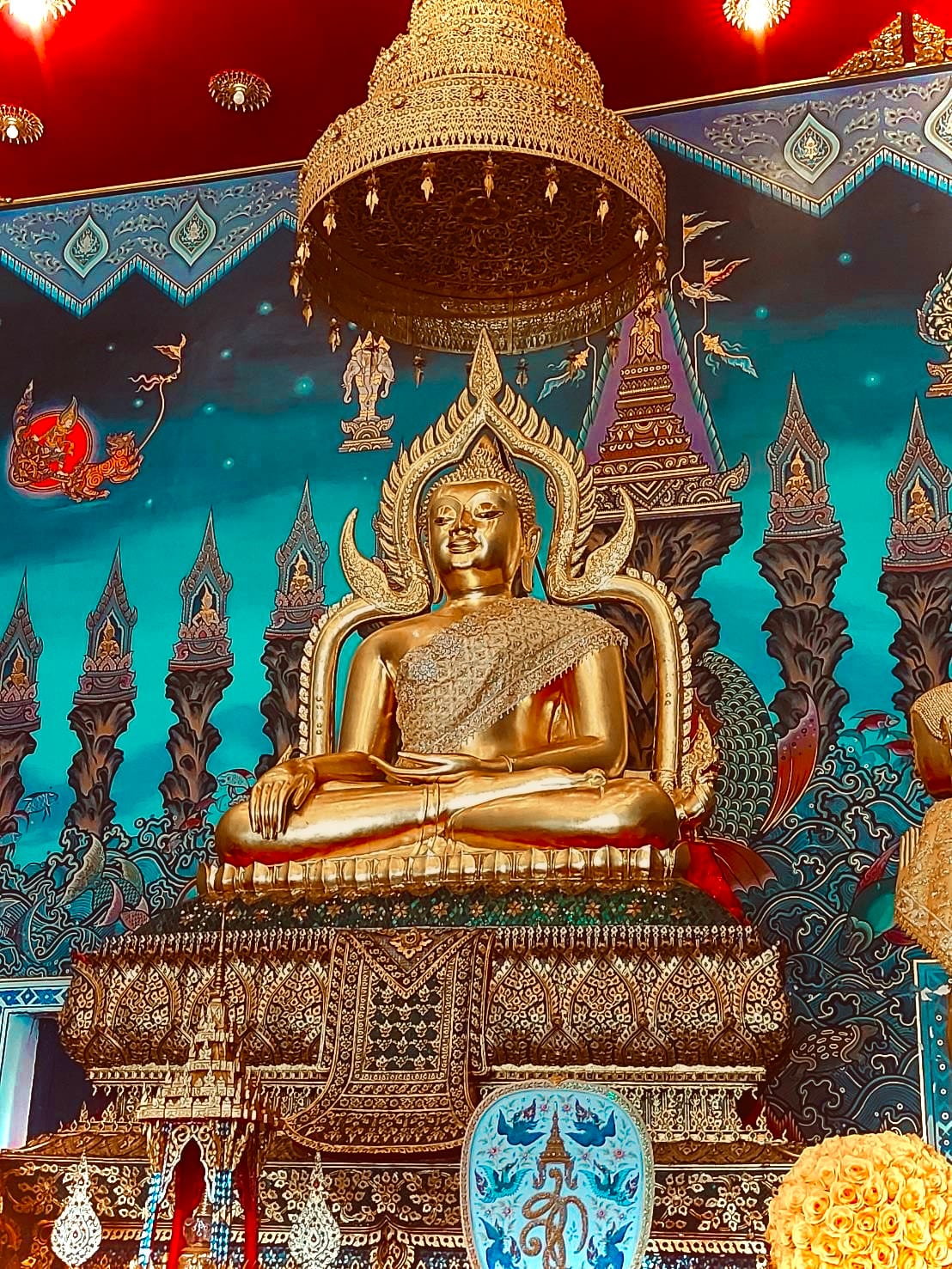
If you come to Phichit and only have time for one stop, locals often tell you to go to Wat Tha Luang first, because it's the city's cherished royal temple, set on the Nan River in the middle of town on Butsaba Road, Tambon Nai Mueang, just a few hundred metres from the centre. The star of the temple is Luang Pho Phet, a Maravijaya-posture Buddha cast in bronze in the old Chiang Saen style, with a lap width of about 1.40 metres. It's a sacred image that Phichit locals and pilgrims come to pray before without fail. It suits both those who want to make merit for good fortune and those who simply want an easy walk around an old riverside temple.
The must-do is going in to pay respects to Luang Pho Phet in the ubosot; many people receive holy water afterwards, then come out to release birds and fish by the Nan River in front of the temple, following local belief. Come in the late afternoon and you'll find an especially lovely soft-light atmosphere by the water. On some days there is an evening chanting around 16:30 that genuine reviews describe as calming to listen to. The overall setting is wide, shady, and quiet, without heavy crowds — you can wander and take photos at your own pace.
Budget-wise it's very easy, because there's no entry fee — make merit as your faith moves you. The ubosot is open for veneration every day from morning to evening (around 06:30–18:00). Before entering, remove your shoes and dress modestly per temple custom. This is also the venue for Phichit's famous traditional long-boat races in early September; if you come then, you'll see a lively riverside scene of a different kind.
Wat Tha Luang is popular because it brings together everything visitors to Phichit want in one place — a sacred image that's a provincial symbol, an easy-to-find central location, and a Nan River view that keeps the visit from feeling dull. The Google review score reaches 4.6 from over a thousand reviewers, reflecting genuine satisfaction. One small note: parking during merit festivals or holidays can be tight, so arriving a bit early is more comfortable.
Phichit Old Town Park (Chalawan Cave, Wat Mahathat, City Pillar Shrine)
Phichit Old Town Park is the historical grounds of old Phichit, covering more than 400 rai, with city walls, a moat, ancient chedis, and large trees shading the whole park. It's a history-and-relaxation stop that suits people who like to walk slowly, families bringing elders to pay respects, and anyone who wants to follow the trail of the Krai Thong-Chalawan legend that defines this province. The highlights are all in one place and easily walkable.
The must-see is Chalawan Cave. At the cave mouth is a sculpture of Krai Thong fighting the crocodile Chalawan, from the literary work composed under King Rama II — the most popular photo corner. Then there's Wat Mahathat, a heritage site registered since 1935, with an old Lanka-style chedi and viharn ruins to walk through, and the city pillar shrine, a two-storey building whose upper floor holds the city pillar and whose lower floor enshrines a statue of Phraya Kotrabong, whom villagers call 'Pho Pu' and Phichit locals hold in deep respect.
Genuine reviews agree that the atmosphere is quiet, cool, and full of trees, with the heritage sites well kept. Many people spend under an hour to cover it, since the park isn't very large. Entry is free with no charge. It's open daily around 08:00–17:00 (the cave-temple side stays open until about 18:00). It's about 7 km from present-day Phichit town, an easy 10–12 minute drive, with parking.
A small note: the light in the late afternoon is lovely and there are lotus flowers to photograph, so it's ideal to come before sunset — but some spots around the shrine have had wasp and bee nests, so take care when going in to pay respects, and pack an umbrella or hat for the sun, because although there are plenty of trees, some paths are open. Overall it's a very worthwhile stop for anyone passing through Phichit — history, legend, and a peaceful moment in one place.
Phichit Railway Station

If you like classic retro photo corners, Phichit Railway Station is a pin that locals love to send you to. The building dates back to the reign of King Rama V, opening in 1907 — a two-storey brick-and-stucco structure in a Western neo-classical style, in an eggshell-cream tone set off with pastel pink, decorated all over with vintage curved stucco moulding. People who see it are often amazed that a small provincial railway station could be this pretty, because buildings like this are down to just a handful in Thailand, and it was once ranked among the 10 most beautiful railway stations in the country.
The highlight you can't miss is the front of the old pastel building with the station-name sign. Around it, rain trees and large trees spread their shade, keeping the atmosphere cool and comfortable. Walk in toward the platform and you'll find old wooden benches and a passenger waiting hall still in real use, with the full flavour of an old-time railway station. Many people like to wait for a train to pull up to the platform to capture a shot alongside the vintage building. If you're into film photography or like dressing up in retro outfits, this is a perfect spot.
On cost it's easy on the wallet, because visiting and taking photos is free with no entry charge. It's a station still in service on the northern line every day, so you can walk in to look around at almost any time. It's centrally located in Phichit town, Tambon Nai Mueang, about 1 km from Wat Tha Luang and near a town shopping centre, so it's easy to walk or drive on. On Saturday evenings there's also a walking-street market near the station to graze at afterwards.
A couple of things to know: this is a working station, so when photographing on the platform or near the tracks, watch for trains and follow the warning signs for safety. Morning and late afternoon have gentler sun with soft light and pleasant air. Allow about half an hour to an hour to look around — it's a good check-in stop paired with a day exploring old-town Phichit.
Wang Krot Old Town (Wang Krot Market)
If you want to see Phichit in a version where you can still walk slowly, Wang Krot Old Town is the answer. It's an old riverside market community on the Nan from the reign of King Rama V, over 100 years old, in Tambon Ban Bung, only about 6 km from town. It was originally a trading quarter of Thai-Chinese merchants who came upriver by boat to settle, and when the Wang Krot railway station arrived it grew even livelier. Today a long row of hundreds of timber shophouses still stands intact, with an old clock tower as a meeting point and colourful flags fluttering overhead. It suits people who like a retro atmosphere, photographers, and anyone who wants a visit that isn't too crowded.
The heart of the place is its traditional food. The star everyone talks about most is the fresh-chilli noodle soup, a recipe handed down through generations, with a hot broth sharply spiced from fresh chilli, at a modest price. Beyond that there's old-style pad thai, hoi jo, sago with pork filling, fried oyster omelette, pork satay, and old-style coffee to sample as you go. There's a pickled-lime juice shop where a glass costs just a few baht, praised in many reviews for the owner's kindness. Several bloggers say walking here feels more like returning to a relative's home than entering a tourist zone, because the community is welcoming and the food isn't pricey.
Besides eating, there are spots to stop at, like the riverside Chao Pho-Chao Mae Wang Klom shrine where people come to pray, and Baan Luang Prathueang Khadi, an old house turned into a place that tells the community's story. Walking the whole quarter is free — you only spend on food. It's busiest and most fully open on Saturday-Sunday, roughly 08:00–14:00; on some days there's a market and a retro ramwong dance by the community.
Things to know: if you come on a weekday, some shops may be closed, so aim for the weekend and arrive between morning and noon to get the full atmosphere. There's parking but not a lot, so coming early is more comfortable. This quarter won two Kinnari awards in 2023 as a low-carbon tourism community, which is why Phichit locals and passers-by keep recommending it — a place where you get both good food and a taste of yesteryear in one.
🛏️ Well-located hotels in Phichit
Covering several Phichit spots in a single day gets tiring, so keeping a room in Phichit town for a night is more comfortable. Wake up early to pay respects at Wat Tha Luang, then drive a loop around Bueng Si Fai, the Old Town Park, and Wang Krot without rushing. Locations near Bueng Si Fai and the city centre are the easiest to get around. Compare prices and reviews for Phichit hotels in advance to get a good room at a good rate, especially during festivals or long weekends when rooms fill up fast.
🔍 Check Phichit Hotel Prices (Agoda)Wat Pho Prathap Chang
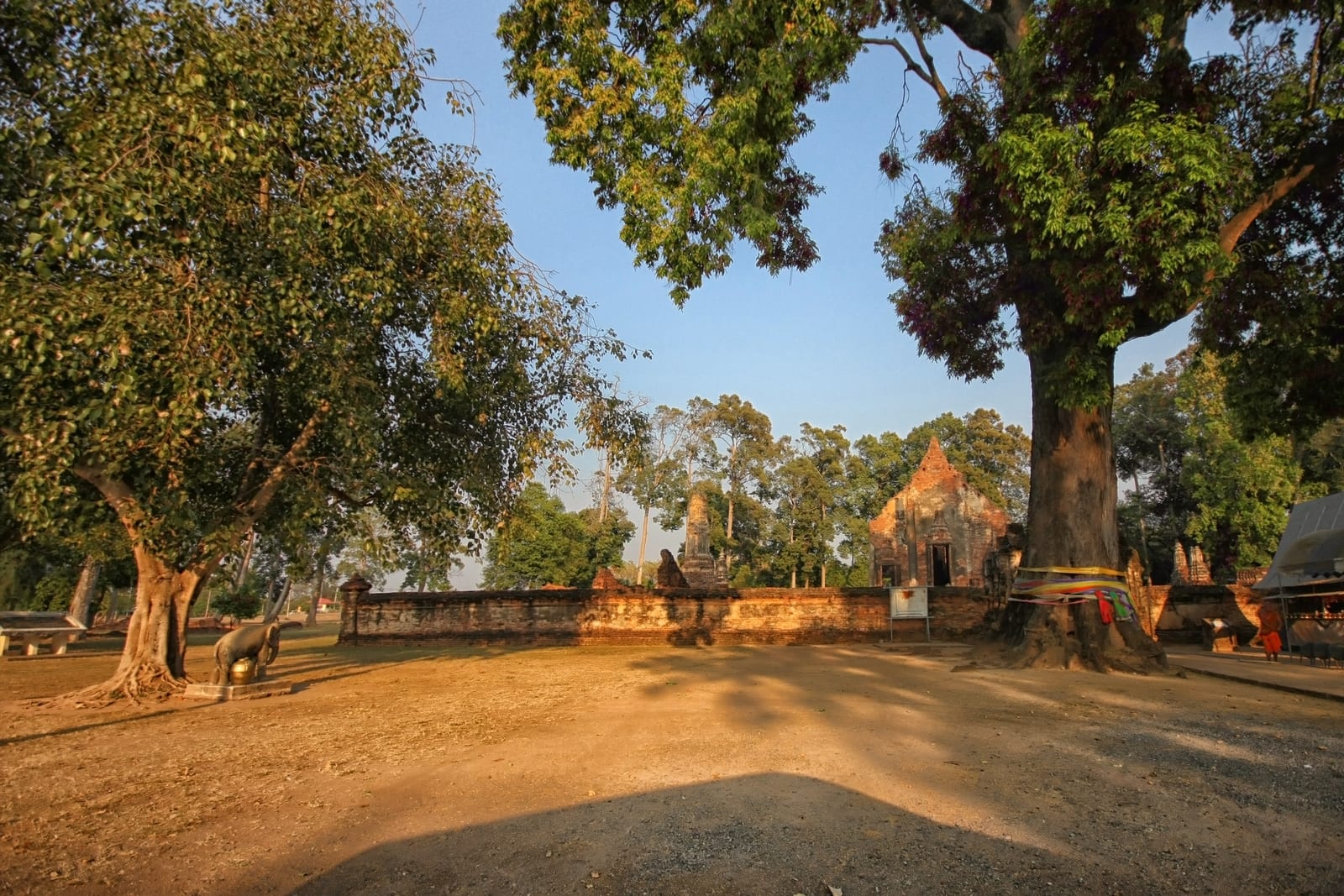
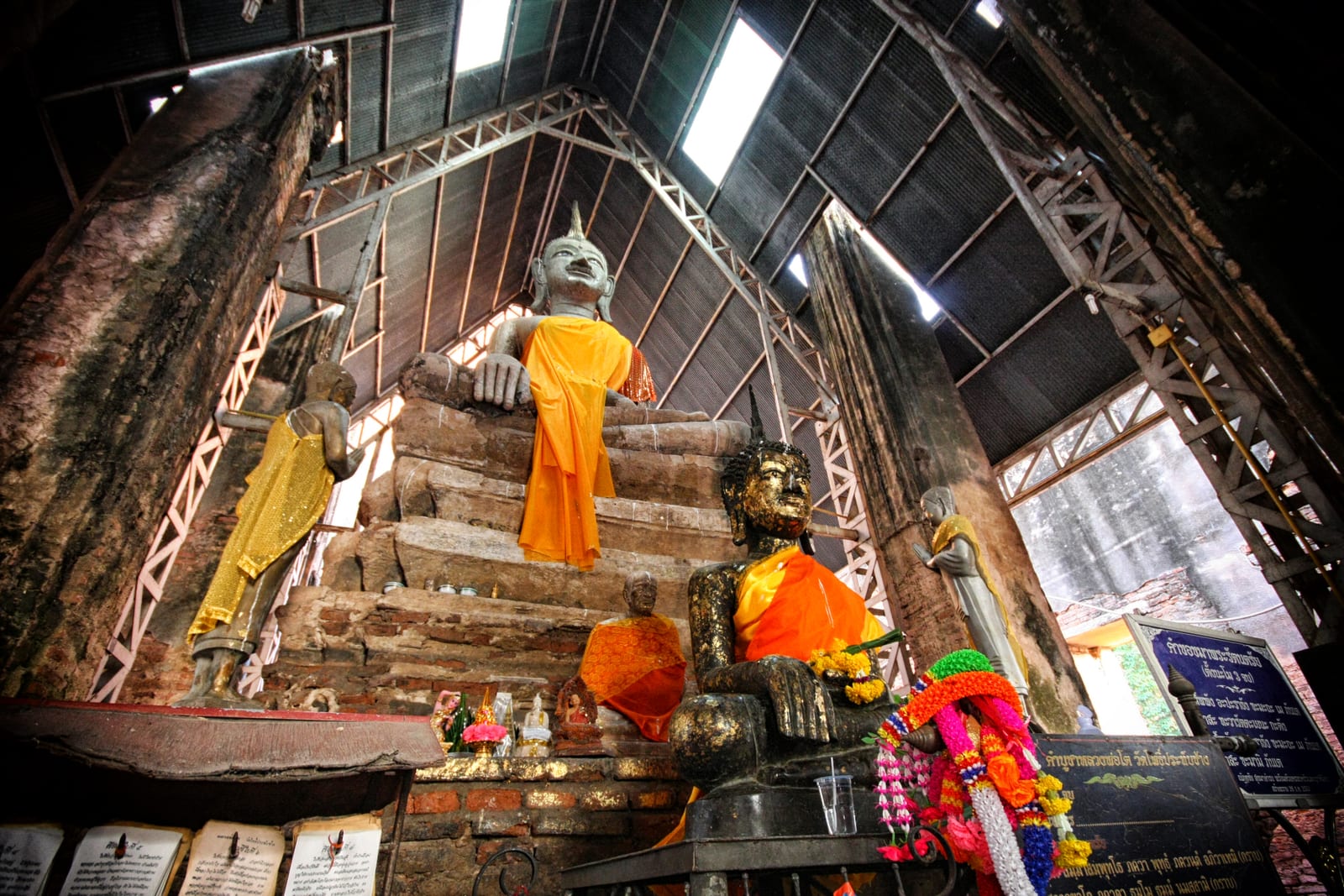
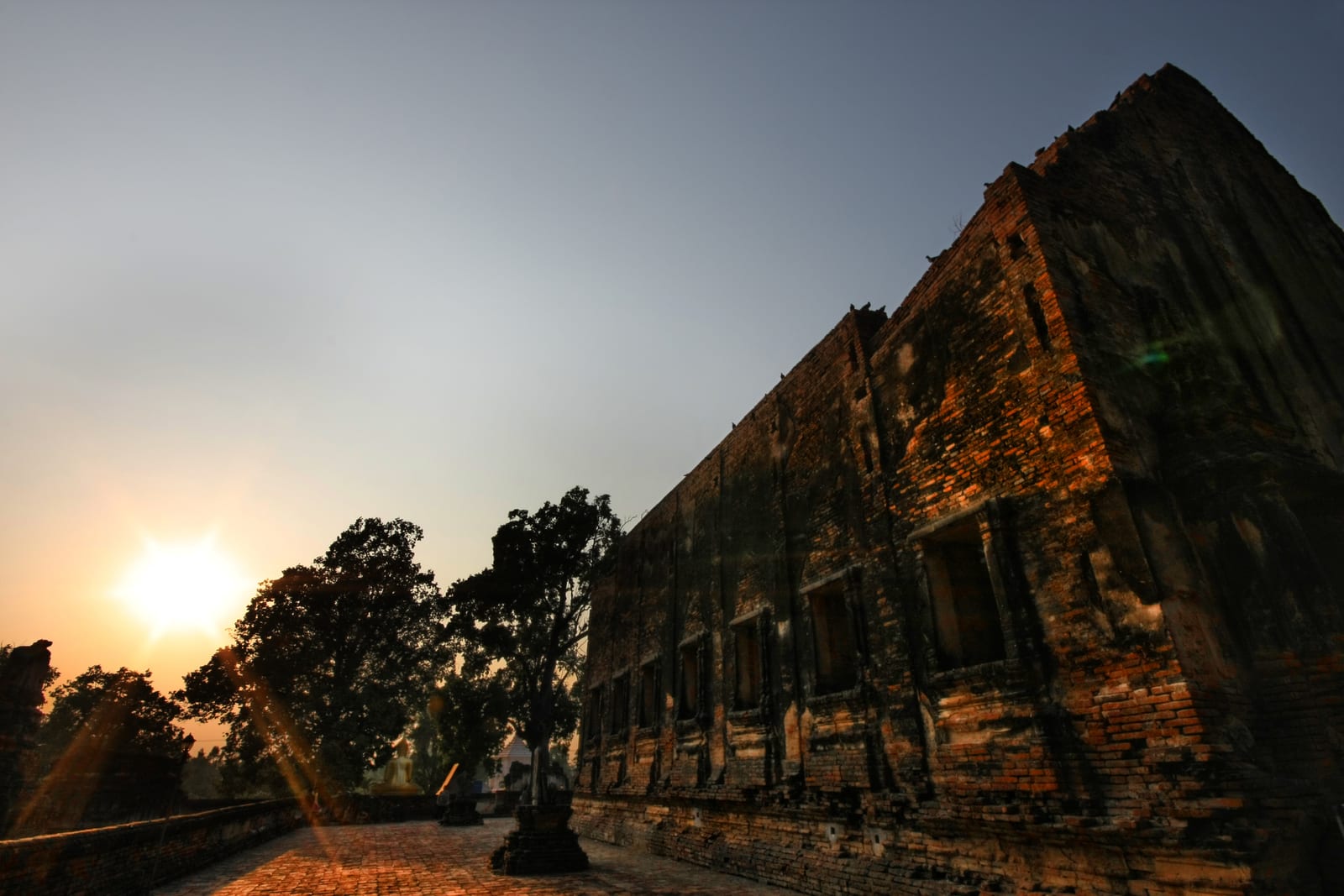
Wat Pho Prathap Chang is an old temple and late-Ayutthaya heritage site, built around 1699–1701 in the reign of King Suea (King Sanphet VIII), on ground believed to be his birthplace. The Fine Arts Department has registered it as a heritage site. It suits people who like history, quiet uncrowded temples, and anyone who wants to follow the story of King Suea, familiar to many from the drama Phrom Likhit. Walk in and you'll find a peaceful, shaded setting, with many large trees, including a century-old takhian tree in front of the temple.
The highlight you can't miss is the Ayutthaya-style brick-and-stucco ubosot, ringed by two enclosing walls, with old-style arches and columns that make you feel the true age of the place. Inside is enshrined Luang Pho To, whom villagers call 'Luang Pho Yim' (the smiling one), a stucco Buddha over 300 years old that locals hold in great respect. Beyond it to the south is an ancient chedi, and there's a shrine to King Suea to pay respects at. Many reviews agree the atmosphere is still and calm, better suited to quiet worship than rapid check-in photos.
On the cost, you can relax — being a temple, entry is free; just prepare a donation as your faith moves you. It's in Tambon Pho Prathap Chang, Pho Prathap Chang District, about 27 km south of Phichit town along the Phichit-Wang Chik road. Driving yourself is the most convenient way. As for opening hours, sources differ — some say it's always open, some say around 06:00–18:00; if you want to enter the ubosot, coming during the day is safer.
It's popular because it brings historical value, sanctity, and the King Suea connection together in one place, and this area is also a source of the famous Tha Khoi sweet pomelo, which you can buy to take home. Things to know: dress modestly for the temple, and since it's a fairly quiet temple in an outer district, allow travel time and fill up on fuel before leaving town.
For You Coffee Lake View Resort (cafe by Bueng Si Fai)
For anyone in Phichit who wants a cafe with an open water view, For You Coffee Lake View Resort is a pin many people recommend. The shop sits right on Bueng Si Fai, in a modern-minimalist building with large glass panels that open onto a full lake view. Sit inside and you see the wide lake; sit in the outdoor zone and you catch a cool breeze. It suits laid-back people who want a quiet corner to sip coffee, photographers, and families who want to let the kids run by the water.
The highlight many reviews agree on is the 'view' — the glass panels look out onto a panorama of Bueng Si Fai, and in the late afternoon the sunset reflecting off the water is the prettiest moment. There are plenty of photo corners both inside and by the water. Another selling point is that there are bicycles to rent for a spin around the lake, so it's become a stop for both cyclists and people who just come to sit with a coffee. The menu covers coffee, milk, and soda drinks plus a fair range of snacks.
Budget is easy on the wallet: drinks start around 70 baht, there's no entry fee, and you only pay for what you order. It's located by Bueng Si Fai, Tambon Nai Mueang, Mueang Phichit — an easy drive from town, easy to find, with convenient parking. The shop is open daily from morning to late afternoon, good for a morning coffee and for sitting in the breeze waiting for the sunset in the afternoon or early evening.
It's popular because it brings several things together in one place: the view of Bueng Si Fai, which is a Phichit landmark anyway, an airy open atmosphere, and the lakeside cycling. One thing to know: opening and closing times are listed differently across sources, and at some times it may close later than usual — check the shop's page before you set out. For the best light, come in the late afternoon near sunset; it gets busier then, but it's worth it for the view.
Phra Phuttha Ket Mongkhon (Luang Pho To of Taphan Hin)
If you're riding the train through Taphan Hin and see a shimmering golden Buddha standing tall by the roadside, that is Phra Phuttha Ket Mongkhon, which locals here call Luang Pho To of Taphan Hin. It's Phichit province's largest standing blessing-posture Buddha, with a lap width of 20 metres and a body height of 30 metres, and another 4 metres for the base — nearly 34 metres in all, meaning you have to tilt your head all the way back to look up from the ground.
The image is built of reinforced concrete, begun in 1965 and completed in 1970, and was granted the royal name Phra Phuttha Ket Mongkhon. It stands in the open at Wat Thewa Prasat, directly opposite Taphan Hin Market, which makes it very easy to drop by. Anyone driving past or arriving by train can pull over to pay respects without heading down some deep lane.
The charm of this place is that it's a genuine hometown Buddha for the people of Taphan Hin. Locals like to come to pray for safety and smooth trade; pilgrims often come to make vows about work and studies. The temple atmosphere is quiet and shaded, and you can walk comfortably around the base of the image. The photo angles are lovely too, because the golden Buddha stands out against the sky, especially in the morning and late afternoon when the sun is gentler.
When you come, dress a bit modestly since this is temple grounds. Entry is free with no ticket. It suits a roadside stop more than a full-day outing — allow about half an hour to an hour to walk, pay respects, take photos, and then move on to another spot in Phichit town. It's the easiest landmark to remember that says you've reached Taphan Hin.
Wat Nakhon Chum
If you want to know Phichit at its oldest, locals here will point you to Wat Nakhon Chum, which they call 'Wat Yai' (the big temple), an old temple tied to the legend of Phichit, in the middle of the old-town area, Tambon Mueang Kao, Mueang Phichit, along the old course of the Nan that was once the ancient city moat. It's a temple built since the Sukhothai period, once an important temple of old Phichit, and formerly a place for the water oath of allegiance ceremony. If you like old-temple sightseeing, history, and a quiet, shaded atmosphere, this is a great fit.
The highlight you can't miss is the ancient ubosot, around 800 years old, a brick-and-stucco building whose upper structure is wood, using wooden pegs instead of nails and with ventilation slots cut into the walls in place of windows — a hallmark of Sukhothai-period ubosots and viharns. Inside are a Maravijaya-posture Buddha and an old presiding Buddha, together with Luang Pho Phan, the temple's guardian image that Phichit people revere (the original Luang Pho Phet is now enshrined at Wat Tha Luang in town). Around it are old stone boundary markers and a Thai-style wooden scripture repository to walk on and see. Many genuine reviews like that the temple is shaded by large trees and peaceful, without the crowds of the in-town temples.
On entry, the temple charges nothing — you can go in free and make merit as your faith moves you. It's open daily around 06:00–18:00. It sits in the old-town area of Phichit, a fair distance from the present-day town, so driving yourself is recommended, with easy parking at the temple. Afterwards you can continue sightseeing in the Phichit Old Town Park nearby, where the ancient city walls, moat, and city pillar shrine are close together.
A small note: this is a sacred temple where people come seriously to pay respects, so dress modestly. Come in the morning for cool, comfortable weather and lovely light for photographing the old ubosot. During merit festivals or robe-offering ceremonies it may be a little more crowded than usual, but overall it's still a temple that feels peaceful and carries a genuine old-town flavour.
Wat Bang Khlan (Wat Hiranyaram) Luang Pho Ngoen
When it comes to the pilgrimage temple that people from other provinces will drive furthest to reach in Phichit, the first name locals here think of is Wat Bang Khlan, officially Wat Hiranyaram, in Tambon Bang Khlan, Pho Thale District, about 38 km from Phichit town. This is the temple of Luang Pho Ngoen Phutthachoti, a master monk so revered by Phichit people that he earned the title 'the deity of Phichit'. Every day, people from all over the country stop by to pray and to rent sacred amulets, without let-up.
The spot most people come to pay respects at is the mondop enshrining a life-sized cast image of Luang Pho Ngoen. Within the temple is also the Nakhon Chai Bowon Museum, a two-storey mondop-style building whose upper floor enshrines the cast image of Luang Pho Ngoen, while the lower floor displays antiquities offered by the faithful — Buddha images, votive tablets, and old ceramics. If you like old objects or want to understand the temple's origins better, the lower floor is a pleasant stop.
Most reviews say the same thing: the temple grounds are spacious and easy to walk around for worship, with a fair number of shops renting amulets and selling souvenirs. On weekdays you can still walk around freely, but on long weekends or during festivals the crowds are especially heavy, because many people treat this as a destination specifically for praying about luck and trade.
The temple is open daily from about seven in the morning to five in the afternoon, and visiting and praying are free. Anyone driving the Phichit-Pho Thale route, or planning a temple trip through the lower central region, shouldn't skip this pin. Allow time to pay respects at both the mondop and the museum, then browse for amulets to take home.
Book Tickets and Tours for Phichit in Advance
If you want to see several Phichit spots without planning it all yourself or worrying about transport, look for city tours and activities across the lower northern region through Klook or GetYourGuide, easy to book ahead. There are car-with-driver packages, guided multi-stop tours, and skip-the-queue attraction tickets. It's ideal for anyone who flew or took the train and didn't bring their own car. Compare prices and reviews before booking, all in one place.
💡 Know Before You Go: Phichit
Phichit's attractions are spread across several districts, and Grab is scarcer than in big cities. Self-driving or renting a car with driver is far more flexible. In town, the highlights like Bueng Si Fai, Wat Tha Luang, and the Old Town Park have spacious parking.
Shops in Wang Krot Old Town, roadside food, and bicycle rentals around Bueng Si Fai mostly take cash, so keep small bills on you. Many cafes and larger shops accept scan-to-pay, but cash is safer at the old market.
Go to the temples and the Old Town Park in the morning for cool weather and fewer people, while Bueng Si Fai and the lakeside cafe suit the late afternoon for the sunset reflecting off the water. Arranged this way, you'll have an easy day and good photos throughout.
Wat Tha Luang, Wat Nakhon Chum, Wat Pho Prathap Chang, and Wat Bang Khlan are sacred sites where people come seriously to pay respects. Dress modestly, cover shoulders and knees, remove your shoes before entering the viharn, and keep your voice down within the temple precinct.
Phichit is a small city where foreign visitors are still few. Local shops and the old market mostly have Thai-only menus. A translation app or pointing at food photos will make ordering easier. Phichit people are kind and friendly, and a smile always gets you help.
Phichit is the city of Chalawan from the Krai Thong legend — the story of the giant crocodile and a young woman. The Phaya Chalawan statue by Bueng Si Fai and Chalawan Cave in the Old Town Park both tie back to this legend. Knowing the story a little means you'll enjoy the walk more and capture photos with more to tell.
Plan Your Phichit Trip to Make the Most of the Day
Phichit's main attractions cluster almost entirely in the town area, so an easy one-day trip works well. Start early at Wat Tha Luang to pay respects to Luang Pho Phet while it's still cool, then drive on to Phichit Old Town Park to walk through Chalawan Cave and the nearby Wat Mahathat heritage site. At midday, stop at Wang Krot Old Town, only about 6 km from town, to walk the century-old timber market and try fresh-chilli noodle soup and old-style pad thai. In the afternoon, head to Phichit Railway Station for photos of the vintage building, then finish at Bueng Si Fai in the late afternoon, cycling around the lake, taking photos with Phaya Chalawan, and sitting at For You Coffee by the water to wait for the sunset. If you have two days, drive out to the districts for Wat Pho Prathap Chang, Wat Bang Khlan (Luang Pho Ngoen), or the great Luang Pho To of Taphan Hin.
Covering several Phichit spots in a single day is easier if you keep a room in Phichit town for a night. Wake up early to pay respects and then drive a loop without rushing. Locations near Bueng Si Fai and Wat Tha Luang are the easiest to get around.
See Well-located Hotels in Phichit