🔄 Last checked 25 Jun 2026 · details and hours can change — check the venue before you go
📍 All restaurants on the map
Tap a pin for the spot + nearby stays
Ratchaburi is a province you can explore on two very different registers in a single trip. The town centre along the Mae Klong River holds old wooden shophouses, a night walking street, and the dragon-jar quarter that the city has been famous for for generations. Head west to Suan Phueng district and you're in a completely different landscape — cool mountain air, lake-view cafés, animal farms, and natural hot springs tucked against the Tenasserim Hills. Drive up from Bangkok in the morning, do Damnoen Saduak before noon, then drift up into the mountains and spend the night in Suan Phueng — it's the route Bangkok weekend-trippers love.
This list is full of places with proven track records. Damnoen Saduak Floating Market has operated since 1967 and remains one of the most iconic images of Thailand worldwide. Alpaca Hill was one of the country's first alpaca farms, spreading across 250+ rai. Wat Nong Hoi houses a towering 16-metre white Bodhisattva Guan Yin on a hilltop with sweeping city views. Tao Hong Tai : d Kunst is a contemporary art space born from the famous ceramic factory that gave Ratchaburi its nickname, the City of Dragon Jars. Read through, pick the vibe you're after, and set off.
Damnoen Saduak Floating Market
Damnoen Saduak Floating Market is a legendary Thai market that has been part of Damnoen Saduak district for over a century and remains one of the world's most recognisable images of Thailand. It sits about 80 kilometres from Bangkok — a little over an hour's drive — and is the ideal destination for anyone who wants an authentic canal-side atmosphere: laden paddle boats, vendors in bamboo hats sculling through the water, and produce piled high on every deck. Whether you're shooting content, bringing foreign friends, or just looking for a memorable family outing, this place delivers.
The highlight is climbing into a paddle boat and picking food right off the passing vessels. Dishes that reviewers mention most are thick boat noodles eaten to the sound of lapping water, coconut ice cream served inside a young coconut shell with shredded coconut on top, freshly tapped palm juice and palm-sugar blocks (you can watch them being made), plus mango sticky rice and fragrant coconuts. Riverside pad thai is another crowd-pleaser. Afterwards, browse the bank stalls for souvenirs and snacks and find a riverside seat.
Entering the market is free — there's no gate charge. You pay only when you want a boat. Paddle boats run around 1,000 THB per hour per boat (seats up to 5 people); motorised boats are around 2,000 THB per hour. Reviews consistently flag that food and souvenir prices run tourist-market levels, and boat operators do negotiate — always agree on a price before boarding. Coming as a group makes the boat ride better value. Pick and buy only what you genuinely want and you'll have a great time.
The market operates daily and is liveliest from around 07:00 until just after noon. The sweet spot for boats and atmosphere is 07:00–09:00: soft morning light, fewer crowds, better photo opportunities, and easier negotiation. The market's enduring appeal is that it still has real paddle boats, real canal vendors, and a genuine waterway lifestyle that's increasingly hard to find — and it's an easy starting point for day trips that continue to the Mae Klong Railway Market or Amphawa.
Khao Ngu Stone Park
Khao Ngu Stone Park is an open-air public park converted from an old limestone quarry in Ko Phlab Phla sub-district, about 8 kilometres from Ratchaburi town — ideal for a day trip from Bangkok with no overnight stay required. The feature that draws every visitor is a cluster of tall limestone peaks rising dramatically from a large lake, a sight that's genuinely rare this close to a Thai city. Walk from the car park, cross a popular suspension bridge over the lake (a go-to photo spot), and the scenery opens up immediately.
The must-see is the 'Secret Corner of Khao Ngu' — also called Phu Pha Raed — at the back of the park, where cliffs mirror in the water so perfectly that many visitors say it feels like stepping into another country. Beyond that, there are historical highlights: the Hermit Cave, the Pha Tho Cave, and Dvaravati-era Buddha images carved directly into the cliff face hundreds of years ago, reached by stone steps. Troops of macaques patrol the hillsides — reviews warn to keep the engine running (monkeys are not above snatching things) and not to feed them, as there's an official rule with fines. You can rent a pedal boat on the lake and feed the fish too.
Admission to the park is free (occasional small maintenance fees may apply at certain zones). Pedal boat hire is a few dozen THB for 20 minutes. There are food stalls and shops. The park opens roughly 08:00–18:00 daily. Most of the terrain is exposed, so midday is hot and bright. Come early morning or late afternoon for comfortable temperatures and better light for photos. A few reviews mention that some areas could be cleaner, but the overwhelming consensus is that the limestone scenery — virtually free — makes it one of the most rewarding check-in spots around Ratchaburi.
Alpaca Hill
Alpaca Hill is one of Thailand's first alpaca farms, located in Suan Phueng, Ratchaburi, spread across more than 250 rai of mountains and pine forest. Open since 2012, it has become the go-to destination for anyone wanting to get up close to adorable animals. It's perfect for families with children, couples looking for a relaxed stroll, and photography enthusiasts hunting for beautiful backdrops. The layout is zoned along a guided path so you never get lost and you'll encounter every species without guesswork.
The undisputed highlight is the alpaca herd — you can walk right in to feed them and take photos at arm's length. But Alpaca Hill isn't just alpacas. Spread across roughly 24–25 zones are wallabies, capybaras, rabbits, owls, peacocks, ostriches, goats, sheep, and a range of other unusual animals. A second big draw is the Hobbit House, where a flock of geese roam outside — the resulting photos look straight out of a fairytale. There's also a Harry Potter zone where you can rent robes and pose with an owl.
Admission starts at 290 THB per person (discounts or free entry for young children and seniors subject to terms). Multi-tier tickets are available if you want add-ons like zipline or ATV. One critical thing to know: the farm admits only 200 visitors per day and advance online booking is mandatory — walk-ins risk being turned away and wasting the trip. Plan and book before you go. Come in the final shearing season (roughly February–June) and the alpacas will have short coats; visit from late in the year if you want to see them in full fluffy form.
Real reviews consistently note that the animals are well cared for, the grounds are clean, the staff are friendly, and visitors of all ages are genuinely surprised by how many species there are. Most people spend half a day to a full day walking at leisure. The farm is at 357 Moo 8, Phaphok-Tako Road, Suan Phueng — about 2–3 hours' drive from Bangkok.
Wat Nong Hoi (Khao Guan Im)
Wat Nong Hoi — known locally as 'Khao Guan Im' — is an ancient royal temple founded in 1873, perched on Khao Raeng hill in Khao Raeng sub-district, about 12 kilometres from the city centre and easily reached by car in 15 minutes. What makes it famous is the large white Avalokitesvara Bodhisattva Guan Yin statue — 16 metres tall with a 9-metre lap — enshrined in a hilltop chapel. It's a natural draw for worshippers, those who love elevated views, and anyone wanting a calm, scenic escape within about 100 kilometres of Bangkok.
The temple is split across two hilltops connected by a walkway. One side is Khao Guan Im with the Guan Yin figure; the other is 'Khao Phra Yai', home to Luang Pho Yai — the Phra Phuttha Rattana Kosintharamuni — a blue-and-white mosaic Buddha around 30 metres tall. The main reason to make the climb is the view: an open 360-degree panorama of Ratchaburi's paddy fields, mountains, and town below. Multiple reviews agree that the breeze is refreshing and the photo opportunities are excellent, especially in the late afternoon when the light softens and the sun begins to set.
The temple is open daily approximately 07:00–17:00 and admission is free. Cars can drive right up, there's a free car park, and there are small food and souvenir stalls to browse. The site is especially lively during Chinese New Year and traditional merit-making festivals, when worshippers from Ratchaburi and nearby provinces converge in large numbers.
One important tip that both Thai and foreign reviewers consistently flag: there are a lot of monkeys on the hill. They're charming but opportunistic — stow your glasses, hat, food bags, and valuables securely, and don't wave food around. Wear comfortable shoes you can walk in; the path is mostly stairs, so save energy for both summits.
Tao Hong Tai : d Kunst
If you want a café that offers more than just a cup of coffee, Tao Hong Tai : d Kunst is the place Ratchaburi locals have been recommending for years. It is the province's first contemporary art gallery, housed in a late-Rama V-era Manila-style wooden mansion on the bank of the Mae Klong River, right next to the Ratchaburi National Museum. The owner is a ceramics craftsman from the famous Tao Hong Tai factory, so handmade tiles and pottery adorn every surface — making this the only place in the city where you can sip a drink, walk through an art exhibition, and shoot artistic photos all at once. It's perfect for café-goers with character, photography enthusiasts, and anyone tired of the same chain coffee shop routine.
The building unfolds across three floors, each with a different story. The ground floor is the seating area, with artwork woven throughout. The second floor features a striking bar counter clad in hand-fired green ceramic tiles. The top floor operates as a rotating gallery of Thai and international artists. Must-see moments include the Tao Hong Tai ceramic tile installation, the old wooden staircase, and the river views from certain angles. Real reviews praise the beautiful décor, the abundance of photo spots, and staff who can explain the exhibitions well. Drinks are solid; some honest reviewers also note that the space can feel quiet at times and parts of the building show their age.
Budget-friendly: no entrance fee for the gallery. Most drinks are under 100 THB — coffees, Italian sodas, fresh milk, cocoa, green tea, and ice cream. Order and wander. The café is on Woradet Road in Ratchaburi town centre, walking distance from the National Museum with parking on the opposite side. Open daily 09:00–18:00, closed Wednesdays.
This spot endures because it bundles three things Ratchaburi visitors are looking for: charming old architecture, the famous dragon-jar ceramics that define the city's identity, and artsy photo opportunities. Note that the gallery levels have no air conditioning but are designed for natural ventilation — midday can be warm. The rotating exhibitions change regularly, so checking the Facebook page before you visit is worthwhile.
🛏️ Stay Overnight in Ratchaburi or Suan Phueng
Ratchaburi is a much more relaxed experience with an overnight stay, especially if you're heading up to Suan Phueng — the mountain air is cool and there are mountain-view resorts ranging from riverside camping to European-style retreats. If you're sticking to the town centre and floating market, a hotel in Ratchaburi city gives you the best access. Compare prices across multiple sites and book ahead; rooms fill up fast on long weekends.
Veneto Suan Phueng
For anyone driving through Suan Phueng who wants a fun photo stop combined with up-close animal encounters, Veneto Suan Phueng (Veneto) is the name that keeps coming up. It's a resort-café sprawling across 20+ rai of lakeside land, with white-and-blue Santorini-meets-Venice architecture set among mountain valleys. The current main draw is the Mini Zoo zone, where you can feed and photograph the animals at arm's length. It's perfect for families with children, photography-minded couples, and groups who want eye-catching social-media content.
The animals reviewers mention most are the capybaras — gentle, plump, and so approachable you can hand-feed them easily. There are also Shetland ponies from Scotland, Holland Lop rabbits, Sulcata tortoises, Angora goats, flamingos, and tens of thousands of koi in the lake. The activity you really shouldn't miss is pedalling a water bike across the lake: as soon as your boat moves, the koi swarm and follow in shimmering schools — a sight you won't find elsewhere. Photography-wise, there's a Blacklight 4D image zone and picture-perfect angles throughout the grounds.
Admission has evolved with the zones — currently roughly low-hundreds THB for adults, half-price for seniors, and free for toddlers. Animal feed packs cost about 50 THB extra. Open daily 08:30–18:00, in Suan Phueng sub-district near Highway 3087 — easy to reach driving from Ratchaburi town. Parking and shuttle vehicles inside are available.
Worth knowing before you go: several reviews mention that food and drink prices inside are on the high side relative to portion sizes, and some areas can feel quieter now than at the original opening. Come in the morning or late afternoon when shade is plentiful, the animals are more active, and photos turn out better. An hour or two interacting with animals and collecting shots is the right pace — children love it and adults get pleasantly surprised.
Robinson Lifestyle Ratchaburi
Hit by rain, blazing heat, or simply need somewhere cool to rest, eat, catch a film, and restock — Robinson Lifestyle Ratchaburi is the go-to for locals and visitors alike. It's the city's largest shopping centre, managed by the Central Group, anchored by Robinson department store and a Tops supermarket that residents swing by for fresh groceries. Suited to families with kids, groups of friends meeting up, and travellers who want a relaxed, air-conditioned break.
The highlight many people come specifically for is SF Cinema on the 2nd floor — newer screens, sharp image, good sound, and very reasonable prices (student tickets start at 69 THB). Step out of the cinema and Starbucks is right there. The food section includes Food Haven, a combined food court of popular chain outlets, plus standalone restaurants spread across the floors. There's a children's play zone for families, and dedicated retail in Super Sports, Power Buy, B2S, OfficeMate, and Mr. DIY for sportswear, electronics, stationery, and home goods — one stop for everything you need to take home.
No entry fee. Free parking for the first 2 hours. What you spend depends entirely on what you eat and buy — a meal at the food court starts in the low-hundreds THB. The mall is on Sri Suriyawong Road in Mueang Ratchaburi and is easy to reach. Open daily 10:00–21:00. Real reviews consistently call it a large, well-stocked mall with friendly staff, good food variety across multiple floors, and a Google rating of around 4.3 stars from over 4,000 reviews — a clear signal that locals trust it.
A small note: weekends and long holidays bring bigger crowds and the car park fills up early. Arriving mid-morning or in the early evening before a late film works well. If you're driving in from Damnoen Saduak or Suan Phueng and passing through town, this is a solid refuelling stop before continuing.
Jet Samian 119-Year-Old Market
If you're craving a genuinely old Thai market — not a themed recreation — 'Jet Samian 119-Year-Old Market' in Jet Samian sub-district, Photharam, Ratchaburi, is the real thing. The market dates back to Rama V's incognito visit in 1888. It occupies a wide central lane flanked by two long rows of ancient wooden shophouses, over a century old and still inhabited by the descendants of the original owners. What sets it apart from other old markets is its setting: it backs directly onto Jet Samian Railway Station and fronts onto the Mae Klong River. Walk out one way and you're looking at the tracks; a few more steps and you're at the riverbank. It's a place for slow walkers, retro-style photographers, and families wanting to bring older relatives for a quiet, low-key stroll.
The food is the real star. Jet Samian's most famous product is sweet salted turnip (chai poh wan) — virtually everyone leaves with a bag as a souvenir. Inside the market you'll also find old-recipe coconut cake, noodle shops, Chinese-style roast pork, and local snacks arranged along the stalls. Most reviewers praise the friendly prices, the freshly made food, and the unpolished community atmosphere. History lovers can visit the Jet Samian Community Museum, which preserves old photographs and household objects, and stroll further to Wat Jet Samian and the local shrine — all within the same neighbourhood.
Timing matters: the market comes alive only on Friday, Saturday, and Sunday afternoons, from about 16:00 to 20:00 (sometimes Wednesdays too). Come on a weekday and you'll find quiet rows of shuttered shophouses. No entrance fee; a low-hundreds-THB budget covers food and a bag of souvenirs. It's about 1.5 hours from Bangkok by car — or take the train and step off right at the market.
Koh Yuki Old Market (Ratchaburi Riverside Walking Street)
Koh Yuki Old Market is the Mae Klong riverside walking street in the heart of Ratchaburi city, open Friday–Sunday evenings only. 'Koh Yuki' is Teochew Chinese for 'riverside', which fits perfectly — the street runs the length of Woradet Road along the Mae Klong embankment. This area was historically the trading wharf and the transfer point for Ratchaburi's famous dragon-jar exports; the municipality has revived the old Chinese shophouse strip into a leisurely evening market. Great for a relaxed family stroll or a romantic riverside wander — no planning needed, just turn up and walk.
The market stretches nearly a kilometre end to end, very manageable on foot. Both sides are lined with market-style food stalls the whole way — grilled squid, spicy salads, tropical fruit, Thai desserts — mixed with clothing, footwear, bags, and community OTOP souvenirs. The highlight reviewers mention most is the large dragon-jar water-spitting sculpture on the riverbank, plus a clock tower and street art dotted along the route — plenty of photo opportunities along the way. When your feet need a rest, riverside foot massage and body massage shops are easy to find, at very reasonable prices.
What people love most is the atmosphere: a river breeze blows through continuously, it never feels as packed as the big-city walking streets, and arriving around 17:00 lets you catch the Mae Klong sunset before the market picks up. Free entry, no gate fee. A low-hundreds-THB budget covers a full evening of eating and browsing.
Fair to say: this is a genuine local market, not a polished tourist production. Some reviewers note the stalls sell fairly typical market goods rather than anything particularly unique. The draw is the simplicity and the riverside setting, not spectacle. Open Friday–Saturday–Sunday only, 17:00–22:00. Coming on a weekday means finding a quiet row of closed shophouses — check the day before setting off.
Bo Khlueng Hot Spring
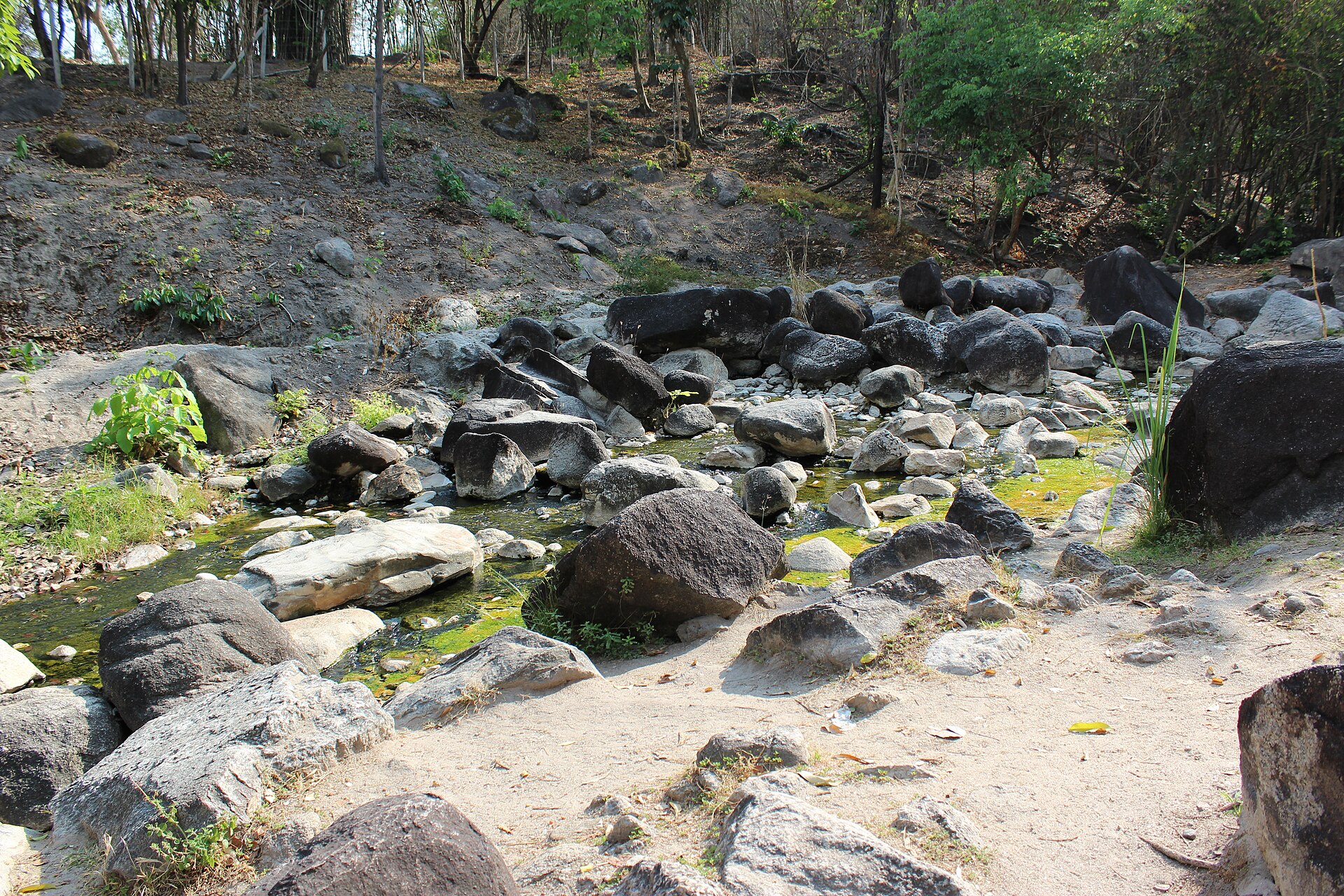
Bo Khlueng Hot Spring is a small natural hot spring tucked into a mountain valley in Suan Phueng, Ratchaburi — widely regarded as the hot spring closest to Bangkok, around 2 hours by car. The water rises from beneath the Tenasserim Hills at a source temperature of about 60°C. What makes it special is that the water is clear with no strong sulphur odour, unlike many hot springs elsewhere, so soaking feels genuinely comfortable. A natural choice for anyone who wants a relaxed mountain retreat without driving far — couples, families, and children can all enjoy a warm soak.
There are three soaking options. The free foot-soak baths are small tiled pools where you sit and dip your legs at no charge. For a full soak, there's an earthen pool (about 30 THB) and a tiled pool (about 50 THB), both at a comfortable 38–45°C. Forgot to bring a swimsuit? Wraps can be rented for 10 THB. A few steps away you'll find outdoor massage stalls for a relaxing follow-up, and rows of local vendors selling food and drinks — soak, get hungry, eat right there. Real reviews all agree: the water is warm and soothing, staff are welcoming, and the natural atmosphere is quietly beautiful.
Very wallet-friendly: the gate fee is just 5 THB. Soak, massage, snacks — still in the low-hundreds THB per person. Free car park, changing rooms, and showers on site. Open daily — weekdays 08:00–17:00, weekends and holidays 08:00–18:00. Weekdays are calm and uncrowded; weekends bring more visitors.
Worth knowing: this is a rustic, community-style spring, not a luxury spa resort. Some spots look their age, and on busy days the pools may have a queue. The source water is genuinely hot, so ease in gradually. A separate entry rate applies to foreign visitors versus Thai nationals. That said, for a natural hot spring on a budget, close to Bangkok, paired with a Suan Phueng trip, it's exactly what you're looking for — and it has been a staple on every Suan Phueng itinerary for years.
Book Ratchaburi Tours and Tickets in Advance
Covering multiple Ratchaburi spots in a single day is much smoother with advance bookings. Whether it's a Damnoen Saduak tour with Bangkok pick-up, canal paddle-boat tickets, or an animal-farm package in Suan Phueng — booking through Klook or GetYourGuide means a clear price upfront, no queuing at the gate, and some tours include a guide to narrate along the way.
💡 Know Before You Go — Ratchaburi
Ratchaburi's sights are spread out and public transport is limited, especially out in Suan Phueng. Renting a car or hiring a driver for the day is the easiest way to combine the floating market, temples and mountain farms.
Floating-market vendors, paddle-boat rentals and small street stalls almost always take cash only. Bring small Thai baht notes; ATMs are easy to find in Ratchaburi town but scarce around the markets and Suan Phueng.
Damnoen Saduak floating market is busiest and most photogenic before late morning, then quiets down by early afternoon. Aim to arrive before 11am. The old markets (Jet Samian, Koh Yuki) only open Friday to Sunday.
At Wat Nong Hoi and other temples, cover your shoulders and knees. Shoes come off inside shrine buildings. A light scarf in your bag is handy for the hilltop Guan Yin shrine.
Staff at bigger attractions like Alpaca Hill and Robinson speak some English, but small vendors and rural spots may not. A translation app and screenshots of place names in Thai help a lot when asking for directions.
At Bo Khlueng hot spring the foot bath is free and the bathing pools cost only a few baht, but there are few rentals on site. Pack a small towel and a change of clothes if you plan to soak.
Plan the Perfect One-Day Ratchaburi Trip
With a single day, split into two zones. Start the morning on the lowland side: head to Damnoen Saduak Floating Market in time for the busy period before 11:00, as the market winds down by midday. Then swing by Khao Ngu Stone Park in the city — photograph the limestone mountains rising from the lake and walk up to see the cliff-carved Buddha images.
In the afternoon, head for Wat Nong Hoi to pay respects to Guan Im and take in the panoramic city views, then drive up to Suan Phueng to close the day at Alpaca Hill or Veneto Suan Phueng while the evening light is still good. If you're staying overnight in Suan Phueng, swing by Bo Khlueng Hot Spring in the morning before heading home. The old markets — Jet Samian and Koh Yuki — are only open Friday–Sunday, so plan your day accordingly.
Staying a night in Suan Phueng or Ratchaburi town takes all the rush out of the trip. Options run from mountain-view resorts to city-centre hotels. Compare prices and book ahead — rooms go fast on long weekends.
Check Ratchaburi & Suan Phueng Accommodation