🔄 Last checked 27 Jun 2026 · details and hours can change — check the venue before you go
📍 All restaurants on the map
Tap a pin for the spot + nearby stays
Sisaket's charm is that it's "a province with many kinds of attractions in one place." The in-town highlights cluster around the Huai Nam Kham island park, a green public park of more than 90 rai in the middle of the city with cycling paths, the 16-storey Si Lamduan Tower for a 360-degree city view, and an aquarium where kids walk through a fish tunnel. In town you'll also find Somdet Phra Sri Nakharin Park, Thailand's first such royal park, with tens of thousands of lamduan trees to stroll among in the breeze. Temple lovers are spoiled for choice — the Million-Bottle Temple in Khun Han, its water-set ubosot glittering with glass bottles, the Suphannahong boat temple in a pond, and Wat Phra That Rueang Rong with its four-Thai-ethnicity art. Head out of town toward Kantharalak and you reach the durian-orchard communities on the Phanom Dong Rak volcanic soil, home to Sisaket's famous GI-grade volcanic durian. It all links up easily — for spiritual travellers, nature lovers, history buffs, and families alike.
This list includes the pins you shouldn't miss when you're in Sisaket, like Wat Maha Phuttharam (the Great Buddha Temple), the royal temple at the heart of the city that enshrines Luang Pho To; Wat Pa Maha Chedi Kaew (the Million-Bottle Temple), decorated with more than 1.5 million glass bottles across the whole complex; Prasat Sa Kamphaeng Yai, the most complete Baphuon-Angkor Wat-style Khmer sanctuary group in the province; Wat Phra That Rueang Rong, which blends the art of four Thai ethnic groups — Lao, Khmer, Suay, and Yoe; and the Sam Ta Rom village where you can taste GI volcanic durian right in the orchard, a specialty famous enough to have its own annual volcanic-durian festival in late June. Café lovers have Lhong Pah, set among big trees in town. Scroll through the details spot by spot and map out your own route.
Wat Maha Phuttharam (Great Buddha Temple / Luang Pho To)
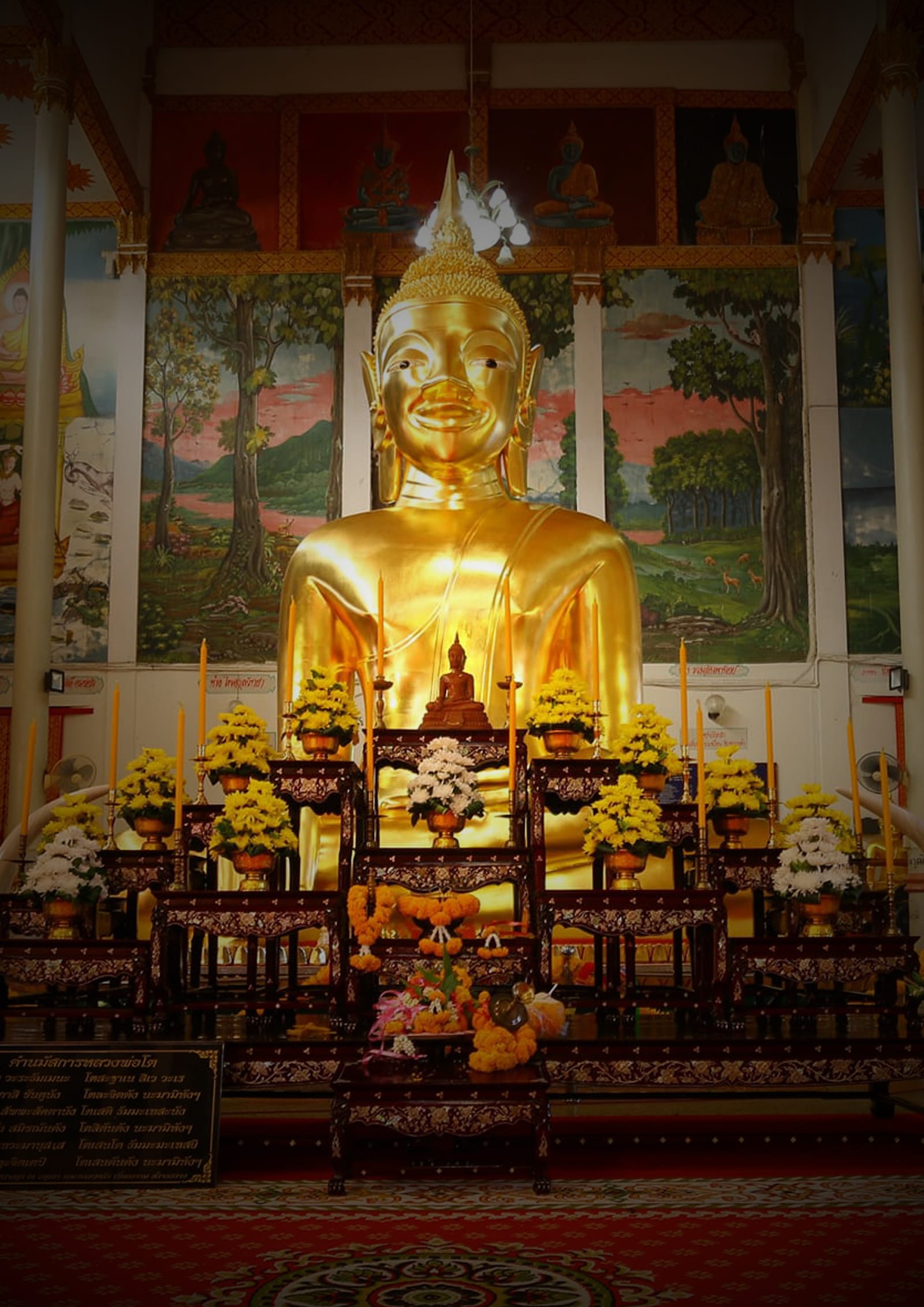
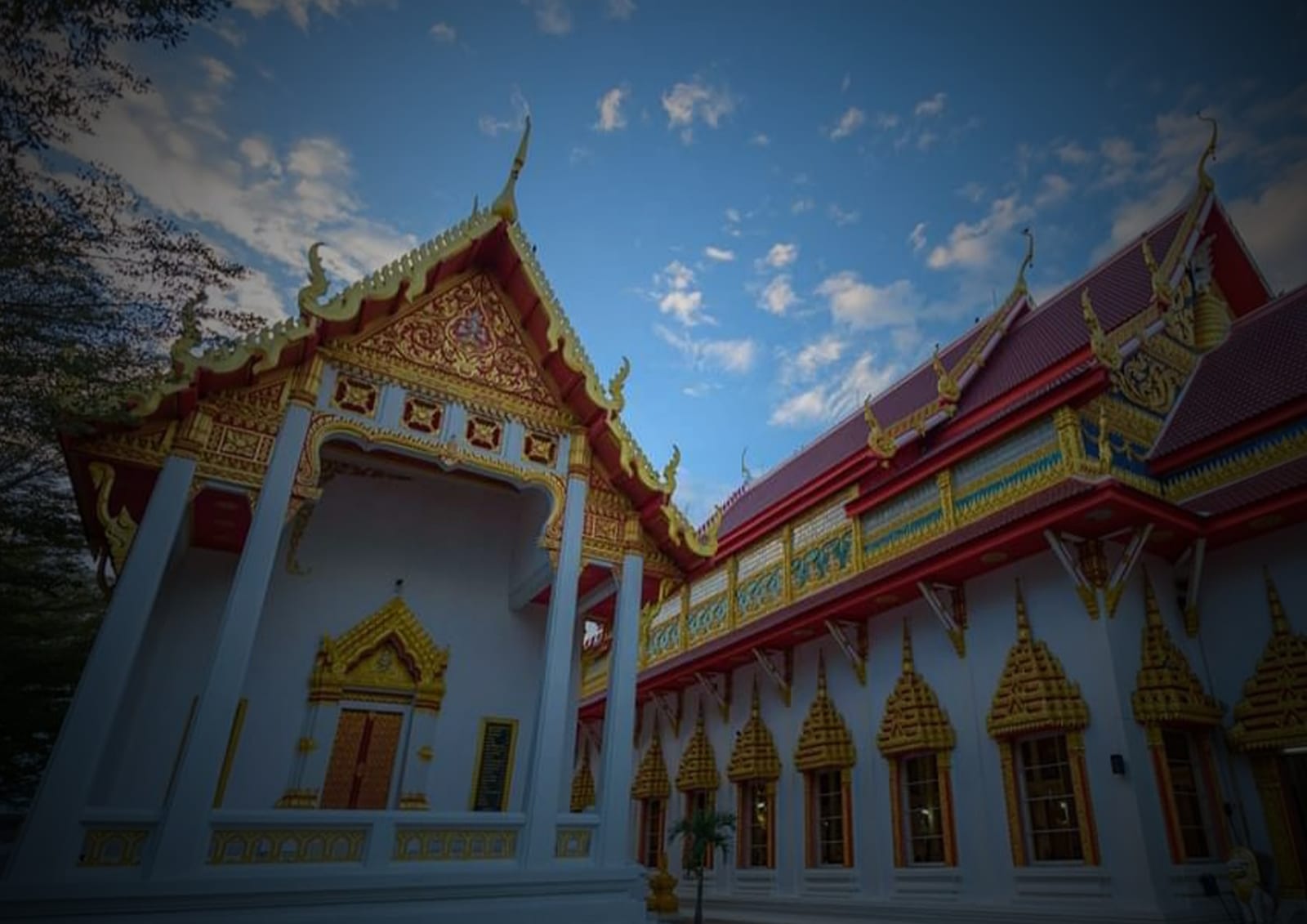
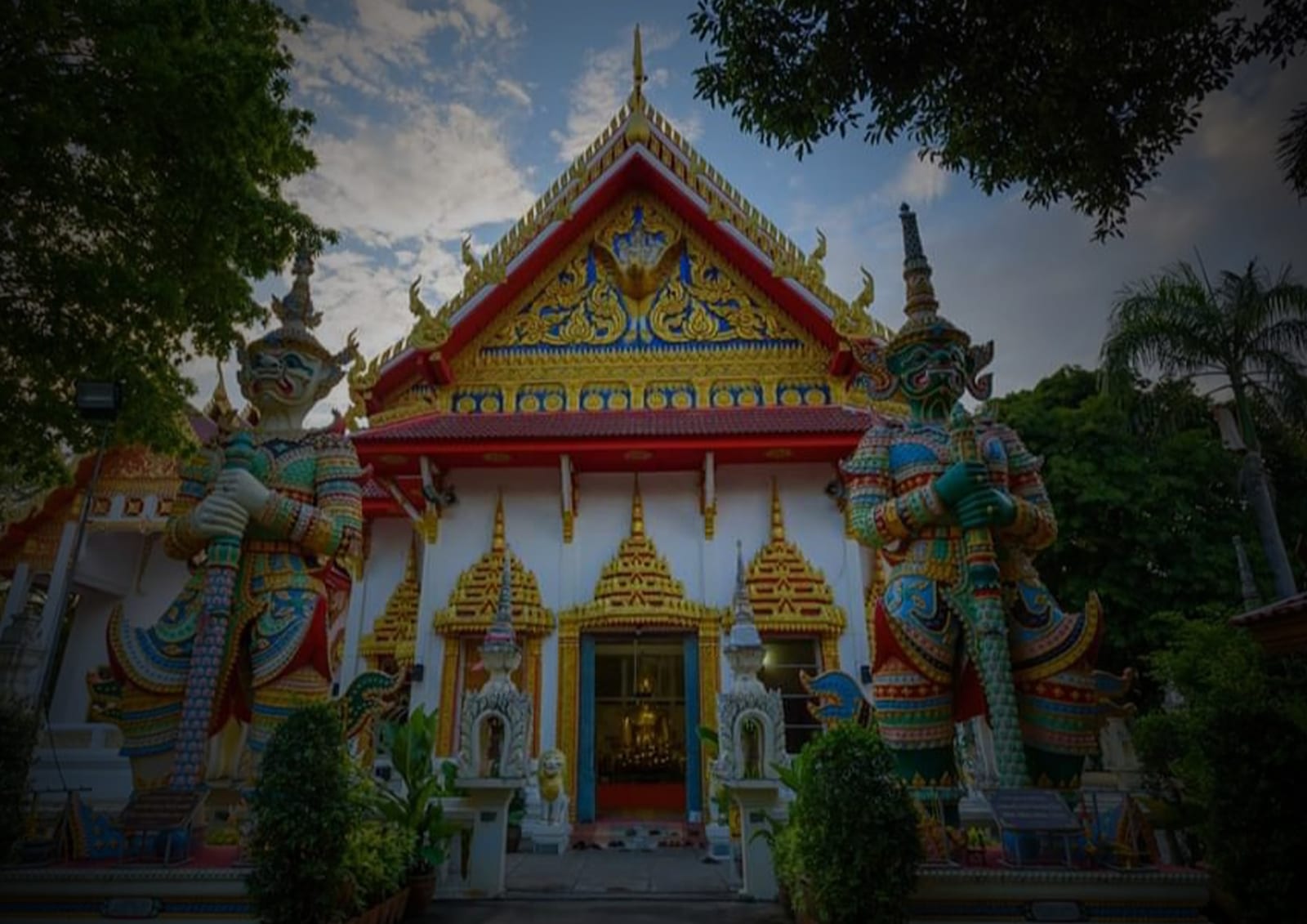
If you had to pick the one place that is the true heart of Sisaket city, locals here usually think of Wat Maha Phuttharam, or what everyone calls the "Great Buddha Temple." It sits in the middle of town along Khukhan Road, reachable by car or on foot from the market — no need to go far. It's the first place many people bring visiting relatives and friends, because it has been the spiritual centre of the whole province for generations.
What everyone comes to pay respects to is "Luang Pho To," a large Maravijaya-posture Buddha standing about 6.85 metres from base to topknot, with a lap width of roughly 3.50 metres. The story passed down over the years is that the image is very old, thought to date back to the Khmer period, and elders tell that when Sisaket city was newly founded around 1785, someone came upon the image sitting in the middle of a red forest, so a temple was built to cover it there, before it gradually grew into the large temple later elevated to royal-temple status.
The temple is quieter than you'd expect for a city-centre spot. In the early morning and evening, when the sun is gentle, people come to worship, light incense, apply gold leaf, and rest under the shade of the trees. Many spiritual visitors stop by to ask for blessings for work, health, and good fortune, then photograph Luang Pho To as a keepsake. Families can wander around at an unhurried pace.
As for visiting, the temple is open daily from around 06:00 to 18:00, and there's no admission charge to enter and pay respects. Modest temple attire is enough. There's parking within the grounds. It makes a good first stop on a Sisaket city trip, before moving on to a nearby market or restaurant in town.
Wat Pa Maha Chedi Kaew (Million-Bottle Temple)
 Photo by Mark Fischer (CC BY-SA 2.0) via Wikimedia Commons🔍 Tap to zoom
Wat Pa Maha Chedi Kaew, which everyone calls the "Million-Bottle Temple," is a small forest temple at Ban Don, Tambon Non Sung, Khun Han district that became a famous Sisaket landmark, because nearly every structure — from the gateway arches, walls, halls, bell tower, and monks' quarters right down to the toilets — is decorated with more than 1.5 million multicoloured glass bottles in total. The idea came from Luang Pu Lot, who saw leftover discarded bottles in the community and arranged them into artwork. Whenever the sun hits, the whole wall glitters like stained glass. It's a great fit for people who love beautiful, unusual temples, photographers, and families who want to stop and worship in a quiet setting.
The highlight not to miss is the "water-set ubosot," a four-porch ordination hall standing prominently in a pond. The building is covered in glass bottles all over, and its reflection in the water is lovely, especially in the morning and evening light. Another favourite is the inner wall, where bottle caps are arranged into patterns — look closely and you'll see the craftsmen's care. There's also a large white jade Buddha to pray to. Most visitor reviews praise it as far more striking and grand than expected, and about 1–2 hours is right for walking around.
Budget-wise it's very easy, because it's a temple: entry is free, no admission charge, just a donation box for those who wish. The atmosphere around the temple is fairly quiet and shaded, forest-temple style, open around 06:00–18:00 daily. It's out in the Khun Han direction, fairly far from town, so a private car is most convenient — we recommend pairing it with other Khun Han attractions in one day. Dress modestly, as this is a religious site.
Things to know: in April 2024, a new chedi under construction (not yet finished) collapsed. The temple plans to rebuild, but the original highlights — the water-set ubosot, the bottle ubosot, and the main Buddha — all remain intact, and visitors continue to come as before. Anyone visiting during this period can still get lovely photos with no trouble.
Wat Phra That Suphannahong
Wat Phra That Suphannahong, which people around here casually call "Wat Ban Wan," is a temple to keep on your list if you enjoy hunting for unusual temple photo angles. The reason so many people stop by is the golden ubosot built atop a large replica Suphannahong royal barge, floating in the middle of a pond. The ubosot is about 5 metres wide and roughly 13.6 metres long, with a tiered mondop spire that enshrines Buddha relics. Seen from the pond's edge, it really does look like a royal barge floating on the water. It suits people who want distinctive temple photos and worshippers looking for a quiet atmosphere close to town.
What you shouldn't miss is the entrance walkway, built as a long Naga stairway crossing the water. The green Naga carvings are beautifully sculpted from the very entrance, and many reviews agree that "the temple is beautiful right from the entrance." Walk up to the top to pay respects to the Buddha relics, the Buddha images, and figures of Luang Pu Thuat and Somdet To. You'll need to remove your shoes before going up. In the morning or evening, when the light is soft and the pond is still, it's the best moment for a reflection shot of the barge.
Costs are very easy: entry is free, no admission charge, open daily from around 05:00 to 18:00. It's located at Ban Wan, Tambon Nam Kham, Mueang Sisaket district, about 10 kilometres from town — an easy 15–20-minute drive, with parking at the temple. For a community atmosphere, come on Sunday, when the Ban Wan community culture market sells local food and treats at friendly prices.
This temple ranks among Sisaket's must-see temples because the image of an ubosot on a barge in the water is easy to remember and gets shared widely on social media. Its Google review score is around 4.5, which is good. One small thing to know: this is a community temple, not a commercial tourist site, so you should dress modestly, keep your voice down in the ubosot area, and expect that on non-holiday weekdays it may be quiet — which becomes a plus for anyone who wants photos without people walking through the frame.
Huai Nam Kham Island Park and Si Lamduan Chaloem Phra Kiat Tower
If you want to see all of Sisaket in one go, the Huai Nam Kham island park is the answer — a 90-plus-rai park island floating in the middle of a reservoir in the city centre, connected by a bridge. The island is shaded by big trees, with a cycling and running loop of about 3.6 kilometres, perfect for exercising morning or evening, bringing kids to run around, or just relaxing by the water at no charge. Locals come here routinely, so it's a genuinely lively city-centre place to unwind.
The star of the island is the Si Lamduan Chaloem Phra Kiat Tower, a 16-storey tower rising about 84 metres — a prominent landmark and the tallest in the province. Take the lift to the top floor and walk around for a 360-degree city view, taking in the whole island, the reservoir, and Sisaket stretching into the distance. Evening is the golden hour; many reviews agree the sunset here is lovely. The lower floors also have an exhibition telling the city's history, its notable figures, and the way of life of Sisaket people to browse before heading up.
It's easy on the wallet: the park is free, while the tower costs about 30 baht for adults and 20 baht for children and students; seniors and small children enter free. There's ample parking and restrooms. On the island you can also visit Sisaket Aquarium in the same trip. Note that the tower is closed on Mondays, and its opening hours are shorter than the park's (the park is open from morning to night, around 05:00–20:00). If you plan to go up the tower, come in the late morning to afternoon to make it before closing.
It's located in the ring-road area of Tambon Mueang Tai/Nong Khrok, just a few minutes from town — easy to reach by car or motorbike. What makes it so popular is getting everything in one place: exercise, a high viewpoint, the sunset, and an easy family stroll that needs no planning. It's a city-centre attraction you never tire of, no matter how many times you go.
Wat Phra That Rueang Rong
 Photo by Ddalbiez (Dominique Dalbiez) from Wikimedia Commons, licensed CC BY 3.0🔍 Tap to zoom
If you come to Sisaket and want an image that truly represents the province, Wat Phra That Rueang Rong (Wat Ban Sang Rueang) is a pin many people rank as a defining city landmark. It's in Tambon Ya Plong, Mueang district, about 7–8 kilometres north of town — an easy drive of under twenty minutes. This stupa was built by Luang Pu Thamma Phithaksa, a native of Ban Sang Rueang. It stands out as a tall multi-tiered stupa, about 49 metres high and divided into 6 levels, and what draws the most attention is that its architecture blends the art of four southern-Isan Thai ethnic groups — Lao, Khmer, Suay, and Yoe — giving it a feel unlike ordinary temples. It suits culture lovers, photographers, and families who want to show children the real thing rather than read about it in a book.
The highlight not to miss is climbing the stairs all the way to the top floor and stepping out for an open, all-around view of Sisaket city. Many visitor reviews agree that the view up top is worth the climb. Along the way you can stop at the Four-Thai-Ethnicities Museum on the 2nd–3rd floors, which keeps old folk household items, tools of the trade, and collections that tell the way of life of the four ethnic groups in this area. In the parking area, an ox-cart statue is the first photo spot everyone tends to stop at before entering.
Budget is very easy, because entry is free, no ticket, just a donation box to give as your faith moves you. Open daily around 06:00–18:00. We recommend the morning or late afternoon when the sun starts to soften, since the stairs are fairly steep and the top gets hot. If you come at midday, bring water and a hat and it'll be more comfortable. This is a temple, so modest dress helps you enjoy the visit at ease.
It's popular because it combines several things in one place — paying respects to the Buddha relics enshrined on the top floor, learning about the four-Thai-ethnicities way of life, and a city viewpoint all together, without spending a single baht. It's a well-rounded starting point for a Sisaket trip, taking about one to two hours to walk around in earnest. A small thing to note: the museum may be closed at times or require you to ask staff first, and on important religious days it gets busier than usual.
🛏️ Hotels in Sisaket — stay in town or near Kantharalak-Khun Han
To make the most of Sisaket, stay a night so you can stroll the island park in the evening and tour the Million-Bottle Temple and the volcanic-durian orchards at an easy pace. The most popular hotels cluster in Sisaket town, near the island park, Somdet Park, the aquarium, and the train station — a mix of in-town hotels and friendly-priced stays, all easy to get around from. If you're focusing on the Kantharalak-Khun Han side, choosing a place on the Kantharalak side saves a lot of driving time on the first morning. Pick a location close to where you want to be on your first morning to get the most value. Compare prices and reviews before you book.
🔍 Check Sisaket Hotel Prices (Agoda)Somdet Phra Sri Nakharin Park, Sisaket
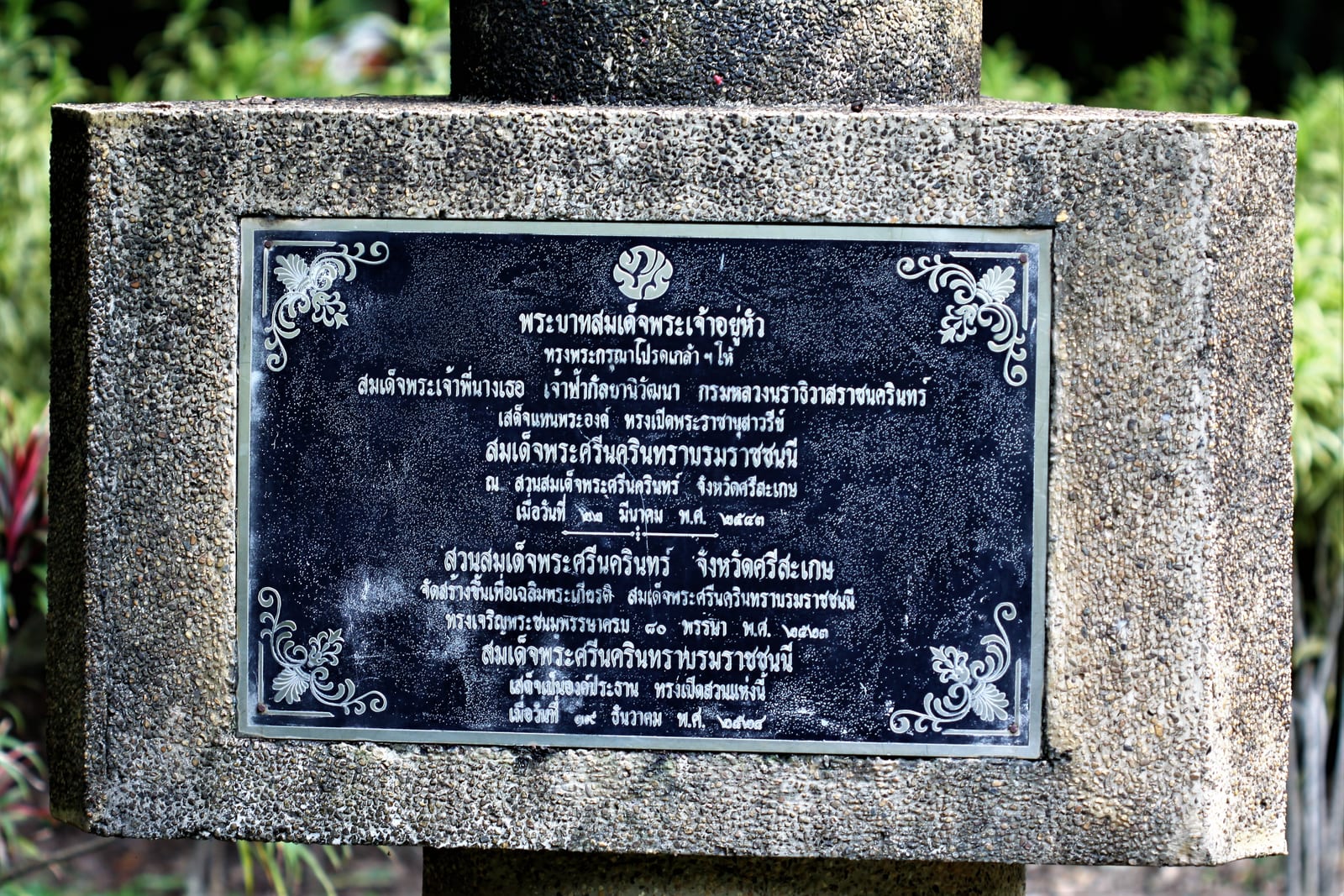
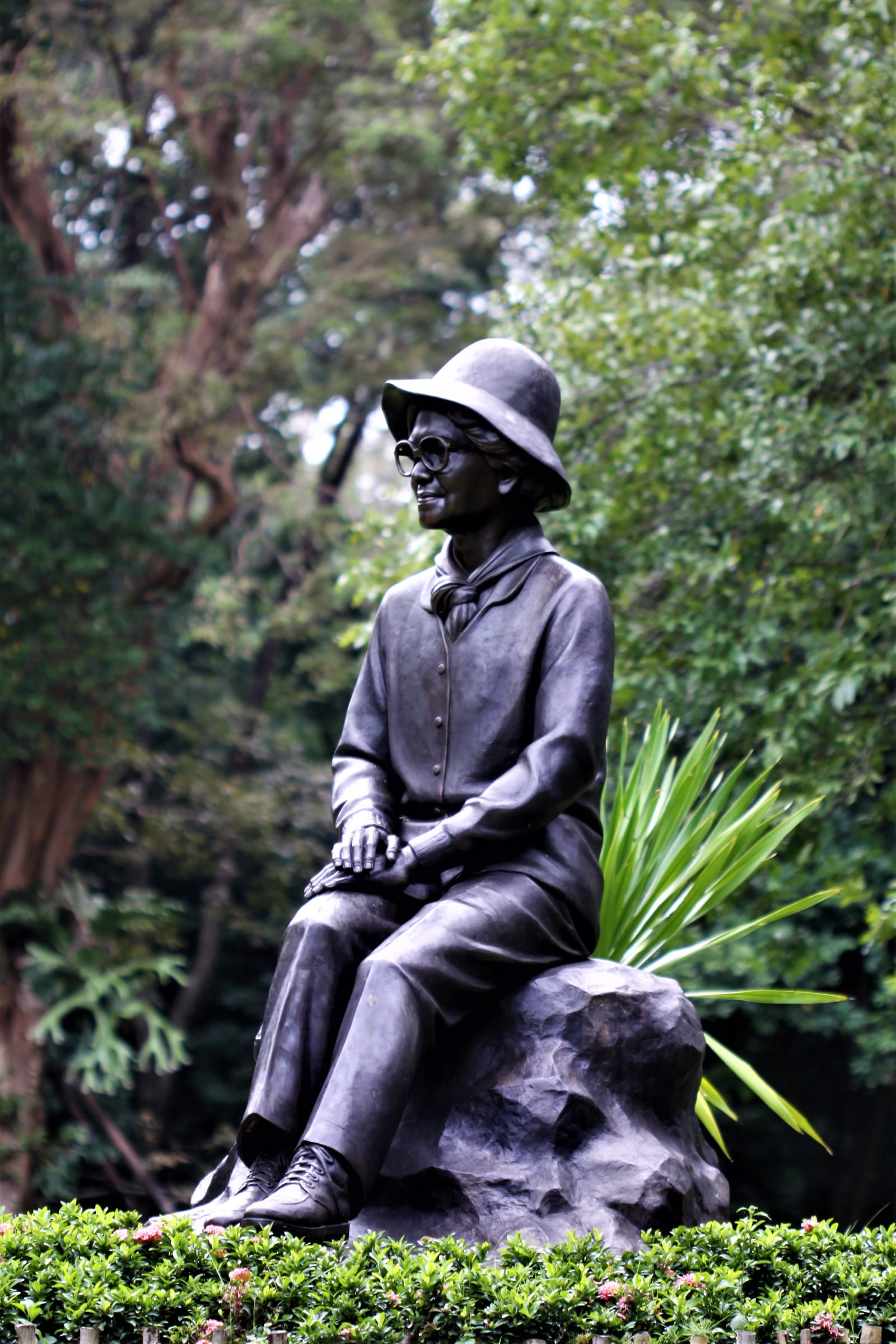
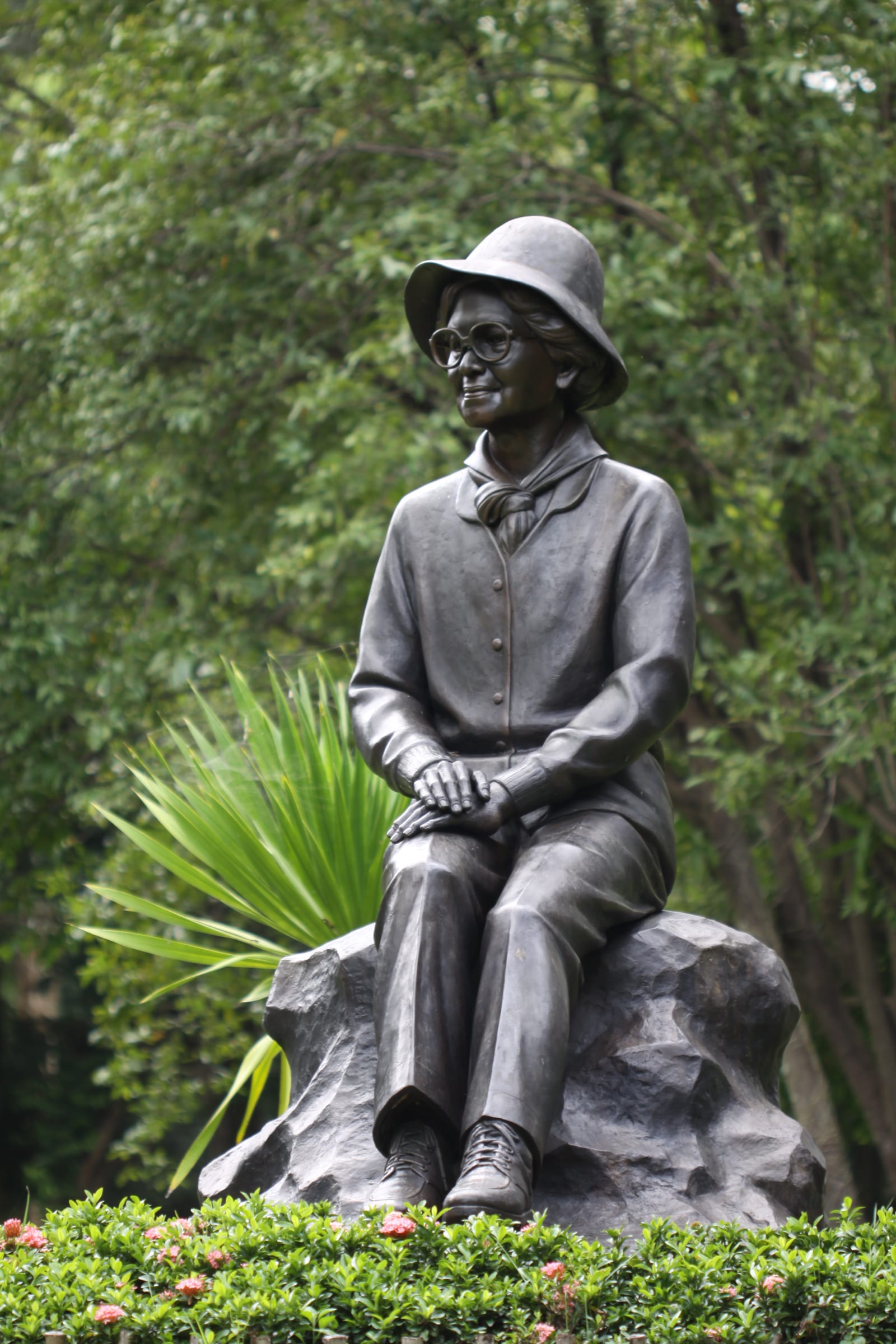
Locals call it simply "Suan Somdet Ya," and if you ask for one place to walk and relax in town, people here almost always think of this first. What makes this park special is that it's Thailand's first Somdet Phra Sri Nakharin park, open since 1981 on a wide area of about 237 rai in Tambon Nong Khrok, just a few minutes' drive from the city centre.
The real claim to fame is the "lamduan grove" — more than forty thousand lamduan trees filling the grounds. The lamduan is Sisaket's provincial flower, and around March the trees bloom together, sending a gentle fragrance across the whole park. During that time the province holds its big annual event here, the "Lamduan Blossom Festival — Carrying On the Legend of the Four Thai Ethnicities," with a light-and-sound show telling the story of the Lao, Suay, Khmer, and Yoe who are the roots of Sisaket people. Come at that time and the atmosphere is especially lively.
Besides strolling under the trees, the grounds also include Sisaket Zoo, with deer, ostriches, crocodiles, and even hippos. Kids usually love it; that part charges a separate entry — around 10 baht for children and about 30 baht for adults — but the public park itself is free. Many families come to lay out a mat and relax, exercise, or bring the kids to feed the fish in the evening.
For a park walk we recommend the morning or evening, since the midday sun is fairly strong. The park is open daily around 08:30–18:00. If you want to see the lamduan in bloom you'll need to plan for March, but even on an ordinary weekday it's a quiet, shaded place to relax, ideal to stop by while touring Sisaket city.
Sisaket Aquarium
If you're bringing kids to Sisaket city and worry they'll get bored, this is the safest answer. The Sisaket Aquarium is the first aquarium in southern Isan, set within the 80th-Anniversary Chaloem Phra Kiat Park on the Huai Nam Kham island. It displays more than 4,000 freshwater and marine fish, split into around 79 freshwater species and another 22 marine species. It's a pleasant walk-through in air-conditioned cool — a great fit for families with young children, student groups, or anyone who wants to escape the Isan heat for an hour or two.
The highlight everyone mentions is the 24-metre underwater glass tunnel; walk through it and fish swim overhead all around you — sharks, rays, turtles, and big fish — and it photographs beautifully. Another thing not to miss is the diver show, when a diver goes in to feed the fish in the big tank, usually in the afternoon around 14:00; if you want to catch it, time your visit. Foreign reviews on Tripadvisor praise the handsome building, the tidy layout, information signs in both Thai and English, and the great value.
Price is the selling point: adults 30 baht, children 20 baht, while children under 100 cm tall, seniors 60 and over, people with disabilities, and monks and novices enter free — cheap enough that you barely have to think about it. Open Tuesday to Sunday 10:00–16:00, closed Mondays. There's ample free parking, and nearby you can climb the Sisaket city-view tower for more photos.
A small note: this is a compact local aquarium, not as large as those in big cities; some tanks are fairly dim and flash is not allowed, so photos may require holding the camera steady. But for the price, and with a glass tunnel that gives a genuine feel, it's a worthwhile and fun indoor attraction for families in Sisaket.
Prasat Sa Kamphaeng Yai
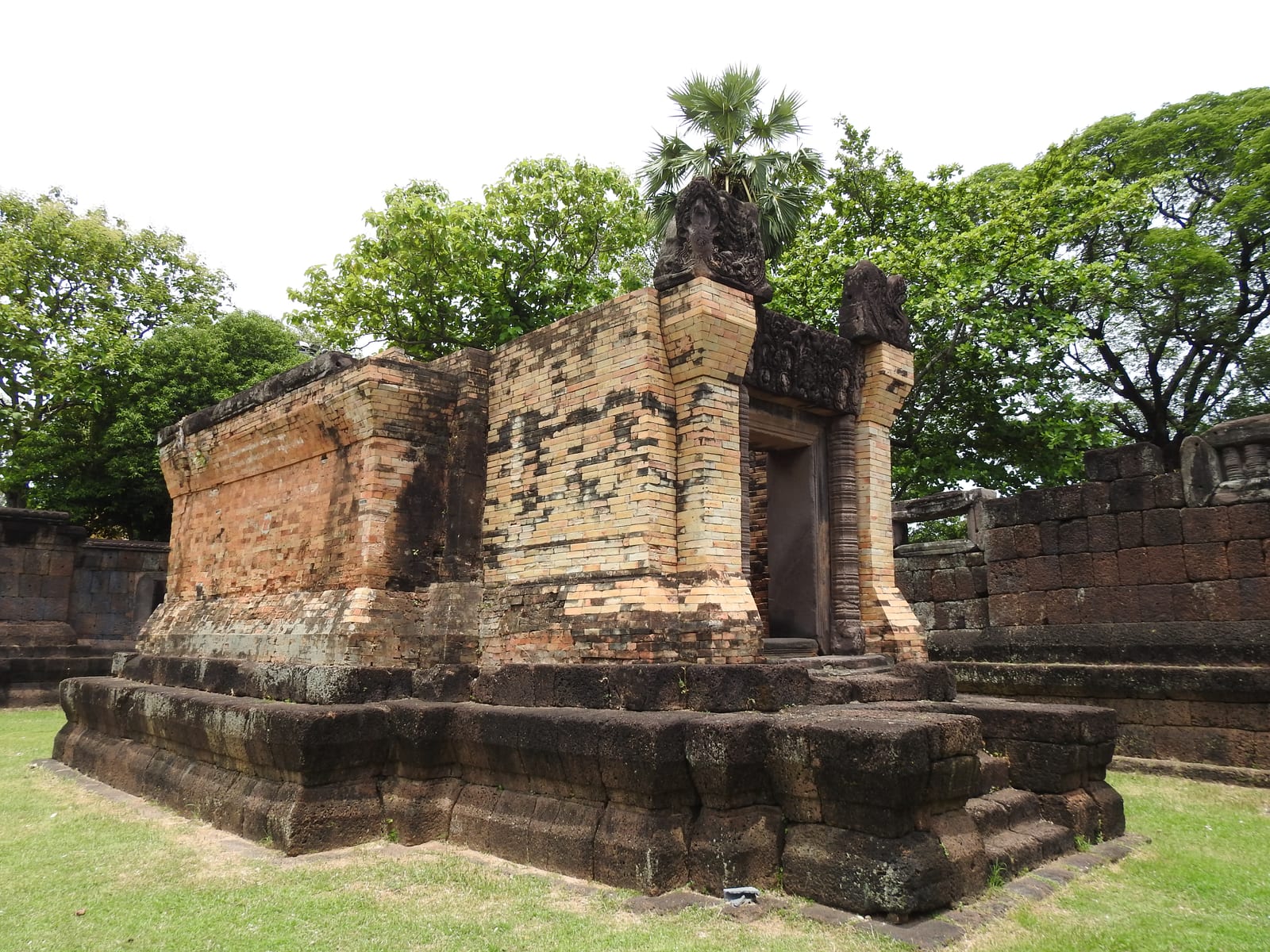
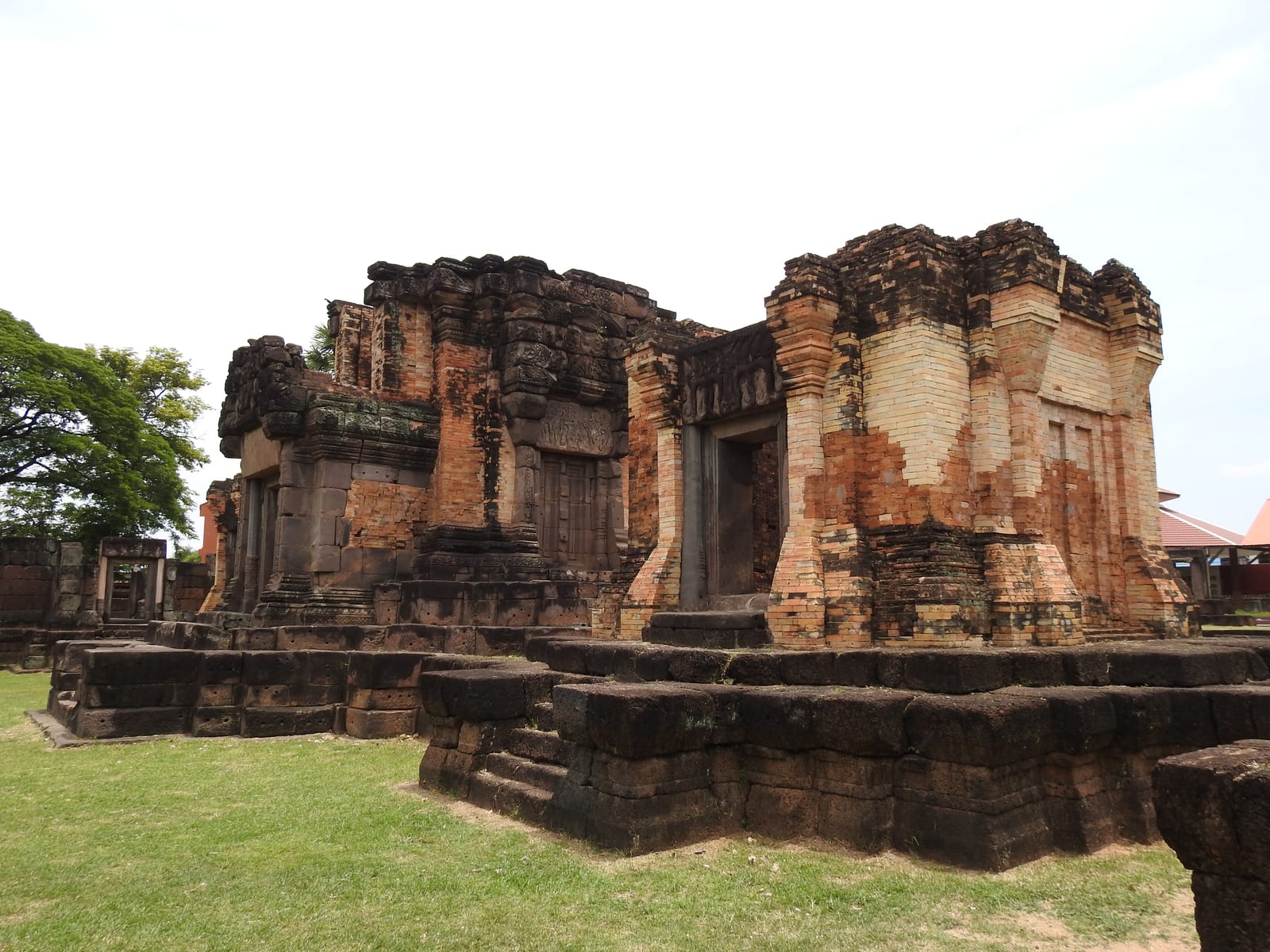
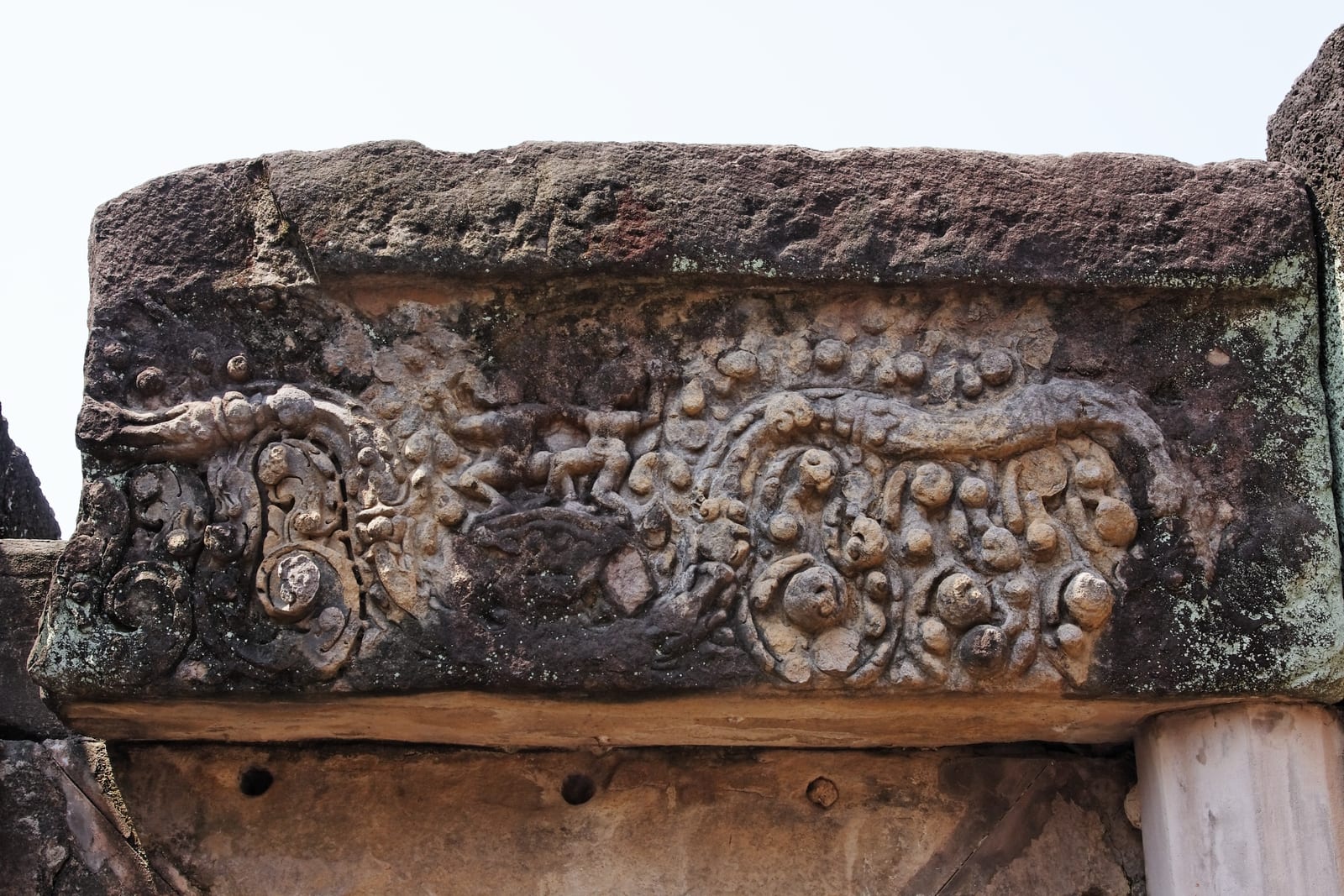
If you love the real thing when it comes to Khmer sanctuaries, not just a small pile of stones, Prasat Sa Kamphaeng Yai (its ancient name is "Prasat Sri Phrutthesuan"), inside Wat Sa Kamphaeng Yai in Tambon Sa Kamphaeng Yai, Uthumphon Phisai district, is the largest and most complete Khmer sanctuary group in Sisaket. The standout feature is three brick prangs lined up on a single laterite base, in the Khmer Baphuon-into-Angkor Wat style, over a thousand years old. It suits history buffs, architecture photographers, and anyone who wants to explore Sisaket with a deep dive into Khmer culture.
What you shouldn't miss is the "Narai Banthomsin lintel," depicting Vishnu reclining on the Naga Ananta, carved in such detail that many rank it among the finest lintels of any Khmer sanctuary in Thailand. Around it are several more lintels narrating Hindu deities — Vishnu, Shiva, and scenes from legend — as well as a Naga-sheltered Buddha carved from stone found on the site. This place is also known for once yielding a large bronze Phra Kring image, now kept in a museum.
The overall atmosphere is quiet and shaded by big trees within the temple grounds, with a pond and a surrounding boundary wall. Many genuine reviews say the area is spacious and easy to walk around, but note that the midday sun is very strong — we recommend coming in the morning or late afternoon and carrying a hat and water. You can rest easy on cost, because entry is free with no fee.
It's located about 2 kilometres from Uthumphon Phisai town, not far to drive from Sisaket city, with easy parking at the temple, open daily during the day. It's popular because it's a top-tier historical landmark in the province, with a Google review score as high as 4.6 — you come away with both knowledge and lovely photos. It pairs well with the nearby Prasat Sa Kamphaeng Noi in one trip.
Lhong Pah Cafe' Sisaket
If you're in Sisaket city and want somewhere to chill away from the bustle without driving far out of town, "Lhong Pah Cafe' Sisaket" answers that very well. It's a forest-feel café hidden in town, surrounded by big shady trees and easy on the eyes. Step inside and it's as if you've slipped into a real forest, living up to the name. It suits people who want to sit quietly and sip coffee alone, hang out easily with friends, or photographers hunting for pretty nature angles.
The highlight here is the atmosphere and the many photo corners to choose from — the bird's-nest corner, the wooden walkway through the garden, and the big-tree zone. On the food side it holds its own too, with fresh coffee, cold drinks, homemade bakery and treats, and even pizza and one-plate meals. Many genuine reviews agree the coffee and treats taste better than expected and are worth it for the setting; people who come tend to fall for this kind of shade and greenery.
There's seating in both the cool air-conditioned indoor zone and the open garden zone, so choose to suit your mood and the weather. There's ample parking and clean restrooms, and the per-person budget is roughly 100–250 baht — easy to pay for a café with this much atmosphere. It's at 240 Moo 4, Tambon Sam, Mueang Sisaket district, open daily around 09:00–20:00 (hours may change at times, so check the shop's page to be sure).
The café is steadily popular among Sisaket locals and café-loving travellers, with plenty of photos and reviews shared on social media, because a café with a genuine forest feel this close to town isn't easy to find. Note that on holidays it may get busy; if you want pretty, quiet angles, come in the morning or on a weekday, and bring a camera or phone, because there really are many photo spots.
Sam Ta Rom Agritourism Village (Volcanic Durian Orchards)
If you want to know just how good the fabled "Sisaket volcanic durian" really is, Ban Sam Ta Rom in Tambon Trakat, Kantharalak district is the place to try it at the source. This is a full-on agritourism village where the community joins together to open several orchards to visitors. Each orchard is planted on old volcanic soil around the Phanom Dong Rak range, which is why the Monthong durian here has earned GI status — the flesh, as reviewers agree, is dry, chewy rather than mushy, sweet and rich in good balance, with a milder smell than durian from other regions. It suits anyone who wants to eat durian truly fresh off the tree.
The highlight not to miss is riding a trailer-tractor or a covered sidecar motorbike that shields you from the sun, touring one orchard after another, listening to the growers explain how they cultivate the fruit, then tasting durian and seasonal fruit right at the base of the trees. During fruit season, around June to July, rambutan, mangosteen, longkong, and stink beans all come out together; many orchards lay on all-you-can-eat fruit buffets and have lovely check-in photo spots among the orchards. If you like souvenirs, there's honey-pickled solo garlic and famous community OTOP products to take home.
On budget, if you just ride around to see the orchards it costs tens of baht, easy on the wallet. Anyone who wants the full package — orchard tour, durian buffet, and lunch with unusual dishes like durian curry or durian rice porridge — can choose a package of around 990 baht per person. It's located about 15 kilometres from Kantharalak town and about 65 kilometres from Sisaket city, easy to reach by car.
Things to know: this is a seasonal destination, with the real peak being durian season (June–July). Out of season, many orchards close or have no fruit to taste, so we recommend calling the orchard or the community enterprise group before setting out. And if you come during the Sisaket Rambutan-Durian Festival, it gets especially crowded — arrive early for both fresh fruit and cooler air.
🎟️ Book Sisaket Tickets, Tours, and Activities in Advance
Sisaket has attractions in many spots, some far out of town — like the Million-Bottle Temple in Khun Han and the Sam Ta Rom volcanic-durian orchards. If you're not driving yourself, or you'd rather travel easily without planning the route, look for a guided southern-Isan tour with transfers, or a durian-orchard package, through Klook and GetYourGuide. Book online in advance, pay conveniently, and skip the on-site queue. Perfect for international travellers who want to catch all the highlights in one trip.
💡 Know Before You Go: Sisaket
Sisaket's attractions are spread out, and out-of-town spots like the Million-Bottle Temple in Khun Han and Sam Ta Rom have no direct public transport. Grab is scarce in town. Renting a car to drive yourself, or chartering a local car by the day, is the most convenient and best-value option.
Evening markets, local restaurants, durian-orchard entry, and small shops mostly take cash. Some places have PromptPay QR but not all, so carry small bills.
The Great Buddha Temple and the Million-Bottle Temple are quiet in the morning while the sun is still gentle — good for photos and for making merit to start the day before heading out of town. Don't forget to dress modestly at temples.
GI volcanic durian comes out around June–July, and there's an annual volcanic-durian festival in late June. If you want to taste it at the source at Sam Ta Rom, come during this window; out of season there's no fruit to taste.
Sisaket has many temples and heritage sites — the Million-Bottle Temple, the Suphannahong boat temple, and Khmer sanctuaries. Dress modestly, cover shoulders and knees, and remove shoes when entering sacred buildings.
Sisaket is a secondary city where not many people speak English, and most signs and menus are in Thai. Bring a translation app or Google Translate; you can point at pictures to order. Locals are kind and helpful.
Plan a Full Sisaket Trip in 1–2 Days
If you only have one day and want to keep it easy, do the in-town zone first. Start the morning at the Huai Nam Kham island park, go up Si Lamduan Tower for an all-around city view, then walk on to Sisaket Aquarium in the same area — great if you're travelling as a family with kids. After that, stop at Wat Phra That Rueang Rong and the photogenic Wat Phra That Suphannahong just outside town. Finish the evening at Somdet Park Sisaket (open Saturday–Sunday), eat Isan food and shop for OTOP, or relax at Lhong Pah café.
If you have two days and want to catch the full set of highlights, save the second day for the Kantharalak-Khun Han side in the south of the province. Drive up to the Great Buddha Temple in the city centre early for the view and morning mist, then stop at the Million-Bottle Temple (Wat Pa Maha Chedi Kaew) in Khun Han to photograph the water-set ubosot. If you come in durian season (around June–July), continue to Ban Sam Ta Rom to taste GI volcanic durian at the orchard. On the way you can stop at Prasat Sa Kamphaeng Yai in Uthumphon Phisai if you loop back on the northern route. In-town spots are close enough to walk between, but out-of-town places like the Great Buddha Temple and Sam Ta Rom are tens of kilometres from the city, so you should have a private car or charter one.
To make the most of Sisaket, stay a night so you can tour the Million-Bottle Temple and the volcanic-durian orchards at an easy pace, plus stroll the island park in the evening. The most popular hotels cluster in Sisaket town, near the island park, Somdet Park, and the train station — a mix of in-town hotels and friendly-priced stays. If you're focusing on Kantharalak-Khun Han, choosing a place on the Kantharalak side saves driving time on the first morning. Compare prices and reviews before you book.
🔍 Check Sisaket Hotel Prices (Agoda)