🔄 Last checked 25 Jun 2026 · details and hours can change — check the venue before you go
📍 All restaurants on the map
Tap a pin for the spot + nearby stays
If you're after a neighborhood you can graze through from early evening until late without ever getting bored, Yaowarat is the answer, no question. This dragon-shaped street is one of Bangkok's oldest Chinatowns, and its charm isn't just the neon Chinese signs or the commemorative gateway arch — it's the roadside stalls that, once the sun dips, roll out tables, set up burners and light the flames until the whole street turns into one long open-air kitchen. Walk a few steps and you can switch cuisines all night long, from a shark-fin-and-dim-sum restaurant to clear, peppery roll noodles, crispy oyster omelettes and deep fish rice soup, all the way to sweets like Singapore-style lod chong and mango sticky rice. Down the little lanes of Talat Noi and Trok Rong Moo hide old charcoal-grill shops that have been at it for decades. That's what sets Yaowarat apart from any other eating district in Bangkok — it gathers great food from many heritages, at many price points, all within walking distance.
This list has places backed by real awards and real time — Hua Seng Hong, Yaowarat branch, which started as a tiny fish-maw shop on Yaowarat Road over 50 years ago and grew into a shark-fin-and-dim-sum restaurant with all-day queues; Nai Ek Roll Noodle, the famous clear, peppery roll noodles at the mouth of Yaowarat Soi 9, listed in the Michelin Guide's street-food selection; Nai Mong Hoi Thod across from MRT Wat Mangkon, the crispy oyster-omelette specialist that's been part of the neighborhood for ages; Jek Pui Curry Rice, a 70-year legend beside Wat Mangkon that locals nickname "musical-chairs curry rice" because you eat perched on stools with no tables; and Seemorakot Red Pork Rice, the old Trok Rong Moo shop that's been charcoal-grilling red pork and crispy pork across generations. For the sweet tooth there's the original Singapore Pochana (Lod Chong) at Mor Mee junction and Jae Kee Mango Sticky Rice to finish on a sweet note — scroll down to read through each one and decide where to start your first meal.
Hua Seng Hong (Yaowarat branch)
Hua Seng Hong's Yaowarat branch is the legendary Chinese restaurant of Chinatown, part of Yaowarat Road for more than 70 years. It began as a small family shop and grew into a large multi-branch chain, but this first branch on Yaowarat is the one people talk about most. It suits anyone craving authentic Cantonese-Teochew cooking served around a round table, ordering plenty to share with family or a group of friends. If you're exploring Yaowarat in the evening and want a proper sit-down place rather than roadside street food, this is the pin a lot of people keep on their list.
The dishes nearly every table orders are the red-broth fish maw and shark-fin soup, known for being far more accessible than the high-end restaurants. Dim sum is another star — shrimp shumai, har gow, dark-soy chicken feet and steamed pork ribs — followed by shrimp wonton egg noodles, braised goose feet and the roast duck / Peking duck that's a house signature. Most reviews praise how consistent the flavor is — come back any number of times and you get the same taste. Dim sum and noodles are the two categories people mention most often, while some reviewers say plainly that you might wait a while when it's packed, though the staff stay quick and friendly.
Prices are reasonable for restaurant-style Chinese food. Dim sum starts in the low tens of baht per basket and single dishes run in the low hundreds, while soups or specials like shark fin and fish maw come at several price points depending on the ingredients. On average a meal runs about 150–500 THB per person depending on how heavily you order. The restaurant also has set menus for 2–3 people that are good value and easy to order if it's your first visit.
It sits right on Yaowarat Road at no. 371-373, near Charoen Krung Soi 14, an easy walk from MRT Wat Mangkon. It opens long hours every day from mid-morning until late, roughly 09:30–24:00, good for both lunch and a late dinner after wandering Chinatown. Worth knowing: weekend evenings get crowded and parking is hard to find, so take the train or arrive before peak, and bring some cash, since many of the traditional shops around here still prefer it.
T&K Seafood Yaowarat
When people talk about the most famous roadside seafood on Yaowarat Road, many think of "T&K Seafood" right away — the old green-shirt shop staked out on the corner at the mouth of Soi Phadungdao (the same lane as Texas Suki) where it meets Yaowarat Road, going strong for over 30 years. It's easy to spot, with staff in green polos lined up out front grilling and frying, and green plastic chairs filling the sidewalk. This place suits anyone who wants the feel of street-style seafood in the heart of Chinatown, coming with a group of friends or bringing family / foreign visitors to soak up the Yaowarat atmosphere after dark.
The dishes reviews mention most are the grilled squid and garlic-pepper fried squid roe (around 200 THB a plate), bouncy and fragrant with garlic; big grilled prawns; curry-powder crab that many people order every time; the oyster omelette; and clear-broth seafood tom yum, plus the steamed lime sea bass and deep-fried fish topped with fish sauce that are crowd favorites. The overall verdict from real reviews is "fresh ingredients, sweet, firm crab meat," with good fresh squid. On flavor, opinions split — some love it, some say a few dishes are seasoned quite boldly — and views on value split too, with some calling it worth it and others saying the prices aren't street-cheap anymore.
On price, most people land around 300–500 THB per person if you order prawns, crab and fish together. It opens in the evening and runs late (roughly 16:00 to midnight, some days until 2am), an easy walk from MRT Wat Mangkon. The thing to brace for is that it gets "really crowded" — at peak you'll queue, service is rushed in the busy-shop style, and the seating inside is in narrow rooms up several steep flights of stairs. If you go, wear something breathable and come early evening for a more comfortable time, and bring cash since the shop is mainly cash-based. The charm here is real Yaowarat atmosphere — the chaos of the open kitchen out front and hot seafood that's made this a Chinatown seafood landmark visitors from around the world come to try.
Nai Ek Roll Noodle Yaowarat
When it comes to legendary roll noodles (kuay jab) in Yaowarat, the first name that comes to mind is "Nai Ek Roll Noodle," the old shop at the mouth of Yaowarat Soi 9 that's been open over 40 years and made the Michelin Bib Gourmand list two years running (2018-2019) as one of Chinatown's must-try street foods. The shop is a row house on Yaowarat Road with seating both inside and along the sidewalk, packed almost all day from morning to late night. It's perfect for anyone wandering Yaowarat who wants original clear, peppery roll noodles, or for taking foreign friends to try the real thing. The pin is at 13.7404, 100.5100, an easy walk from MRT Wat Mangkon.
The must-order is the "clear roll noodles," the shop's star — big rolled noodles, chewy and tender, that many reviews praise for not breaking up or turning mushy, in a clear broth that's intensely fragrant with white pepper, with clean offal free of any off smell (around 50 THB). Follow it with the "crispy pork rice," another signature — big pieces of crispy pork with crackling skin and tender meat that people say beats many other shops. For the herbal-soup crowd, don't miss the "bamboo-pith soup stewed with Chinese herbs" (around 60 THB), with ribs stewed soft and a rounded, fragrant herbal broth, plus the "offal soup / pork-blood soup" that comes with a big block of blood curd and a bowlful of offal, perfect with hot steamed rice. Prices start in the low fifties up to stewed ribs around 110 THB, a few hundred per head — good value for a Michelin shop in the heart of Yaowarat.
On flavor, reviews lean the same way: the highlights are the genuinely fragrant peppery broth and the genuinely clean offal, the crispy pork is solidly crunchy, and service is quick, with several staff taking orders before you've even got a table. On Wongnai it scores around 3.9 stars from several hundred reviews. The gripes some people raise are that the pepper is too strong for those who don't like the heat, the crispy pork rice is plated a bit messily, and the rice portion is a touch small for big eaters — worth keeping in mind.
Know before you go: the shop opens around 08:00 to midnight every day (some days stretching to 1am), and it gets busy in the evening, at night and on weekends, so expect to queue and wait for a table at times. We'd suggest the sidewalk seating, which is more open and cooler than the fan-cooled interior. There's no real parking, so MRT Wat Mangkon is the most convenient. Foreign visitors can relax, since the menu is in Thai, English and Chinese and the shop is used to international customers. What keeps it popular across generations is simply that it's the clear, peppery roll noodles that have been part of Yaowarat for decades — backed by Michelin and a queue that never lets up.
Nai Mong Hoi Thod (Oyster Omelette)
Ask anyone in Yaowarat which oyster omelette you have to try once, and the name "Nai Mong Hoi Thod" always comes up near the top. This small row-house shop on Phlapphla Chai Road, across from the MRT Wat Mangkon exit, has been frying oyster omelettes for over 40 years and made the Michelin Guide (Bib Gourmand) several years in a row. It's ideal for anyone wandering Yaowarat / Chinatown who wants the real famous version, or you can hop off the subway at Wat Mangkon and walk straight across to sit down. The pin is at 13.7422, 100.5107 — easy to spot, since there's usually a queue at the griddle.
The must-orders come in two styles — "or lua" is the crispy oyster omelette, fried in very hot oil until the edges of the batter are crisp and puffy, while "or suan" is the soft stir-fried style, smooth and moist, looking a bit like an oyster omelette folded into egg. Both use big, fresh oysters packed onto the plate. If you like a satisfying chew, order or lua; if you prefer soft on the tongue, order or suan. You can also choose mussels instead of oysters. Plates start at a small size around 100 THB, medium 200, and large around 300 THB, served with a sweet-and-sour plum dipping sauce that cuts the richness well.
The verdict from real reviews mostly praises the highlights the shop is known for — big, fresh oysters and crispy batter that isn't greasy. Many call it the best or lua they've ever had. On Google it scores around 4.3 from over 2,000 reviews. At the same time, some note that you wait a while when it's packed, the cook sometimes rushes and burns the edges of the batter, and prices run higher than a typical oyster omelette — the trade-off of a famous shop where customers never stop pouring in.
Know before you go: the shop opens around 10:00-19:00 and closes Monday-Tuesday. Seating is small tables both inside and roadside, in genuine Yaowarat street-food style with no air-con. Weekends and evenings bring long queues, so allow time to wait. The shop is mainly cash-based, with a photo menu and size numbers so foreign visitors can point to order easily. Pair it with other shops around Wat Mangkon-Yaowarat and graze on from there.
Lim Lao Ngow Yaowarat
When it comes to the "jumping fish balls" of Yaowarat, almost everyone thinks of this shop first — Lim Lao Ngow, the old Wat Koh original, a legendary fish-ball noodle shop that's been part of this neighborhood for over 80 years. It sets up roadside where Song Sawat Road meets Mittraphan, across from Wat Samphanthawong (Wat Koh), in front of the Charoen Pokphand building. If you love serious fish-ball noodles and want to follow a Michelin Bib Gourmand shop that's made the list nine years running (2018–2026) on a low-tens-of-baht budget, this is a pin you have to drop.
The must-order is the "bouncy fish balls," what people commonly call jumping fish balls, made from pure fresh saltwater fish with no flour added. Reviews agree the texture is firm and bouncy, chewy and springy, with a clean, fragrant fish aroma. Pair them with the signature hand-kneaded egg noodles that many say are just the right chewy-tender. Order it "dry" and you get noodles tossed with black vinegar, fried garlic and spring onion, with a tart edge that cuts the richness. If you prefer broth, get the soup bowl or noodle soup. Another not-to-miss is the plump fish wontons, plus the deep-fried fish cake (hue kuay) that's crisp outside and soft within.
The setting is a genuine Yaowarat roadside shop — simple plastic tables and chairs, not many seats, quick service, and you're up and gone once you've eaten. Prices start around 40–50 THB a bowl, a separate plate of fish balls runs in the low tens, and a big plate of fish wontons is around 170 THB — reasonable for a Michelin-level shop. Some reviews say it's a touch pricier than ordinary roadside noodles, but most conclude the fish-ball quality is worth what you pay.
Know before you go: this old original branch opens evenings only, roughly 16:30–20:30 every day, not at lunchtime, so check the hours if you're set on going. The after-work stretch gets fairly crowded, so you may queue. It's a short walk from MRT Wat Mangkon or the Hua Lamphong side, parking is hard, so take public transit or stroll Yaowarat and drop in. The reason it's this famous is that it's kept its all-saltwater-fish ball recipe across generations without cutting quality, until it became one of the first names people think of when they talk about Yaowarat fish-ball noodles.
🛏️ Stay overnight in Yaowarat and eat through several meals with no rush
If you want to hit all 10 places without racing the clock, staying a night in Yaowarat / Chinatown is well worth it — many stays sit within walking distance of MRT Wat Mangkon and Hua Lamphong, reaching nearly every famous spot on this list. Head out come evening to graze the roadside street food, then come back to sleep without a long journey. There's everything from hostels in the low hundreds in charming old buildings to boutique riverside hotels. We've compared prices across Agoda, Booking and Trip.com so you can pick the one you like best and that's best value, all in one place.
Siang Ki Fish Rice Soup
When it comes to legendary fish rice soup in Yaowarat, the name "Siang Ki" is one of the first old-school food lovers think of. The shop is tucked down Soi Bamrung Rat (Charoen Krung 12) right by Trok San Chao Ah Ma Keng, about 100 meters into the lane — a small shophouse open for more than 90 years, with the recipe handed down three generations from the first grandfather, a Teochew Chinese from Shantou. What makes people willing to travel here is that the shop still insists on cooking over a fierce charcoal fire rather than switching to gas, because the owner says the charcoal smoke is the aroma that sets the broth and the rice apart from ordinary shops. It suits anyone who wants to try the genuine traditional version, those who seek out old-school shops, and anyone wandering Yaowarat around evening who wants a warm, easy-to-eat meal.
The dishes people order regularly are the sea bass rice soup — choose the skin-on cut for that crisp, bouncy skin — the oyster rice soup with plump, just-right oysters, and the old-fashioned pomfret / threadfin rice soup that's getting harder to find. For something special there's fresh fish maw and ba teng (sliced pork belly), the marbled meat rich and well-rounded, while fish belly / roe sometimes has to be reserved ahead since it's limited. The verdict from real reviews leans the same way — the fish is fresh and firm with no off smell, and the broth is fragrant with charcoal and dried shrimp — but many agree the broth runs on the mild side and you need the shop's bold soybean sauce to cut it. If you like bold flavors you might find it a touch plain, which is worth knowing before you order.
On price, let's be honest: this isn't a quick roadside rice soup. A bowl starts at 300 THB, then 400 and 500 THB depending on size and what's in it, because it uses selected seafood and generous portions. Most people who come see it as a special meal rather than a budget one. The setting is a shophouse with a few tables and open-air seating along the walkway, where you can watch the fresh blanching and cooking out front — easy to eat, no need to dress up. It opens evening to late, around 16:00–22:00 every day, about 500 meters from MRT Wat Mangkon, roughly a 6-minute walk from Exit 3. Worth knowing: the shop has no parking, so if you drive, you might find a roadside spot on Yaowarat in the early evening, and since it's deep in a lane, your first visit may need map navigation — but once you've tried a hot bowl of charcoal-cooked rice soup, you'll understand why this shop has been part of Yaowarat for nearly a century.
Seemorakot Red Pork Rice
When it comes to legendary charcoal-grilled red pork rice in Bangkok, the name "Seemorakot Red Pork Rice" on Soi Sukon 1 (Trok Rong Moo) in the Talat Noi-Yaowarat area is one serious eaters rank near the top. The shop has been open since 1945, more than 70-80 years, in an old wide-front row house passing its Chinese recipe from generation to generation. It's ideal for anyone wandering Yaowarat, paying respects at Wat Traimit, then wanting a traditional lunch that's been part of this neighborhood for ages. It's an easy walk from MRT Hua Lamphong, Exit 1. The pin is at 13.737114, 100.51473.
The must-order is "red pork-crispy pork-Chinese sausage with egg over rice" — a single plate with everything. The highlight is that all the pork is grilled over fragrant charcoal: the red pork is marinated until the seasoning soaks in, then grilled for about an hour until tender and juicy, while the crispy pork is grilled over charcoal three times to get that crackling skin without the grease. It's topped with a house red-pork sauce fragrant with Chinese herbs, sesame, peanuts and garlic, simmered with pork-bone broth, and finished with a "soft-boiled duck egg" blanched in the red-pork sauce until the shell turns dark (what many call the black egg). If you like sides, try the stewed duck with pickled lime, or the bitter melon with pork ribs.
Most reviews lean the same way: the red pork is tender, the crispy pork lives up to its crackling name, and the sauce is well-rounded — "neither too sweet nor too salty." Many call it their favorite red pork rice, and some families have been regulars since their parents' generation. The notes that come up often are that the rice is the firmer old-style kind (traditional-shop style), it gets crowded and parking is hard, and prices have crept up from before. On Wongnai it scores around 3.9, and on Google around 4.3 from a few thousand reviews, plus a LINE MAN Wongnai Users' Choice nod.
Prices are accessible — a regular plate starts around 40–65 THB, with an egg around 70, and a special plate with extra meat around 100–150 THB, an easy fill on a low-tens-of-baht budget. Know before you go: the shop is mainly a lunch spot, open daily roughly 09:30–16:00, and it sells out fast on weekends, so come before afternoon to get everything. It takes cash and QR payment, with delivery via LINE MAN. The seating inside isn't very big and there's no real parking, so the MRT is most convenient.
Jek Pui Curry Rice
Jek Pui Curry Rice (Jay Chia) is the legendary curry-rice shop of Yaowarat, part of the neighborhood for more than three generations and 70-80 years, tucked in the lane beside Wat Leng Noei Yi (Wat Mangkon Kamalawat) on Mangkon Road. The charm that's made it known across all of Bangkok is that the shop has "no tables" — only low plastic stools lined up along the roadside, where whoever gets a seat first eats first and gets up to make room for the next person when they're done, earning it the nickname "musical-chairs curry rice." It suits anyone grazing Yaowarat who wants to try the real thing like a local, fun whether you come solo or with friends, and an extremely cheap afternoon-to-evening meal.
It's curry over rice, your choice — walk up to the curry pots out front and just point if it's your first time. Popular picks are the beef yellow curry and pork yellow curry with winter melon (thick, coconut-fragrant gravy with tender meat), chicken green curry, and green curry with featherback fish balls. Another standout is the stewed eggs (khai phalo), simmered 3-4 hours until fragrant and deeply seasoned, rounded out with sweet pork sprinkled with fried garlic, sai ua (northern sausage) and various spicy stir-fries. The flavors are well-rounded Chinese-Thai curries, not fiery — many reviews use the words "comfort food": easy to eat, fragrant with curry spice, mild, and a hit with both Thais and foreign visitors.
Price is another star. One curry over rice starts around 40 THB, two curries about 60 THB, and you're full for under 100 THB a head, with stewed eggs at 10 THB apiece. The location is super walkable — get off at MRT Wat Mangkon and it's less than a 5-minute walk. It opens daily from afternoon into the evening, with the cart setting up around 1:30pm and proper service starting about 15:00, running until roughly 19:00–19:30.
Why is it so popular? Beyond being a legendary old-school shop, it has also appeared on the Netflix series Street Food: Asia, which keeps visitors lining up every day. On Google it scores around 4.5 from a few thousand reviews. Worth knowing: go "a little early," since some curry pots run out fast, seating is hard to find at peak, and you may have to stand and wait or eat casually on your feet. The menu is written in Thai on the wall, so if you don't read Thai, just point at the pots. It's a roadside curry-rice experience worth trying once if you come to Yaowarat.
Singapore Pochana (the original Lod Chong) at Mor Mee Junction
If you're wandering Yaowarat-Charoen Krung and it's hot enough that you want a cold sweet, this is the name Bangkokians have talked about longest — "Singapore Pochana (the original Lod Chong)." It's a small shop at the Mor Mee three-way junction on Charoen Krung Road, across from UOB Bank, that's been selling lod chong for decades until it became a neighborhood legend. The story behind the name is charming: the original shop stood in front of the Singapore (Chaloembri) cinema back in the day, so people got used to saying "let's get lod chong in front of the Singapore cinema," until it shortened to "Singapore lod chong" — even though it's a genuine Thai dessert with nothing to do with the country of Singapore. It's perfect for anyone visiting temples and shopping around Yaowarat who wants to stop for a legendary sweet.
There's really only one thing to order, since the shop has only ever sold "Singapore lod chong" — 35 THB a glass, same price to take away in a bag. In the glass are translucent green lod chong strands, chewy and bouncy, topped with fresh coconut milk and syrup, then heaped with finely shaved ice. What many people love is the coconut milk: fragrant, rich and well-rounded, not sharply sweet, and genuinely refreshing against the shaved ice to beat the heat.
The verdict from real reviews leans fairly uniform — people praise the bouncy, springy strands true to the original, the fragrant rich coconut milk, and a taste unchanged from years ago, a familiar old-fashioned flavor that's hard to find now. The gripes that come up are that some find it a touch too sweet or that prices have crept up from before (it used to be 30 THB a glass), and that it's a plain flavor that may not suit those who like lots of extras. On Wongnai it scores around 3.9 from several hundred reviews — solid staying power for a shop selling just one thing.
Know before you go: in mid-2023 the shop moved from its old spot to a new one only about 70 meters away, still on Charoen Krung near Mor Mee junction. It now opens around 10:30–21:00 and closes Thursday. It's a simple, no-frills sit-down shop; the area has heavy traffic and parking is hard, so we'd suggest taking the MRT to Hua Lamphong or Wat Mangkon and walking over. It's a vegetarian-friendly dessert — if you're allergic to coconut milk or watching your sugar, consider before ordering.
Jae Kee Mango Sticky Rice Yaowarat
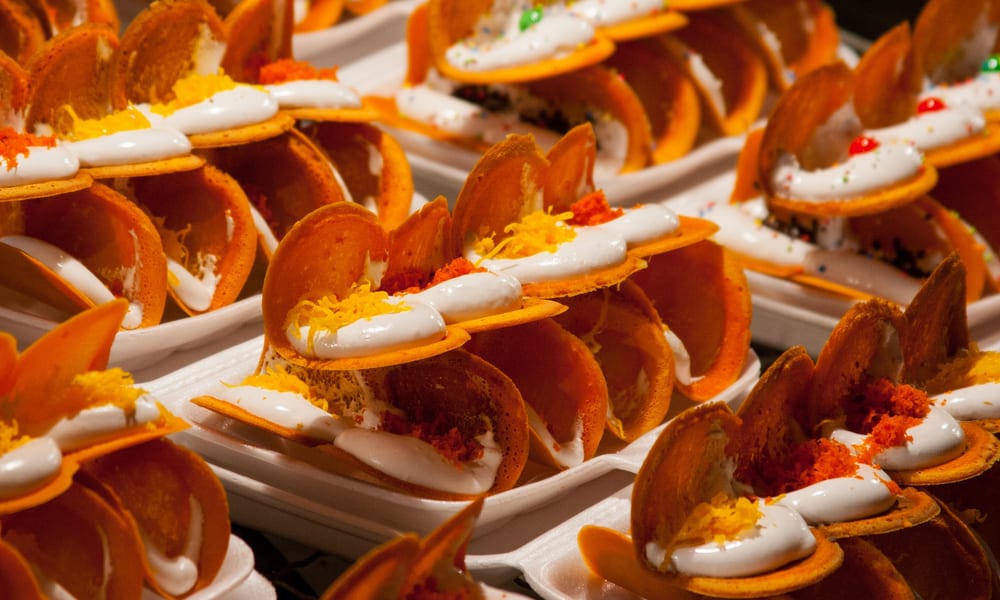
If you've grazed through the savory eats at the Yaowarat night market and want to finish with a plate of dessert, "Jae Kee Mango Sticky Rice" is the name people around here have talked about for ages. It's a small cart with just 3-4 tables out front, set up on the right side of Yaowarat Road around Soi Plaeng Nam. Many say it was one of the first to sell mango sticky rice in this neighborhood, going for over a decade. It suits anyone who wants freshly made Thai dessert while strolling, rather than a fancy sit-down place.
The star is the two-color sticky rice mun, offered in both green with a pandan scent and white with a coconut scent. The rice uses small, slender grains that hold together nicely without going mushy, while the coconut topping is made from very ripe coconut, so it's rich and just-sweet-enough. The mango is the big golden kham mango, generous and golden-yellow, with a sweet flavor and a hint of tartness that balances the richness of the rice. If you don't want it too sweet, order a cold drink like a mango smoothie or fresh-pressed juice alongside for something refreshing.
A set runs around 100-120 THB, and if you buy just the sticky rice mun to take home, it's sold by the kilo at around 220 THB. What people love to pass on is that the sticky rice here keeps for several days even without preservatives, because the coconut milk, salt and sugar ratios are dialed in well. If you'd rather not queue out front, you can order delivery — there's a number to call ahead.
The shop opens every day in the evening, roughly 6pm to 11pm, right in step with the Yaowarat night market in full swing. Worth knowing: it's a roadside cart with few seats, and when there are lots of visitors you may have to stand and wait a bit, so we'd suggest getting it wrapped to eat as you walk for more flexibility. If you're visiting Yaowarat late and want to try one of the neighborhood's old-school Thai desserts, this is a pin that's easy to drop and won't disappoint.
🍢 Want to taste several places with a guide, or cook Thai food yourself
If you're a foreign visitor or want to understand Yaowarat's Thai-Chinese food beyond just ordering and tasting, try booking a guided food tour where a local walks you shop to shop in the evening, tells you the story behind each dish, helps you order and leads you through the Chinatown alleys that are hard to find on your own. Or take a Thai cooking class and make your own curry, stir-fries and som tam, then take the recipes home — fun in a different way. Book ahead through Klook or GetYourGuide, picking the time slot and language that suit you. It works for going solo, as a pair, or in a group.
💡 Know before you eat in Yaowarat / Chinatown, Bangkok
Most shops are within walking distance of MRT Wat Mangkon Exits 1 and 3, but some are deep in alleys like Talat Noi or Soi Bamrung Rat, so a short Grab or motorbike taxi onward is handy. In the evening Yaowarat Road is jammed and very crowded — walking is faster than driving. Pin the shop name in Google Maps first, since many lanes have Chinese-Thai signs that are hard to find.
Nearly all roadside and street-food stalls in Yaowarat take only cash or PromptPay, so keep enough small bills (20/50/100) on you. There are ATMs and money-changers along the main road · larger sit-down places like Hua Seng Hong and the seafood shops usually take cards and QR payment.
Yaowarat clearly splits into two sessions. Rice shops like Seemorakot Red Pork Rice and Jek Pui Curry Rice open late morning to evening and sell out fast, so go at lunch · roadside street food like the oyster omelette and seafood gets lively from early evening on. Friday-Saturday are busiest — go before 18:00 or a little later to dodge the queue.
No need to tip at street and single-plate rice shops · for table-service places like Hua Seng Hong or the seafood shops, if you're happy with the service, Thais often leave the loose change or around 20–50 THB. Some restaurants already add a service charge to the bill — check the bottom first.
Many larger sit-down places and famous shops with lots of visitors in Yaowarat have picture or English menus, and the staff can get by · some old-school street shops are Thai-Chinese only, so use a translation app or point at a photo / a dish at the next table to order. The vendors are friendly.
The charm of Yaowarat is tasting many things in one night. Come with several people, order a dish each and share, and it's better value while you get to try more · save room for several meals, grazing a little from one shop to the next. Don't fill up on the first shop and run out of steam to walk.
Plan a full day of eating in Yaowarat
The trick is to schedule by each shop's opening hours, because Yaowarat clearly splits into two sessions. Start lunch at the charcoal-grill shops in the lanes — Seemorakot Red Pork Rice at Trok Rong Moo (Soi Sukon 1) in Talat Noi, and Jek Pui Curry Rice beside Wat Mangkon — which open late morning to evening and usually sell out before closing. Follow with a roll-noodle meal at Nai Ek Roll Noodle at the mouth of Yaowarat Soi 9, or Lim Lao Ngow, famous for its bouncy fish balls.
The evening is Yaowarat's golden hour, when the roadside burners fire up. Make a loop through Nai Mong Hoi Thod across from MRT Wat Mangkon, T&K Seafood for the grilled-prawn / curry-powder-crab crowd, and Siang Ki Fish Rice Soup down Soi Bamrung Rat for a late bowl of deep sea bass rice soup. If you'd rather sit comfortably in air-con as a group, drop by Hua Seng Hong and order shark fin and dim sum to share. Finish with dessert at the original Singapore Pochana (Lod Chong) at Mor Mee junction and Jae Kee Mango Sticky Rice. Take the train to MRT Wat Mangkon and you can graze your way through nearly every shop. A few shops adjust their hours by the day, so check before you go to be sure.
To eat several meals in Yaowarat without rushing, booking a night in Yaowarat / Chinatown or near Hua Lamphong is far easier — you can walk from MRT Wat Mangkon to nearly all the famous shops, and wake up to head straight out for your first meal with no travel time lost. Compare stay prices across several sites and pick the one you like best.
See Yaowarat / Chinatown stays, prices compared across 3 sites