🔄 Updated 6 Jun 2026
Trang packs a lot of different landscapes into a fairly small area. The east side leans against the Banthat Range, which has more than 30 waterfalls; the west side opens onto the Andaman Sea and its islands. The part that keeps nature lovers coming back, though, is Koh Libong — home to Thailand's largest seagrass beds and a resident herd of dugongs. This plan gives you three days to cover the mountains, the sea and the dugongs, using the town of Trang as your base on day one before moving down to sleep by the water.
Let me be straight with you up front: for this trip you really want your own car or a rental, because the waterfalls and the pier sit on opposite sides of the province and public transport is thin. If you'd rather not drive, you can charter a van or use a local tour package instead. As for the dugongs — they're wild animals, so whether you see them comes down to luck and the tides. We'll tell you how to tip the odds in your favour.
The 3-day plan at a glance
- Day 1 — Fly or take the train to Trang, hit the Banthat Range waterfalls (Ang Thong + Ton Te), sleep in Trang town
- Day 2 — Drive to Pak Meng Beach, swim, eat seafood, watch the sunset, sleep around Pak Meng–Sikao
- Day 3 — Take a boat across to Koh Libong, spot dugongs at low tide, visit Laem Ju Hoi, then head home
Best time to go
Trang's coast is at its best from November to April — clear skies, calm water, ideal for the boat out to Libong. The waterfalls run fullest and prettiest from late rainy season into early winter. If you want a good balance of both, aim for November–December.
Book the activities in your Trang trip ahead
Booking online ahead on Klook or GetYourGuide is usually cheaper than the gate and skips the queue. Pick only the experiences you actually want — prices and availability are shown live on each site.
Day 1 · Banthat Range waterfalls
The Banthat Range runs like a wall between Trang and Phatthalung, and the Trang side has loads of waterfalls. The two that are easiest to reach and most worth your time in a single day are Ang Thong and Ton Te. They sit in different districts, but route it well and you can do both comfortably on day one.
Mountains and waterfalls
What to know about the waterfalls
During the rainy season (May–Oct) the water runs hard and the rocks get slick, so take extra care and check whether the falls are even open. Wildlife sanctuary staff sometimes close the hiking trails temporarily, so it's safer to phone the ranger station ahead and confirm.
Day 2 · Pak Meng Beach
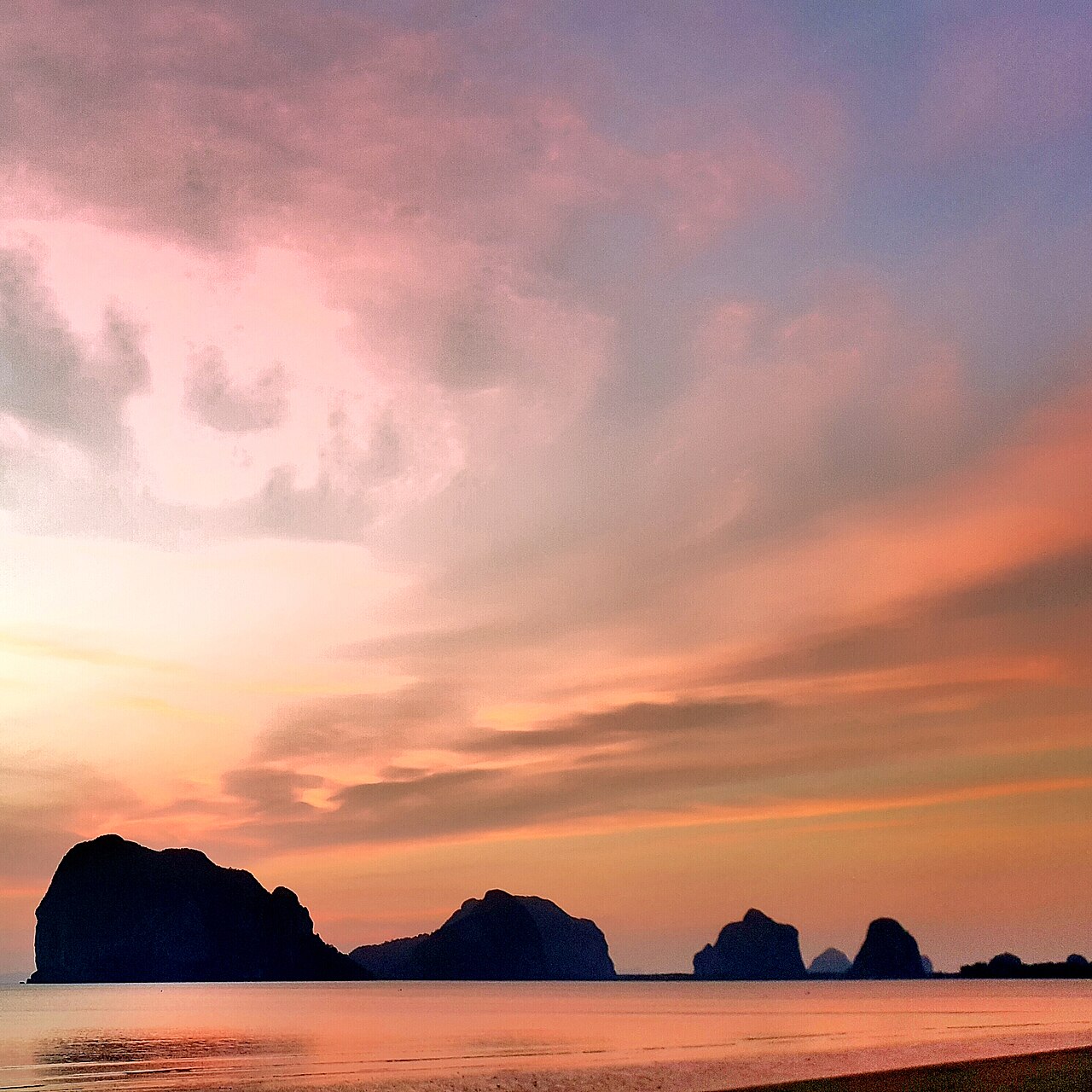
Pak Meng Beach is in Sikao district, about 35 km from Trang town — a long crescent of sand on the Andaman, backed by a shady belt of casuarina pines running almost 5 km. The signature view is the island just offshore, shaped like a person lying on their back; locals call it "Khao Meng," and it's the beach's defining sight. Come evening, it's a hugely popular spot to watch the sun go down.
Sea and sunset
Day 3 · Koh Libong and the dugongs
This is the highlight of the trip. Koh Libong is the largest island in Trang and holds the country's biggest seagrass beds, which makes it home to a herd of dugongs that come to graze here. Getting there means a boat from one of the piers on the Kantang side (such as Hat Yao pier) across to the island — it doesn't take long. On the island, motorcycle sidecars and longtail boats are on hand to take you around.
Dugongs are genuinely wild animals, not a show — whether you see one depends on timing. The trick is to head out by boat at low tide, because that's when dugongs move in to graze on the seagrass, and you can spot a back breaking the surface or a tail flicking the water much more easily. Book your boat with a local who knows the spots and the tide times, and you'll greatly improve your odds of seeing one.
Dugongs and Koh Libong
Help look after the dugongs
Dugongs are an endangered species. When you're watching them, don't let the boat crowd in or chase them until they spook, don't throw rubbish into the sea, and choose a boatman who respects the community's rules. The seagrass here is their lifeline — if we help protect it, future generations will still get to see them.
Great eats along the nature route
Even on a nature trip you've got to eat well. We've picked the food stops that sit right along this route — from breakfast in town before you head up the mountains, to seafood on the beach, to what's cooking on the island — ordered the way you'll actually come across them.
Morning dim sum in Trang town
The town's go-to breakfast: dim sum served piping hot with a cup of hot tea — a Trang morning tradition worth trying before you set off.
Khiang Dao Seafood, Pak Meng
A seafood spot right on Pak Meng Beach with fresh catch, open from early morning till late — easy to sit and eat with a sea view.
Pak Meng Seafood
Another regulars' favourite on the beachfront — crab, prawns and fresh fish at prices that are fair for what you get.
Crab fried rice at Pak Meng
The beach's signature dish is crab fried rice, packed with meat and fragrant with crab fat — a plate plenty of people order again every time they visit.
Sea-view cafe at Mai Fat
A minimalist beachfront cafe with good coffee and bakery items — perfect for ducking out of the afternoon sun and catching the sea breeze.
Koh Libong community seafood
Island community kitchens cooking fresh from whatever the fishermen have just landed — fish, squid, prawns, all at friendly prices.
Trang roast pork
A Trang classic — crisp skin, tender meat. Eat it with dim sum or buy some to take home as a gift; grabbing it before you set off on day one works well too.
Khao yam & Southern khanom jeen
A light, boldly flavoured Southern bite — khao yam (rice salad with fresh herbs and budu sauce) or khanom jeen with Southern curry. Easy to find at morning markets across town.
Roughly what it costs
The figures below are mid-range, per-person costs for a 3-day, 2-night trip, worked out for two people splitting the car and boat. Real prices depend on the season, your accommodation and group size — use these as a budgeting frame.
- Car rental + fuel — around ฿600–900/person over 3 days (rentals start at roughly ฿1,000–1,500/day, split between two)
- Boat to Koh Libong + dugong spotting — chartering a longtail runs about ฿1,500–2,500/boat, which you can split; Trang island tours start around ฿950/person
- 2 nights' accommodation — ฿400–1,500/person/night depending on the level; Koh Libong has everything from a few hundred to a few thousand baht
- Food — around ฿400–700/person/day, more if you have a big seafood meal
- Waterfall entry — Ton Te is free; you only pay 20 THB for parking
How to save money
Going as a group of 4–6 brings the cost down a lot, since you split the car and the boat. If you'd rather not rent a car, look into a local Trang tour package that bundles the transport, boat and meals together — it's more convenient, and the boatmen know the dugong spots.
Before you go
- Check the tide schedule for the day you're going to Libong, so you can time your boat trip to low tide
- Book the boat and guide ahead, especially on long weekends — local boatmen are limited
- Bring sun protection and water shoes — both the waterfalls and the sand mean walking on slippery ground
- Carry cash — on the island and at the waterfalls the signal is patchy and not every shop takes transfers
- A zoom camera or telephoto lens if you want to capture the dugongs, since they only surface for a split second
Want a good base for exploring nature around Trang?
See the Top 10 Trang hotels →