📝 Written 3 Jul 2026 · ✅ Fact-checked 3 Jul 2026 · prices and schedules can change — check with the operator before booking
The charm of Yasothon for temple-lovers is that a single province holds stupas and temples that each tell a different story. There's Phra That Kong Khao Noi, shaped like a sticky-rice basket and carrying a folk legend well known among Isan people; Phra That Anon at Wat Mahathat in the middle of town, an old Lao-style stupa believed to hold the relics of Phra Anon; Phra That Ku Chan in Kham Khuean Kaeo district, an old stupa shaped much like Phra That Phanom set amid the countryside; and Wat Phra Phutthabat Yasothon, home to a white jade Buddha image and a Buddha's footprint to pay respects to. A temple trip here isn't just about paying respects — you also get to hear the legends, admire the stupa craftsmanship, and soak up the atmosphere of an Isan town along the way.
Because each site sits in a different district with a fair distance between them, knowing in advance what each place is known for and who it suits will help you plan a smoother one-day route without doubling back. Below, we first sum up all four sites in a single table, then go into detail on each one, with highlights, legends, pros and cons, and tips for anyone who wants to see them all without wearing themselves out. All are temples you can enter and pay respects at free of charge — just dress modestly and behave respectfully as custom requires.
| Stupa/Temple | Highlight / Legend | Location / Distance from town | Best for |
|---|---|---|---|
| Phra That Kong Khao Noi | A stupa shaped like a sticky-rice basket unlike anything found elsewhere, with a folk legend about a son who killed his mother out of hunger | Mueang Yasothon district, amid rice fields · ~10 km from town | First-time visitors who want to see the province's landmark stupa and hear its legend |
| Phra That Anon (Wat Mahathat) | An old Lao-style stupa in the middle of town, believed to hold the relics of Phra Anon, a disciple of the Buddha | Mueang Yasothon district, in the old town area · in town, easy to walk to | Merit-makers and history buffs who love old stupas and local craftsmanship in town |
| Phra That Ku Chan | An old stupa shaped much like Phra That Phanom, set in a rural community, quiet atmosphere | Kham Khuean Kaeo district · ~25–30 km from town | Those who like quiet, uncrowded old stupas out in the countryside |
| Wat Phra Phutthabat Yasothon | A white jade Buddha image and a Buddha's footprint to pay respects to, a quiet and shaded temple | Maha Chana Chai district · ~40 km from town | Those who come to pay respects and pray, who enjoy quiet temples and the white jade Buddha |
Phra That Kong Khao Noi

Phra That Kong Khao Noi is the first stop for almost everyone visiting Yasothon, because it's an old stupa with an unusual shape found nowhere else. The stupa itself is shaped like a kong khao niao, or sticky-rice basket used by Isan people, standing amid rice fields not far from town. It's easy to get to and makes for beautiful photos, especially when the rice fields are green or during the soft morning and evening light. Many visitors say they get to pay respects and see the province's symbol in one place, which is why it's often set as the opening stop of a trip before heading on to other stupas and temples.
What makes Phra That Kong Khao Noi interesting isn't just its shape, but the folk legend passed down through generations. The story tells of a son who worked the rice fields until he was starving; when his mother brought his food late and it looked like too little, he flew into a rage and killed her — only to find, after eating, that he hadn't even finished what was in the basket. Overcome with remorse, he built the stupa to atone for his sin. The story is used to teach lessons about gratitude and self-restraint, so standing before the stupa isn't just about taking photos — it also gives you pause to reflect on the story behind it.
One thing to keep in mind is that Phra That Kong Khao Noi sits amid fairly open fields, so midday sun is strong and there's little shade. It's best to go in the morning or evening for a more comfortable walk and better light for photos. Bring a hat, an umbrella, and drinking water. The temple grounds have parking and a few small souvenir stalls, though it's nowhere near as crowded as famous temples in big cities. If you're planning to visit several sites in one day, starting here in the morning makes it easier to schedule the rest of your day and avoids the harsh midday sun out in the fields.
- The province's landmark, shaped like a sticky-rice basket unlike anywhere else
- Comes with a folk legend that teaches a lesson about gratitude
- Close to town, easy to reach, beautiful photo spot amid the fields
- Free to enter and pay respects, with parking and souvenir stalls
- Sits in open fields, strong midday sun, little shade
- The viewing area is fairly small, so a visit doesn't take long
- Requires driving a short distance out of town, no direct bus service
Phra That Anon (Wat Mahathat)

If Phra That Kong Khao Noi is the landmark outside of town, Phra That Anon at Wat Mahathat is the stupa at the very heart of Yasothon town. The stupa itself is an old Lao-style structure reflecting the local craftsmanship of the Mekong basin, quite different from the central-Thai-style stupas most visitors are used to. The name Phra That Anon comes from the belief that it enshrines the relics of Phra Anon, a disciple and close attendant of the Buddha, which is why it's held in such regard by locals and visitors alike. The temple sits in the old town area, easy to reach, with parking nearby and plenty to explore on foot afterward.
Most visitors come to pay respects at the stupa and the temple's main Buddha image, then walk around admiring the stupa's shape and the craftsmanship in its decoration, since it's a well-proportioned stupa and a fine example of the Lan Xang-style art found in Isan. For anyone interested in history and craftsmanship, this site makes clear that Yasothon's cultural roots connect to Laos and the Mekong basin. Because it's right in town, many visitors pair a stop at Phra That Anon with a stroll through the old town, sampling local food and admiring old buildings in the same area.
One thing to keep in mind is that because it's in town and an important temple, it gets busier than usual during Buddhist holy days, major religious festivals, and the Bun Bang Fai rocket festival, the province's biggest event. If you want a quieter atmosphere, come in the morning or on a weekday. Dressing modestly and behaving respectfully matters here as at any temple, especially when entering the main worship hall or paying respects to the principal Buddha image. The advantage of its in-town location is that it pairs easily with other spots around town — no long drive required — making it a good stop for paying respects in town either before or after heading out to the stupas beyond the city.
- The town's central stupa, an old Lao-style structure rarely found elsewhere in Isan
- Right in town, easy to reach, pairs well with a stroll through the old town
- Historically significant, believed to hold the relics of Phra Anon
- Free to enter and pay respects, close to in-town accommodation
- Busier than usual during Buddhist holy days, major events, and Bun Bang Fai
- The viewing area is focused on the stupa and temple, so a visit doesn't take too long
- Parking in the old town area can get tight during festivals
Phra That Ku Chan
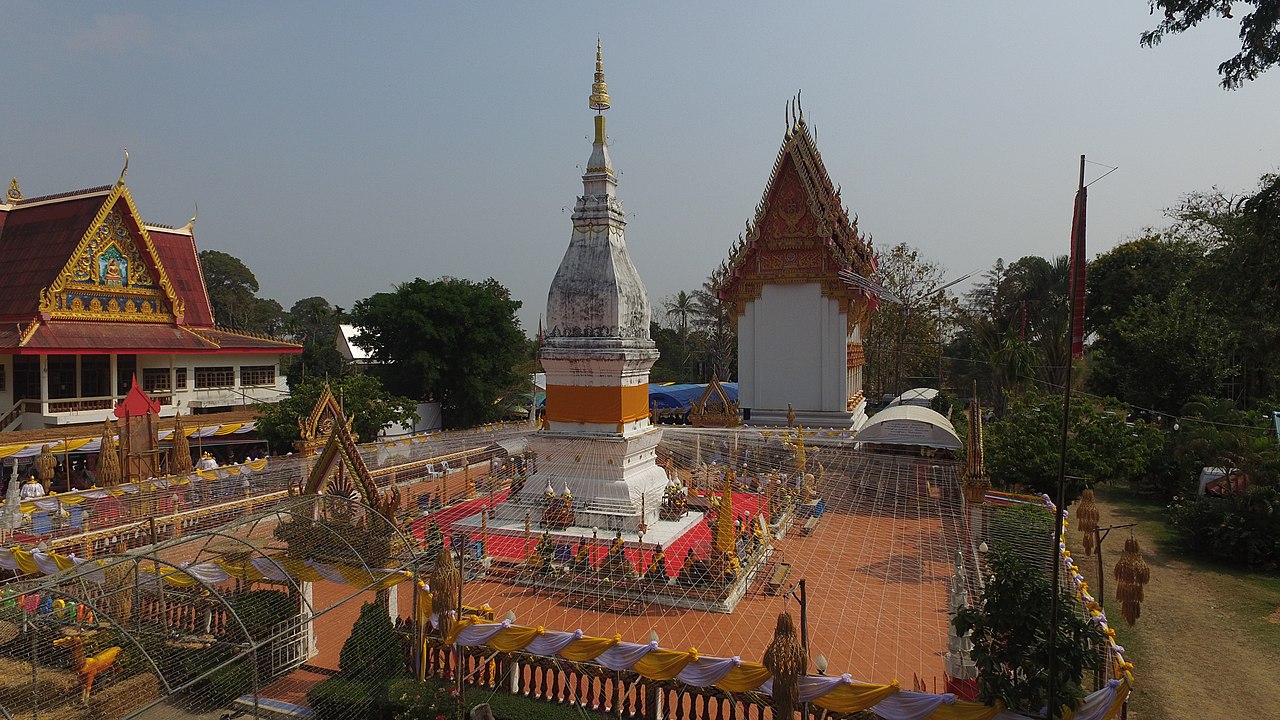
Phra That Ku Chan is an ancient stupa in Kham Khuean Kaeo district that will appeal to anyone who loves quiet countryside temples. The stupa itself is a squared, indented-corner structure whose proportions and shape closely resemble Phra That Phanom in Nakhon Phanom, a form found among Isan's most important stupas and one that reflects the Lan Xang artistic influence that spread through this river basin. It stands in the middle of Ban Ku Chan village, surrounded by a quiet rural temple and community, nowhere near as busy as the famous stupas in town, so paying respects here feels genuinely peaceful.
Most visitors here are locals and devoted merit-makers determined to visit every stupa, along with temple enthusiasts who want to see an old-style stupa in its authentic village setting rather than a crowded check-in spot. Walking around the stupa and admiring its decorative patterns and proportions is the main activity, and it doesn't take long. At certain times of year the community holds merit-making events and traditional ceremonies around the stupa, so if your visit happens to coincide with one, you'll get an up-close look at Isan's living merit-making traditions.
Worth knowing: Phra That Ku Chan lies a fair distance outside of town, requiring a drive out toward Kham Khuean Kaeo district along rural roads, so it's worth checking the route on a map beforehand and allowing extra travel time. This isn't a commercially developed tourist site, so amenities are limited — bring your own drinking water. And because it's a stupa in the middle of a community, be respectful, dress modestly, and be mindful that the temple serves as the village's spiritual center. Do this and you'll come away with both merit and a look at an old stupa in an atmosphere unlike anywhere else.
- An old stupa shaped like Phra That Phanom, in a peaceful rural setting
- Uncrowded, ideal for those who enjoy paying respects quietly
- An authentic look at a rural Isan village's merit-making traditions
- Free to enter and pay respects
- Located outside of town along rural roads — best with your own vehicle
- Limited amenities, so bring your own drinking water
- The viewing area is small and a visit doesn't take long — not a major check-in spot
Wat Phra Phutthabat Yasothon

Wat Phra Phutthabat Yasothon sits in Maha Chana Chai district and suits anyone who comes to pay respects and pray in a quiet, shaded setting. The focal point most visitors come for is the white jade Buddha image, a clear white statue that feels calm and beautiful in a way quite different from the gold or plaster Buddha images most people are used to, along with the Buddha's footprint, a symbol used to commemorate the Buddha. A visit here centers on paying respects, making merit, and praying in a peaceful atmosphere, rather than admiring grand architecture.
Because it sits a fair distance from town, Wat Phra Phutthabat Yasothon tends to stay uncrowded, making it ideal for anyone who wants some private time to pay their respects without competing for space with large crowds of tourists. Visitors here tend to come with real intention rather than just passing through — paying respects to the white jade Buddha, applying gold leaf or offering flowers as an act of faith, and resting in the temple's shaded grounds, a moment many say helps settle the mind. It makes a fitting final stop to close out a day of temple visits.
One thing to keep in mind is the distance — the temple lies in Maha Chana Chai district, a fair way from Yasothon town, so it's worth having your own vehicle and checking the route and opening hours in advance. If you're fitting it into a one-day trip alongside other stupas, plan your route so everything runs in the same direction to avoid doubling back. When paying respects, dress modestly, behave respectfully, and keep the temple's quiet atmosphere, both to match the tranquil character that defines this place and out of respect for others who have come to practice or pay their respects.
- Pay respects to a white jade Buddha image and a Buddha's footprint
- Quiet, shaded atmosphere, ideal for unhurried prayer and reflection
- Uncrowded, unlike the famous temples in town
- Free to enter and pay respects
- The farthest from town of the four sites, so allow extra travel time
- Best with your own vehicle, no direct bus service
- Focused on paying respects and prayer rather than grand architecture
Book Activities & Tickets in Advance
Want a temple trip with transfers included, or prefer to rent a car and drive yourself? Check out activity, transfer, and day-trip options around Yasothon and southern Isan, and book online ahead of time.
Where to Stay for a Yasothon Temple Trip?
Choose a well-located hotel in Yasothon town, near the old town area and Phra That Anon, so you can head out early to visit Phra That Kong Khao Noi and the out-of-town stupas with ease.
Find Hotels on AgodaHow to Plan a Complete Yasothon Stupa Route
Yasothon's stupas are spread across several districts, so plan your route well to see them all without wearing yourself out · Start the morning at Phra That Kong Khao Noi outside of town before the midday sun heats up the open fields — pay respects and photograph the province's landmark stupa · Head back into town for Phra That Anon at Wat Mahathat, then keep exploring the old town and sampling local food · Group the out-of-town sites together — both Phra That Ku Chan in Kham Khuean Kaeo and Wat Phra Phutthabat in Maha Chana Chai — planning a route that runs in the same direction so you don't have to double back · check opening hours and routes on a map first, since some sites are in rural areas · dress modestly and behave respectfully everywhere, as is customary when visiting temples.
Once you've planned your stupa route, pick a well-located hotel in town so you can head out early and fit in a full day of temple visits with ease.
See Yasothon Hotels →