🔄 Updated 21 Jun 2026
Ranong is long and narrow, running parallel to the Myanmar border with the Kraburi River between them. The town itself is small and walkable, but the real highlights are spread out around the edges: hot springs, islands out at sea, waterfalls, and viewpoints. What sets Ranong apart from other southern beach towns is that it isn't just about the sea. There's a natural hot mineral spring right in the middle of town, a mix of Chinese and Burmese culture, and a quiet you'd be hard pressed to find in Phuket or Krabi anymore.
First thing to know — Ranong is the rainiest place in Thailand
Locals call Ranong the eight-months-rain, four-months-sun town, meaning it rains for roughly eight months and gets good sun for about four. It's the wettest province in the country. If you're planning to be on the beach or out on the islands, timing matters more than anything else here. Show up in the wrong month and you could get rain for the whole trip with the boats grounded.
- November to April is the best stretch: clear skies, calm sea, good for island trips, clear water and nice sun.
- December to February is the real high season, with the best weather but more people and accommodation that books up fast.
- May to October is the rainy season, with rough seas and many island boat operators stopping or running unpredictably.
- If you do come in the rainy season, lean into town activities: soak in the hot springs and walk the old town, which you can enjoy almost without a hitch even when it's pouring.
A note on the seasons
If your main goal is Koh Phayam or Koh Chang, do not come in the rainy season. The big ferries usually stop running during the monsoon, leaving only speedboats, and those depend on the swell day to day. But if you're mainly here for the hot springs and the old town, any month works fine. Just pack an umbrella and a pair of shoes you don't mind getting wet.
Book the activities in your Ranong trip ahead
Booking online ahead on Klook or GetYourGuide is usually cheaper than the gate and skips the queue. Pick only the experiences you actually want — prices and availability are shown live on each site.
How to get to Ranong
Ranong is about 570 km from Bangkok, reachable by plane, bus, or car. There's no train all the way to Ranong; the nearest station is Chumphon, and from there it's another two hours or so over the mountains to the Andaman side.
- Flight — the fastest option. There are flights from Bangkok (Don Muang) into Ranong Airport, about an hour and a half in the air. The airport is roughly 20–25 km from town, then a taxi or rental car.
- Bus / van — several operators run overnight coaches from Mo Chit, taking around 8–10 hours and costing roughly ฿500–900 depending on the seat class, going through Chumphon then over the mountains into Ranong.
- Self-drive — from Bangkok take Phetkasem south, through Chumphon, then turn off into Ranong, around 7–8 hours. The mountain stretch between Chumphon and Ranong is winding, so drive carefully in the rain.
- From neighboring provinces — a lot of people tack Ranong onto Chumphon, Phang Nga, or Surat Thani, since it sits right on the route south.
You'll want your own wheels in Ranong
This is the thing first-timers tend to miss. Ranong has no real public transport network, no Grab Car like the big cities, and the sights — waterfalls, the grass mountain, the river mouth — are scattered and far apart. Without wheels you'll spend a lot of the trip waiting around and struggling to get anywhere.
- Rent a motorbike — around ฿250–300 a day, the nimblest option for one or two people, but watch the rain and the hill roads.
- Rent a car — around ฿900–1,300 a day, great if you're traveling as a group or bringing older relatives. Available at both the airport and in town.
- Hire a car with driver — if you'd rather not drive, there's a day-rate charter service. Convenient but pricier.
- Motorbike taxi / songthaew — there are a few in town, but only really suited to short hops within town.
Book your wheels ahead
There are fewer rental vehicles in Ranong than in the big tourist towns, and they sell out fast during high season or long weekends. If you're coming then, book ahead — especially if you want to pick up a car at the airport the moment you land.
Heading out to the islands — Koh Phayam and Koh Chang
The headline draw for most people coming to Ranong is Koh Phayam: a quiet island with white sand, clear water, and a laid-back, not-yet-crowded feel. Some people call it Thailand's Maldives. Ranong's Koh Chang is a smaller, rawer, even quieter island, good for people who genuinely want to get away from it all. Both are reached by boat from Pak Nam Ranong pier.
- Speedboat — about 40 minutes to Koh Phayam, around ฿350 per person each way, frequent and fast.
- Ferry — cheaper at around ฿200 each way, but takes about 2 hours and often stops running during the monsoon.
- Pak Nam Ranong pier — about 10 km from town and roughly 35 minutes from the airport, the departure point for both islands.
- Stay at least one night on the island — you can do it as a day trip, but it's a waste of time. Stay over on Koh Phayam and the sunset alone makes it well worth it.
What first-timers should know before island-hopping
Koh Phayam has no car roads; you get around mainly on rented motorbikes. Power comes and goes in some spots, mobile signal isn't full on every beach, and ATMs are scarce, so bring enough cash. And always check the day's last boat schedule, because missing the boat and getting stuck on the mainland is no fun.
Raksawarin hot springs — the local specialty you shouldn't skip
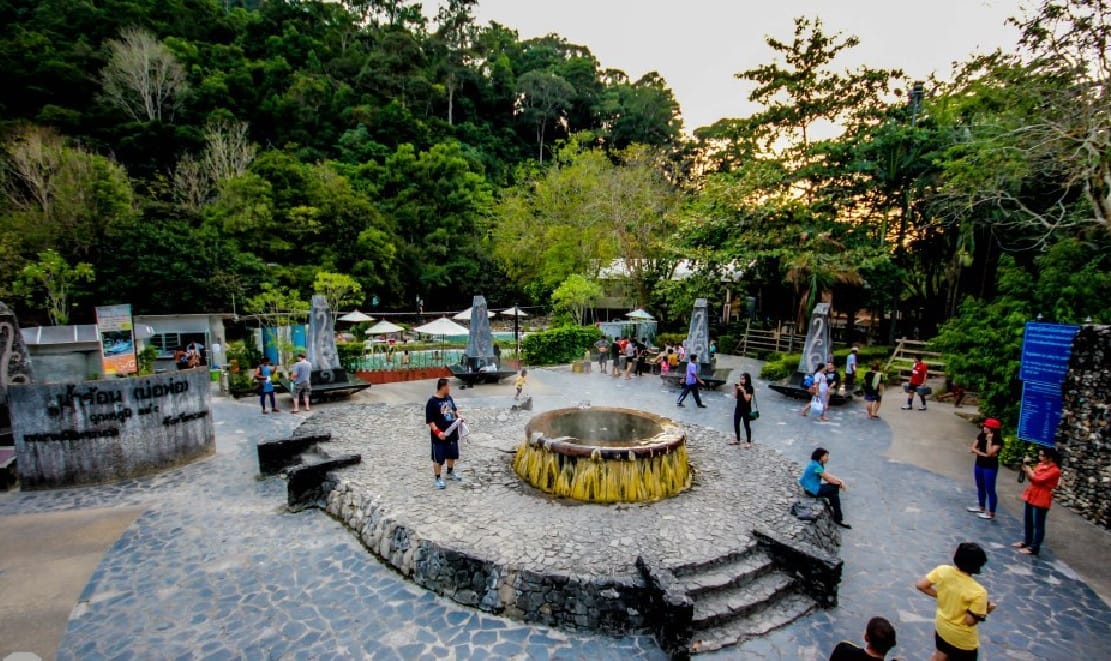
If you come to Ranong and don't soak in the hot springs, you haven't really been. The Raksawarin hot springs are right in the middle of town — a natural hot mineral spring clean enough to be bottled and drunk, with no sulfur smell, and a source temperature of around 65°C. There are three pools called the Father, Mother, and Daughter. The source pools are scalding and off-limits for soaking; you only get into the foot baths or the mineral bathing rooms where the temperature has been blended down.
- Foot baths in the public park — free and open to everyone, perfect for easing tired feet in the evening.
- Private mineral bathing rooms — there's a fee, starting around ฿50–200 depending on the type and the place.
- Hotels plumbed for spring water — many Ranong hotels pipe the hot mineral water into the rooms, so you can soak right in your room. Great if you're here to unwind.
What to eat in Ranong
Ranong is a better food town than most people expect, with Chinese-style morning dim sum, punchy southern Thai dishes, fresh, well-priced seafood, and authentic Burmese food from the migrant community that's hard to find elsewhere. Here are the standout eats a first-timer should work through.
Ranong morning dim sum
The town's go-to breakfast that Ranong locals grew up on: shrimp har gow, pork-and-shrimp siu mai, char siu buns, congee, and a hot Ovaltine. The famous spots in the old town open early and fill up fast.
Ranong oysters
Ranong is known for big, sweet oysters, a real local specialty. Eat them raw with seafood dipping sauce and fried garlic, or battered into an oyster omelette. Better priced than in the big tourist towns.
Punchy southern Thai food
Yellow fish curry, stir-fried stink beans with shrimp, khua kling, and cha-om leaves fried with egg — proper bold southern flavors. Several spots around town, a lunch or dinner you shouldn't miss if you can handle the heat.
Fresh seafood in town
Ranong is on the coast, so the shrimp, shellfish, crab, and fish are fresh and well priced. Try steamed blue crab, grilled river prawns, or turmeric-fried fish — a dinner that's great value if you come as a group.
Burmese food and Burmese milk tea
Ranong has a large Burmese community, so there are authentic Burmese restaurants serving Burmese curries, tea-leaf salad, and strong Burmese milk tea — flavors that are hard to find in other towns. If you like trying something different, don't miss it.
Cashew nuts to take home
Roasted cashews are a standout Ranong souvenir, sold salt-roasted, baked, and coated in various flavors. You'll find them at souvenir shops in town and around Pak Nam — a worthwhile thing to bring home.
Preserved seafood and shrimp paste with kung siap
Shrimp paste, dried shrimp, kung siap chili dip, and salted fish are the preserved-seafood souvenirs Ranong does well, thanks to being on the coast with fresh catch on hand. Take some home to cook with.
Old-town cafes and garden cafes
Ranong's cafes range from small spots in old shophouses in the old town to farmstay cafes set in green hills, like Baan Rai I Arun out in Kapoe district. Perfect for a chill sit-down to dodge the afternoon sun or wait out the rain.
Sample plans — how to do your first trip
If it's your first time and you're not sure how to put a trip together, here are the two plans we'd suggest, pick whichever fits your time. The short 2-day version focuses on the town and hot springs, with no tiring boat rides. The 3-day version adds an overnight on Koh Phayam, so you get both the town and the sea.
Old town + hot springs
Viewpoints + the border river mouth
If you've got 3 days and want some sea time too, spend Day 1 on the town and hot springs as above, then use Days 2–3 to head out to Koh Phayam for an overnight. Here's the island timeline.
Out to Koh Phayam, 1 night
Morning on the island + back to the mainland
Rough budget per person
- One night in town — a double split two ways, around ฿400–900 per person depending on the hotel level.
- One night on Koh Phayam — a beachfront bungalow around ฿500–1,500 a night depending on the beach and the season.
- Food per day — around ฿250–500 if you eat at local spots and have seafood for some meals.
- Car / motorbike rental — motorbike ~฿250–300 a day · car ~฿900–1,300 a day.
- Round-trip boat to Koh Phayam — speedboat around ฿700 per person return.
- Hot springs — foot baths free · private mineral bathing room around ฿50–200.
Straight talk before you go
Ranong is still a place the crowds haven't reached. The upside is the quiet, the good prices, and the great food. The trade-off is some inconvenience: little public transport, so you need your own wheels; more rain than you'd expect; and island access that depends on the season. Get the timing right and come prepared, and Ranong gives you the feeling of a southern beach town from years past — something that's genuinely hard to find now.
Ready to plan your trip? See all the things to do and places to stay in Ranong
See the Ranong travel guide →