🔄 Updated 21 Jun 2026
Lampang isn't a town you need to rush. First-time visitors are often surprised at how quiet and walkable it is. The good stuff sits close together — old temples, the old-town market, riverside cafés, and the charm of horse carriages that still run as part of everyday life, not just as a tourist show. Reading through these basics first will make your first trip go a lot more smoothly.
How to Get to Lampang
Lampang is reachable by train, bus and plane — pick whatever suits your budget and time. A favourite is the northern train line, partly for the scenery and partly because Lampang's own station is a lovely old wooden building that's worth a photo.
- By plane — direct flights from Bangkok (Don Mueang) land at Lampang Airport in about 1 hour. There are only a few flights a day, so book ahead for the best fares.
- By train — from Bangkok on the northern line it's a long ride (you can take an overnight sleeper). From Chiang Mai it's only about 2 hours, and the stretch through Khun Tan is gorgeous.
- By bus / minivan — from Bangkok (Mo Chit) several operators run all day. From Chiang Mai there's Green Bus and the route 152 minivans leaving frequently every 20–30 minutes, with fares in the low hundreds of THB.
- By car — about 100 km from Chiang Mai, roughly 1.5 hours. Handy if you want to detour to temples outside town and out to Chae Son.
First-Timer Tip
If you're coming from Chiang Mai and want to skip driving, the Chiang Mai–Lampang train is fun and cheap, usually under 100 THB. Get off at the station and grab a horse carriage or a ride into town from there.
Book the activities in your Lampang trip ahead
Booking online ahead on Klook or GetYourGuide is usually cheaper than the gate and skips the queue. Pick only the experiences you actually want — prices and availability are shown live on each site.
Where to Stay for First-Timers
Lampang is a small town, and the main sights cluster along the Wang River and the old quarter. Staying within walking distance of Kad Kong Ta is the most convenient choice.
Kad Kong Ta / Wang Riverside
The heart of the old town — walking distance to the night-market street, riverside cafés and Ratsadaphisek Bridge. Great for first-timers who'd rather not drive.
City Centre / Boonyawat Road
Close to restaurants, markets and breakfast spots, with a range of room prices and easy access to rides.
Out-of-Town Resorts / Chae Son
Good if you're after nature, hot springs and cooler air — but you'll need a car, since it's a fair way from town.
See the Lampang stays real reviewers recommend
Top 10 Lampang Hotels →What to See First — the Big Ones You Shouldn't Miss
Wat Phra That Lampang Luang
An ancient Lanna temple on a low hill outside town with stunning architecture. The highlight is the upside-down reflection of the chedi inside a darkened viharn — people line up to see it. If there's one temple that defines Lampang, this is it.
Kad Kong Ta (Walking Street)
The old riverside quarter along the Wang, lined with wooden shophouses and mixed-style old buildings. It turns into a walking street on Saturday and Sunday evenings, with food, cafés and crafts — best around sunset.
A Horse-Carriage Ride Around Town
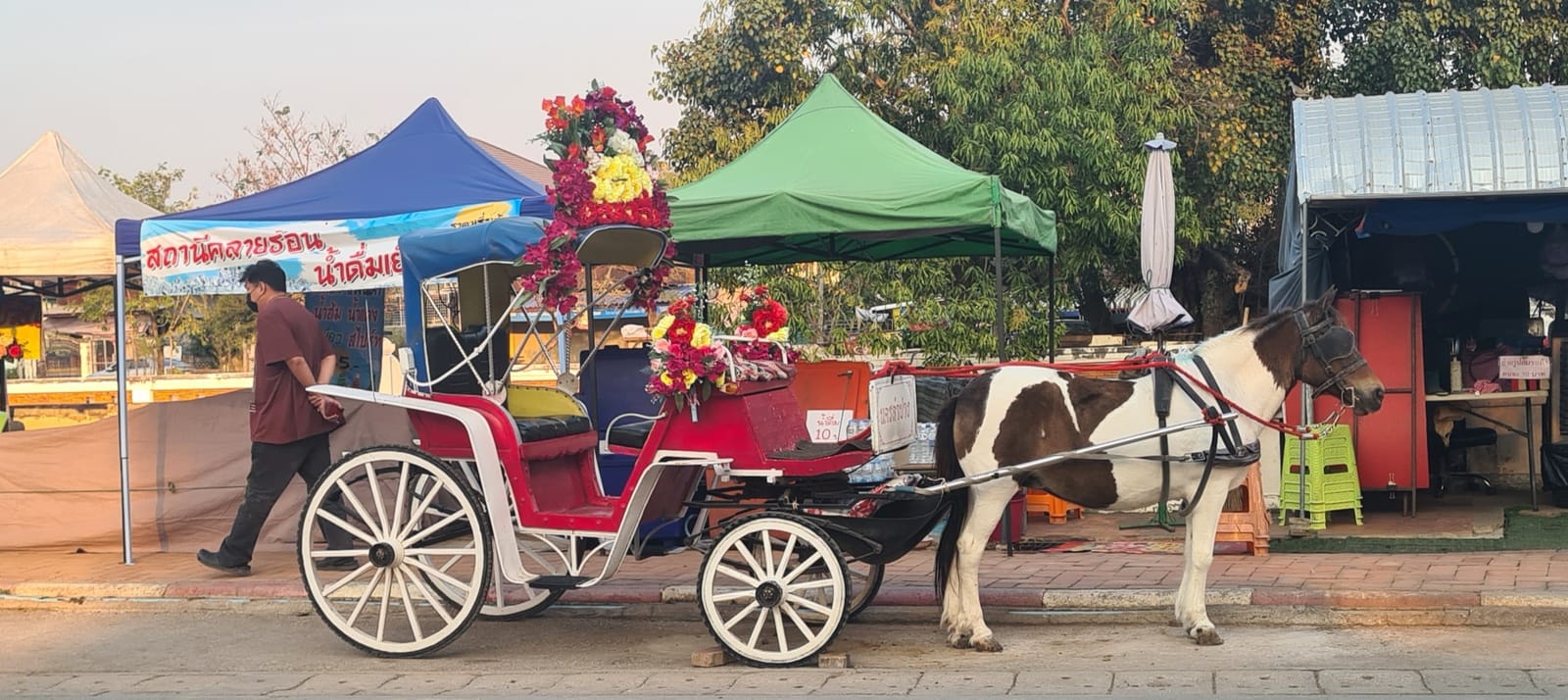
Lampang is the only town in Thailand where horse carriages still run for real. There are pickup stands around town, and it's a relaxed way to see the riverside old quarter and its temples. Always agree on the price with the driver before you climb aboard.
Wat Chaloem Phra Kiat Phra Chomklao Rachanusorn (Doi Phra Bat)
White chedis scattered across a limestone peak, with sweeping views that feel almost otherworldly. You have to take a local truck up, and it's still a photo spot that not everyone has reached.
Thai Elephant Conservation Center
A government-run elephant care centre with elephant painting shows and learning activities about elephants — good for families and kids. It sits along the Lampang–Lamphun road.
Wat Phra Kaeo Don Tao Suchadaram
An old in-town temple that once housed the Emerald Buddha. The chedi and viharn show a handsome mix of Lanna and Burmese styles, and it's an easy stroll from the town centre.
Baan Sao Nak
A century-old teak house, now open as a small museum, that shows how Lampang's wealthy families once lived. It's quiet, peaceful and very photogenic.
Chae Son National Park
Natural hot springs where you can soak your feet and boil eggs, alongside a waterfall and cool air. Worth it if you have an extra day and a car — it's about 1.5 hours from town.
A 2-Day, 1-Night Plan for First-Timers
This plan is built for first-timers with no need to rush, focusing on the main in-town sights and the key temple just outside town that isn't too far. With no car of your own, you can call a ride or hire a local truck for the temple runs outside town.
Old Town, Horse Carriages and Kad Kong Ta
Lanna Temple Outside Town + Souvenirs Before Heading Home
Adjust the Plan
With 3 days, add a nature day out to Chae Son to soak in the hot springs, or head up to Wat Chaloem Phra Kiat (Doi Phra Bat) for photos of the white chedis. Travelling with kids? You can swap the Thai Elephant Conservation Center into Day 2 for the morning.
Good to Know Before You Go
- Kad Kong Ta is open Saturday–Sunday — if you want the full walking-street experience, plan your trip over a weekend. On weekdays you can still walk the quarter for the old buildings, but there are fewer stalls.
- Many sights are outside town — Wat Phra That Lampang Luang, the elephant centre and Chae Son all need a car. If you're not driving, hiring a local truck or arranging a ride by the trip works out better.
- Agree on horse-carriage prices first — there are several routes at different prices, so confirm with the driver before you get on to avoid confusion at the end.
- Best time to visit — November to February is cool and pleasant for walking around. March to April can bring haze to the north, so check the air quality before you go.
- This is a slow town — many places close early, and breakfast dishes and khao soi often sell out before afternoon, so plan your morning meal.
Want a fuller plan? See the complete Lampang travel guide
Lampang Travel Guide →