🔄 Updated 21 Jun 2026
Narathiwat sits at the very tip of Thailand on the Malaysian border. Most people here are Malay-Muslim, speaking the local Malay dialect at home, living Islam as a way of life, and sharing cultural roots with the northern states of Malaysia going back generations. That gives the town a feel that's clearly different from the rest of southern Thailand — in its language, its food, its mosque architecture, and the rhythm of the day, which ties to prayer times and to Fridays. Come with understanding and respect, and you'll find a warm town with a charm that's hard to find anywhere else.
Before you go — check the latest situation first
Narathiwat is a deep-south border area that occasionally has security advisories. It's worth checking the latest news and official announcements before you finalize any plans. Ask your accommodation or locals about routes and the right times to travel, and keep emergency contact numbers handy. For the most part the town center and main sights are fine to visit as usual — just come prepared with good information and travel sensibly, and you'll feel at ease.
Malay roots and Muslim life in everyday Narathiwat
The heart of Narathiwat's culture is its Malay-Muslim identity. A day here is tied to the five daily prayers, and the call to prayer from the mosques works almost like the community's clock. Friday is an important day when men gather to pray together at the mosque, and some shops close around Friday midday — so if you find a shop shut at that time, it's nothing unusual. Almost all the food in town is halal, with no pork or alcohol in Muslim-run shops, and that's something worth understanding and respecting before you even arrive.
- Narathiwat Central Mosque — the spiritual hub in the middle of town, with a stately dome and minaret, and the place where locals gather for Friday prayers. You can admire the exterior and get a sense of the faith that shapes the town.
- Halal across the whole town — most restaurants are halal, so looking for the halal mark out front helps. If you drink alcohol, understand that it's hard to find and not appropriate to drink in public.
- The Friday rhythm — Friday midday is communal prayer time and some shops close temporarily, so plan meals and errands with a little extra room around then.
Want more out of Narathiwat? Book tours & activities
Booking online ahead on Klook or GetYourGuide is usually cheaper than the gate and skips the queue. Pick only the experiences you actually want — prices and availability are shown live on each site.
Wadi Al-Husein, the 300-year-old wooden mosque
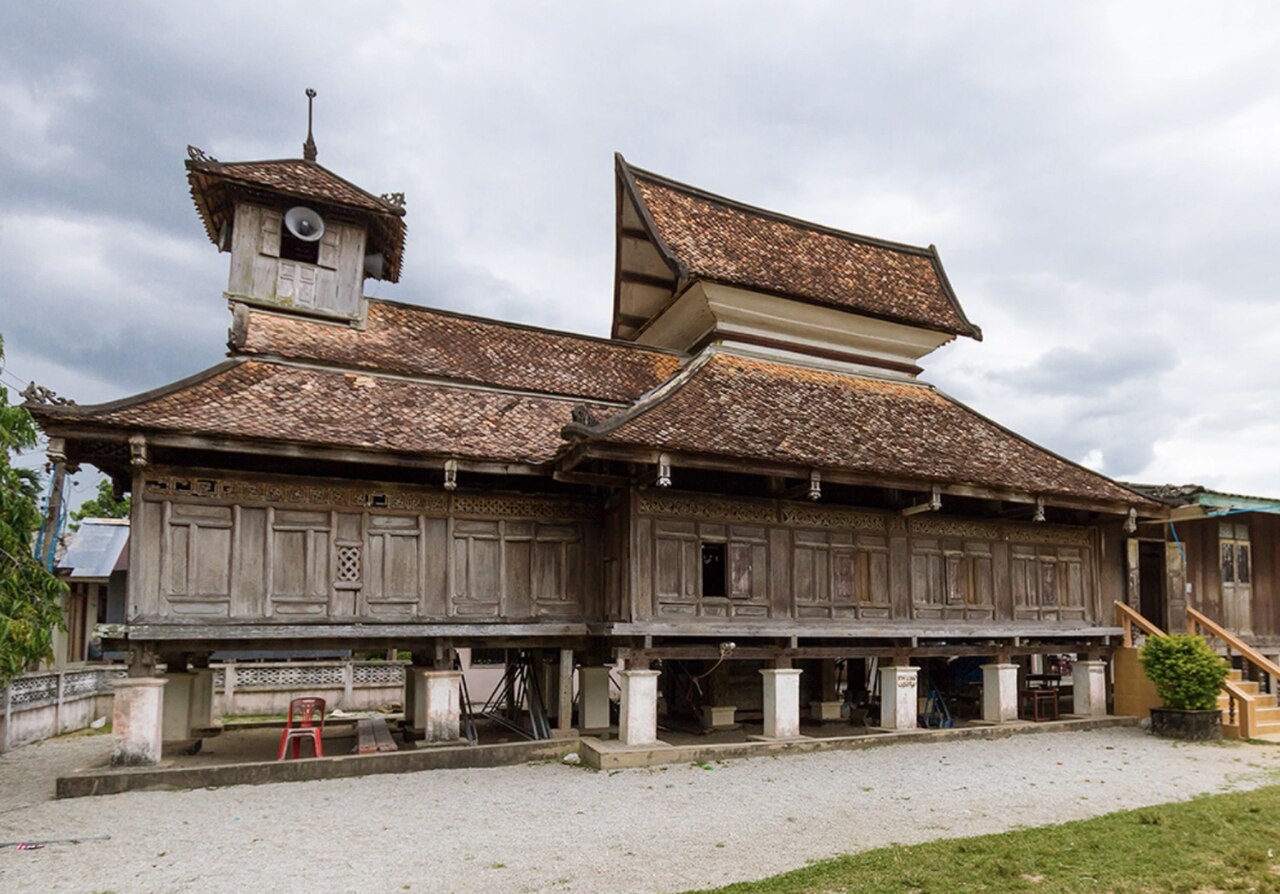
If there's one single spot that tells the story of Narathiwat's Malay culture most deeply, many people will point to Wadi Al-Husein Mosque — known locally as Talo Mano Mosque, and as the 300-year-old mosque. It stands in Ban Talo Mano, Lubo Sawo subdistrict, Bacho district, about 25 kilometers from town heading toward Bacho. The mosque was built around 1624 by Wan Husein As-Sanawi, who had migrated from Pattani. The whole building is made of takian wood — two wooden structures joined together — blending local Thai, Chinese, and Malay craftsmanship. What people love to study are the 26 wooden columns carved with beautiful patterns, and the layered gabled roof you rarely see on ordinary mosques.
Visiting the 300-year-old mosque the right way
Wadi Al-Husein Mosque is still an active place of worship. Visitors are generally welcome only around the exterior; if you want to see inside, you need to ask permission from the village imam first. Dress modestly with shoulders and knees covered, women should bring a headscarf, avoid prayer times, and ask before photographing locals — out of respect for the hosts and the community.
Language — Jawi, local Malay, and Thai
At home and in the community, many people in Narathiwat speak the local Malay dialect (Patani Malay), which sounds clearly different from central Thai. The script you'll see on mosque signs, old shops, and community boards — the one that looks like Arabic lettering — is Jawi, traditionally used to write Malay. At the same time, locals speak Thai too, and seeing bilingual Thai-and-Jawi signs in one town is a normal sight in Narathiwat, and a charming detail that tells you a lot about the town's roots.
- For a Muslim greeting, use "Assalamu alaikum," answered with "Wa alaikumussalam" — say it and locals will smile back.
- Malay words show up often in dish names, like "nasi" (rice), "dagae," and "kabu," reflecting the Malay roots in the local menu.
- Jawi-script signs around the old quarters and mosques make great photo spots that tell the town's story. Photographing signs and places is fine, but if you want to photograph people, ask first.
Traditional dress and Malay crafts
Malay-Muslim dress in Narathiwat has its own identity. Many women wear a hijab and a long dress, while men at important events wear a songkok cap and a sarong. The craft the town is best known for is krajood basketry, woven from the krajood reed that grows in the peat wetlands, made into mats, bags, and beautifully patterned everyday items — along with batik and pa-te fabric, hand-made in the community with bright floral patterns. These pieces are both useful and great souvenirs that tell a local story.
Krajood basketry
Woven from krajood reed from the peat wetlands, made into mats, bags, and everyday items with geometric patterns. It's a Narathiwat specialty featured in royal-craft programs, and a durable souvenir to take home.
Batik / pa-te fabric
Malay-style hand-printed fabric in bright colors, with floral and wave patterns. Buy it by the length, as a shawl, or as a ready-made shirt at shops in town and at the markets.
Kolae boat model
A traditional Malay fishing boat painted in bold, vivid patterns from bow to stern, a symbol of Narathiwat's coast. Carved miniatures make for a signature local keepsake.
Narathiwat Malay food — far-south flavors you won't find elsewhere
Food is the quickest shortcut to understanding Narathiwat's culture — bold southern flavors, Malay spices, and breakfast dishes unique to Thai Muslims. Here are the dishes and shops worth trying at least once when you arrive, chosen from places locals actually go to and that are still open.
Nasi Dagae — Anoh Mah shop
Rice mixed with sticky rice and cooked in coconut milk, eaten with a rich tuna curry or chicken curry — a traditional breakfast for Malay Muslims. Anoh Mah is a decades-old shop opposite the Toh Kodor cemetery, near the Phithak Likhit junction, and it also sells local breakfast dishes and old-style sweets.
Southern khao yam + budu sauce
Rice tossed with a variety of local herbs and vegetables, dressed with Narathiwat-style budu sauce that's salty-sweet and well balanced, topped with dried shrimp and toasted coconut. It's a healthy dish southerners eat regularly for breakfast and lunch.
Kai kolae — Jao Det Wong Wian Nok
Grilled chicken glazed with a Malay coconut-curry sauce that's sweet, spicy, and well balanced, with a lovely orange-red color. Jao Det Wong Wian Nok has sold the original recipe for over 20 years, starting around 11:00. Great with rice and a local dish you shouldn't skip.
Roti + te-o tea
Roti that's crisp outside and soft inside, eaten with hot tea. Narathiwat locals call hot tea without milk "te-o." The old tea shops by the foot of the bridge near the Kalae Paye community have been open for decades — a meeting spot and a slice of authentic Malay tea-house culture.
Local & Malay food — AKHOO by Nasir
A shop that rotates its menu by mealtime: local and Malaysian dishes in the morning, southern khanom jeen curry at lunch, and bold Thai food in the evening. It opens early and is a good way to try cross-border Malay food all in one place.
Fresh seafood
Narathiwat has a coastline and fishing piers, with well-priced fresh shrimp, crab, and squid. Restaurants by the sea and in town do it grilled, stir-fried, and in bold southern curries — a solid main meal after a beach day.
Budu sauce
A fermented fish condiment that's the flavor heart of Narathiwat cooking, used to dress khao yam or as a dipping sauce — salty and fragrant. Buy it as a souvenir to take home; it's well packaged and easy to carry.
Malay sweets
Local sweets like akoh, putu pinang, and colorful coconut-milk treats, sweet and fragrant with coconut. Find them at the morning markets and souvenir shops in town, to snack on or take home.
Tips for eating
Breakfast dishes like nasi dagae and khao yam often sell out quickly, so go before it gets late. During the month of Ramadan, many Muslim restaurants close during the day and come alive in the evening instead, so plan your meals with that in mind and you won't go hungry by mistake.
Traditions and festivals through the year
Narathiwat's calendar of events ties to both Islam and the town's local specialties. If your timing lines up with a major event, the atmosphere is especially lively — and it's when you'll see Malay culture at its fullest.
- Of Dee Muang Nara festival + royal kolae boat races — an annual event that's been part of the town since 1975, bringing together Nara's four specialties: longkong fruit, krajood reed, singing zebra doves, and kolae boats. There are kolae, long-boat, and yok-kong boat races for the royal trophy along the Tha Phraya Sai dam, plus a royal-craft fair and craft demonstrations. It's held around late September.
- Ramadan — the Muslim month of fasting. In the evenings there are iftar food markets (Ramadan bazaars) packed with Malay food lining the streets, the best time to try the full range of local food.
- Hari Raya (Eid al-Fitr / Eid al-Adha) — celebration days after the fast, when families dress up to visit the mosque and call on relatives. It's the warmest time of year in the community.
- Zebra dove singing contests — Narathiwat and the lower south have a culture of keeping singing zebra doves, and the song contests reflect a Malay way of life you don't often get to see.
Sights that tell the town's culture and nature
Beyond the 300-year-old mosque, Narathiwat has spots that capture both the culture and the nature of the town, none of them far from the center — easy to fit into one trip.
- Thaksin Ratchaniwet Palace — a palace on Tanyong hill where King Rama IX and Queen Sirikit stayed during royal visits, with gardens and sea views. It's a good place to understand the bond between the area and the monarchy.
- Narathat Beach — a long sandy beach near town where locals come to relax, with evening restaurants and an easygoing feel — a nice spot to watch the fishing life and kolae boats along the shore.
- Town center by the Tha Phraya Sai dam — the core of town used for the Of Dee Muang Nara festival, where you can stroll along the river, look at the kolae boats, and soak up the rhythm of a deep-south border town.
Visiting Narathiwat respectfully — a 2-day plan
If you want to understand this town without rushing, try laying out two days to cover faith, crafts, and food. Here's a rough route you can adjust based on the situation and each spot's opening hours.
Faith and the 300-year-old wooden mosque
Sea, crafts, and souvenirs
Respect the place = travel with peace of mind
Narathiwat welcomes travelers who come with understanding. Dress modestly, especially when entering religious sites; don't drink alcohol in public; ask before photographing people, especially women; respect prayer times and Fridays; and check security news before you travel. Do that and you'll travel in a way that's friendly to the town and its people.
Plan a Narathiwat trip with a feel for Malay culture
See the Narathiwat travel guide →