🔄 Updated 21 Jun 2026
Before we get into the timetable, here's the big picture on why a cultural trip through Sisaket is actually fun. The key is that what you see on this trip isn't just pretty stuff to photograph — it genuinely tells you about the people of the province. The Khmer temples say this place once sat inside the Khmer civilization, Wat Phra That Rueang Rong says that today's Sisaket people come from four ethnic lines living side by side, and the Million-Bottle Temple shows just how far down-to-earth local faith can go in building something unusual. Collect these three in one trip and it's like reading a short history of the city.
Everything in this plan is based on sites that are genuinely open to visitors right now. The main Khmer temples sit inside temple grounds and are free — no ticket. Wat Phra That Rueang Rong and the Million-Bottle Temple are free as well. As for the Pha Mo I Daeng cliff and Khao Phra Wihan along the border that many people ask about, we've put a separate warning at the end of the article, because for now you still need to check the situation before you go.
The three pillars of the cultural route
This plan rests on three pillars, each telling a different chapter of the city's story. If you understand what you're looking at, the trip is far more fun than just standing around for photos.
- Khmer temples (Uthumphon Phisai–Huai Thap Than districts) — heritage from a thousand years ago, back when this land sat inside the Khmer civilization. The main ruins like Prasat Sa Kamphaeng Yai, Sa Kamphaeng Noi, and Ban Prasat line up along a single road, so they're easy to drive and tick off.
- Wat Phra That Rueang Rong (Mueang district) — a stupa deliberately designed to combine the art of Sisaket's four Tai ethnic groups (Lao, Khmer, Suay, and Yer) into one tower. The ground floor is a folk museum, and it's only about 8 km from town.
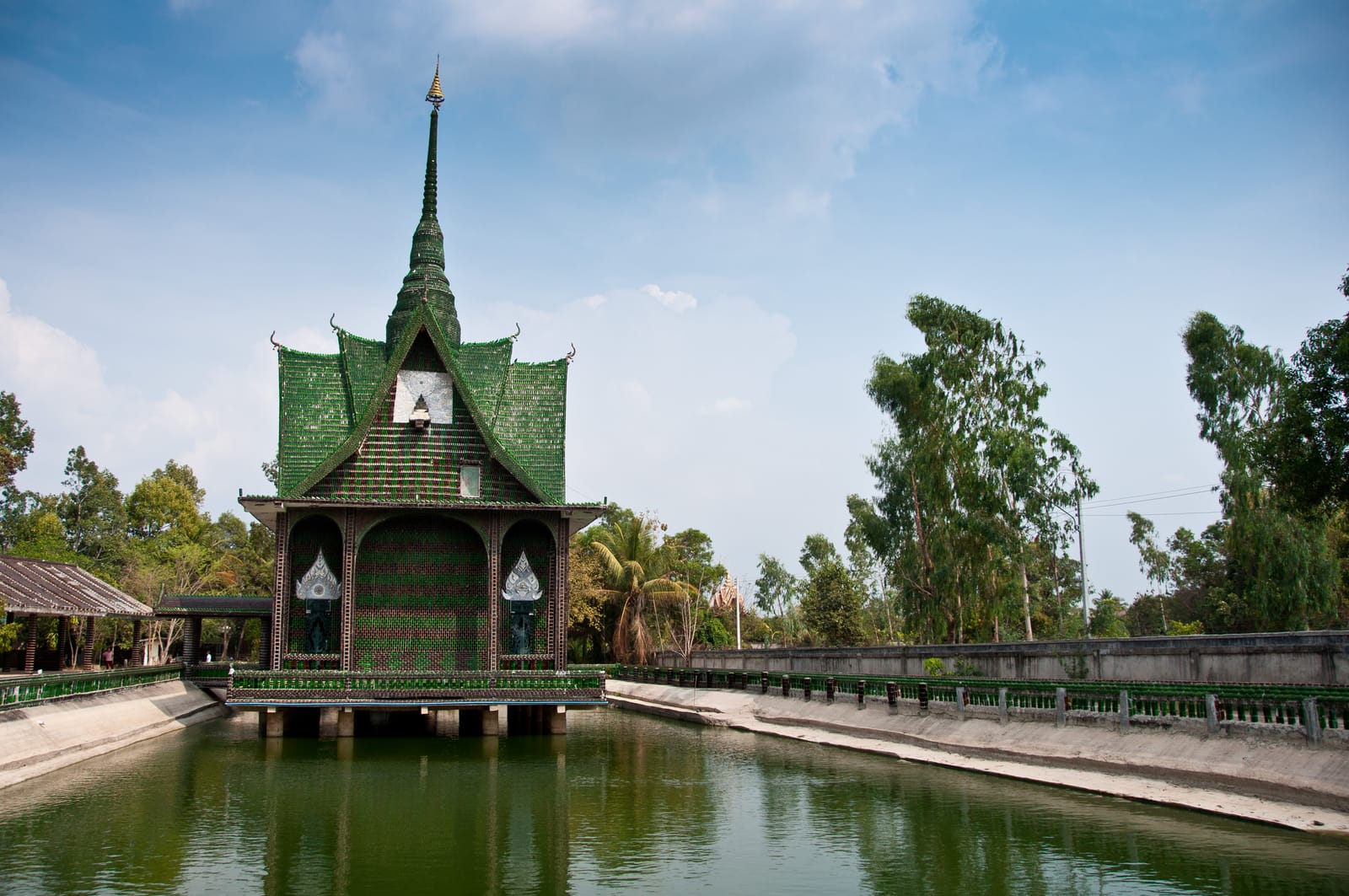
- Wat Lan Khuat / Wat Pa Maha Chedi Kaew, the Million-Bottle Temple (Khun Han district) — the entire temple is decorated with a million colored glass bottles. It's a piece of local devotion that became a landmark of the province. It's in the south, a longer drive, but worth it.
Order the route so the drive flows
If you're using your own car, these three are in different directions. The temples sit to the west around Uthumphon Phisai, Wat Phra That Rueang Rong is on the edge of town, and the Million-Bottle Temple is at the very south in Khun Han. The smoothest plan is to combine the Khmer temples and the four-tribe temple on day one since they're close, then save the next day just for the drive south to Khun Han.
Book the activities in your Sisaket trip ahead
Booking online ahead on Klook or GetYourGuide is usually cheaper than the gate and skips the queue. Pick only the experiences you actually want — prices and availability are shown live on each site.
If you only have one day, make the cultural core count
A lot of people pass through Sisaket or only have a single day. The one-day plan focuses on the Khmer roots and the four-tribe temple near town, because the Million-Bottle Temple is too far south to fit into one day without rushing. If you really want the Million-Bottle Temple too, skip ahead to the two-day plan.
Khmer roots + four-tribe temple
2 days, 1 night — all three pillars
Two days is the sweet spot for a cultural trip, because you get the temples, the four-tribe temple, and the Million-Bottle Temple without rushing. Day one stays in the town–Uthumphon Phisai zone for the temples and Phra That Rueang Rong; day two heads south to Khun Han specifically for the Million-Bottle Temple, then picks up souvenirs on the way back.
Khmer temples + four-tribe temple
South to Khun Han — Million-Bottle Temple + souvenirs
3 days, 2 nights — go deeper
If you're set on doing Sisaket properly, three days lets you dig deeper into the culture. Day one covers the temples along the Uthumphon Phisai–Huai Thap Than route, day two stays in the town zone for the four-tribe temple and the Khmer–Kuy roots around Prang Ku, and day three heads south to Khun Han for the Million-Bottle Temple and souvenirs before you leave.
The main Khmer temple route
Four-tribe temple + Khmer–Kuy roots
Million-Bottle Temple + souvenirs before leaving
A closer look at the three cultural sites — what each one tells you
Before you set off, it's worth getting to know the three main sites a little better, so you know how to look and don't miss the highlights of each. Here's what to notice and the feel you get from each place, ranked by how worth-it they are if you have to cut something.
Prasat Sa Kamphaeng Yai
The largest and most complete Khmer temple in the province, with three central prangs on a single base, several lintels (including Indra riding the elephant Erawan and the reclining Vishnu), and a temple museum holding excavated artifacts. If you want to understand Sisaket's Khmer roots, this is the place you have to come.
Wat Phra That Rueang Rong (four-tribe stupa)
A stupa about 49 meters tall, designed to combine the art of Sisaket's four Tai ethnic groups — Lao, Khmer, Suay, and Yer — in a single tower, divided into 6 levels. The ground floor is a folk museum telling the story of the four-tribe way of life, and the upper level gives a view over town. It's the closest of the three to the city, so it's an easy stop.
Wat Lan Khuat (Wat Pa Maha Chedi Kaew)
The entire temple — the ordination hall, the pavilions, and the chedi — is decorated with a million colored glass bottles. It's a piece of local devotion that became a check-in spot for the province, and sunlight through the colored glass looks strikingly unusual. It's the farthest south, a longer drive, but anyone who loves the offbeat shouldn't miss it.
Prasat Ban Prasat
Three brick prangs in the middle of a village inside Wat Prasat Phanaram — peaceful, not crowded, with the feel of a temple that still lives with the community. Good for people who like quiet spots and want to complete the set of temples.
Prasat Sa Kamphaeng Noi
A roadside arogayasala — a Khmer hospital ruin — with a pond in front of the temple. Fewer traces of art survive than at Sa Kamphaeng Yai, but it's a quick stop right on the main road, which makes it a good way to open the trip.
Prang Ku (Prang Ku district)
A compact arogayasala temple from the reign of Jayavarman VII, set in an area densely populated by local Khmer and Kuy people. You can pair it with the Kuy People Museum at Ban Ku in a single day — good for completists who want to collect every temple.
Make the temples more fun to see
At the temples, try loading up a quick primer on Khmer art before you go, then look at the lintels to read what story they're telling — it's far more fun than just standing for photos. Go in the morning or late afternoon when the sun is at an angle, so you can see the depth of the carvings clearly. As for Wat Phra That Rueang Rong, don't rush up to the top — spend time with the folk museum on the ground floor first, and you'll understand the four-tribe stupa better.
Want to understand the culture even more? Where to stop next
If you've done the three main sites and still want to dig further into the culture, Sisaket has add-on stops that connect the four-tribe and Khmer stories well. Slot them into your plan depending on your time and interest.
Kuy People Museum, Ban Ku (Prang Ku district)
A hub for the story of the Kuy people — their elephant lore, elephant-keeping traditions, and local wisdom. A good place to start understanding one of the four tribes before going elsewhere. It's a community museum, so check the opening hours.
Somdet Phra Sri Nakharin Park (Dong Lamduan)
A city-center public park with tens of thousands of lamduan trees. It hosts the Lamduan Flower Festival that carries on the four-tribe traditions every March, and out of season it's still a pleasant place to stroll.
Markets in Sisaket town
The easiest way to feel the four-tribe way of life. In a single market you'll hear Lao, Khmer, and Kuy and find local foods that are hard to come by elsewhere — no real planning needed.
Getting ready before you set off
- Transport — your own car or a rental is the most convenient. The three main sites are in different directions out in the outlying districts, and public transport reaches them only to a limited degree. If you come in by train or bus to the town, it's best to rent a car or hire a driver by the day.
- Best time to go — the cool season (November–February) has the nicest weather, so walking around open-air temples in the sun isn't punishing. March coincides with the Lamduan Flower Festival, when you can see four-tribe culture gathered in one place.
- What to wear — dress modestly, since you'll be entering both temples and Khmer ruins on temple grounds. Comfortable walking shoes and a sun hat help, because the open-air temples have little shade.
- Etiquette — the temples are ancient monuments and sacred to local people, so don't climb on them. At the temples, take off your shoes and behave respectfully as the signs direct.
- Cost — all three main sites are free, so the main expenses are fuel and food. That makes this a very light-on-the-budget cultural trip.
Border matters to check before you go
If you're planning to extend the trip to Pha Mo I Daeng or Khao Phra Wihan National Park in Kantharalak district, we'll be straight with you: always check the situation first. This area sits right on the Thailand–Cambodia border, and there have been clashes along the border in the past, which led the park to temporarily close the Pha Mo I Daeng site. Before you go, always check the park's announcements and the latest news.
Check before you set off
Before heading to the Kantharalak–Khao Phra Wihan side, always check the announcements from Khao Phra Wihan National Park and the latest news on the border situation. If it's still closed or the situation isn't safe, give it a miss for now and use the cultural route in this article instead — because the temples, the four-tribe temple, and the Million-Bottle Temple all sit well inland, away from the border, and can be visited as normal.
Plan a full Sisaket trip — see more places to stay and eat
See the Sisaket travel guide →