🔄 Updated 21 Jun 2026
Sisaket is one of those provinces outsiders struggle to picture, but once you arrive you find a lot packed into a single province, from Khmer-era stone temples scattered across several districts to Pha Mo E Daeng, the clifftop viewpoint inside Khao Phra Wihan National Park. The town is also home to four ethnic groups (Lao, Khmer, Suay, and Yer), which makes the food and culture more varied than you'd expect. It's a good fit if you want to see Isan without following the crowds.
Where is Sisaket and how do you get there?
Sisaket is in southern Isan, about 550 km from Bangkok, and it sits on the northeastern rail line (Bangkok–Ubon Ratchathani). The train station is right in the middle of town, so travelers without a car often ride the train straight here. If you'd rather save time, most people fly into Ubon Ratchathani and drive over, since the airport is only about 60 km from Sisaket town.
- Train — the Bangkok–Ubon line passes through Sisaket on every service, and the station is central. It takes roughly 8–10 hours depending on the train; an overnight sleeper is comfortable and cheap, ideal if you don't have a car.
- Plane — Sisaket has no airport, so you fly into Ubon Ratchathani (UBP), which has several flights a day from Don Muang and Suvarnabhumi, then drive or rent a car for the roughly one-hour trip to Sisaket.
- Bus — coaches run Bangkok–Sisaket daily from Mo Chit, taking around 8–9 hours. The bus terminal is in town and the fare depends on the class of coach.
- Getting around the province — sights like Pha Mo E Daeng and the Khmer ruins are far from town and spread across several districts, and public transport is thin. Renting a car or having your own wheels is the way to go; if not, hiring a local driver for the whole day works out better.
Getting-around tip
If you want to go up to Pha Mo E Daeng / Khao Phra Wihan, having your own car is almost essential. It's in Kantharalak district, more than 90 km from town, and no public buses run all the way up. The easiest option is to fly into Ubon and rent a car to drive yourself.
Book the activities in your Sisaket trip ahead
Booking online ahead on Klook or GetYourGuide is usually cheaper than the gate and skips the queue. Pick only the experiences you actually want — prices and availability are shown live on each site.
When should you go and what's the weather like?
Sisaket works year-round, but the best stretch is November to February, when it's cool and comfortable, walking the open-air temples isn't punishing, and you have a chance of catching the morning fog at Pha Mo E Daeng. March to May brings proper Isan heat, so if you're walking the ruins midday, bring a hat and water. The rainy season (June to October) leaves the landscape lush and green, and it's when volcanic durian comes into season (around June–July) — if you love durian, this is the time to come.
- Cool season (Nov–Feb) — the best weather, perfect for walking the ruins and heading up to Pha Mo E Daeng for the morning fog.
- Durian season (Jun–Jul) — volcanic durian comes in; orchards around Kantharalak and Khun Han open for tasting and buying.
- Durian festival (mid-year) — the province usually holds a volcanic durian festival, when it gets especially busy, so book your room ahead.
The border situation to check before you go
Pha Mo E Daeng and Khao Phra Wihan National Park sit right on the Thai–Cambodian border, where the situation can shift from time to time. The area is sometimes closed or access is temporarily restricted. Before you plan a trip to Pha Mo E Daeng or the Khao Phra Wihan side, always check the latest situation with the national park or local authorities. Don't assume it's always open; if you're not sure, call the park on the day you plan to go. It's safer and saves you a wasted trip.
Keep a backup plan
If Pha Mo E Daeng happens to be closed the day you go, the province still has Khmer ruins, the Million Bottle Temple, and waterfalls around Kantharalak and Khun Han to fill the day instead. Plan with some flexibility rather than pinning the whole trip on one spot.
The main sights first-timers shouldn't miss
Pha Mo E Daeng (Khao Phra Wihan National Park)
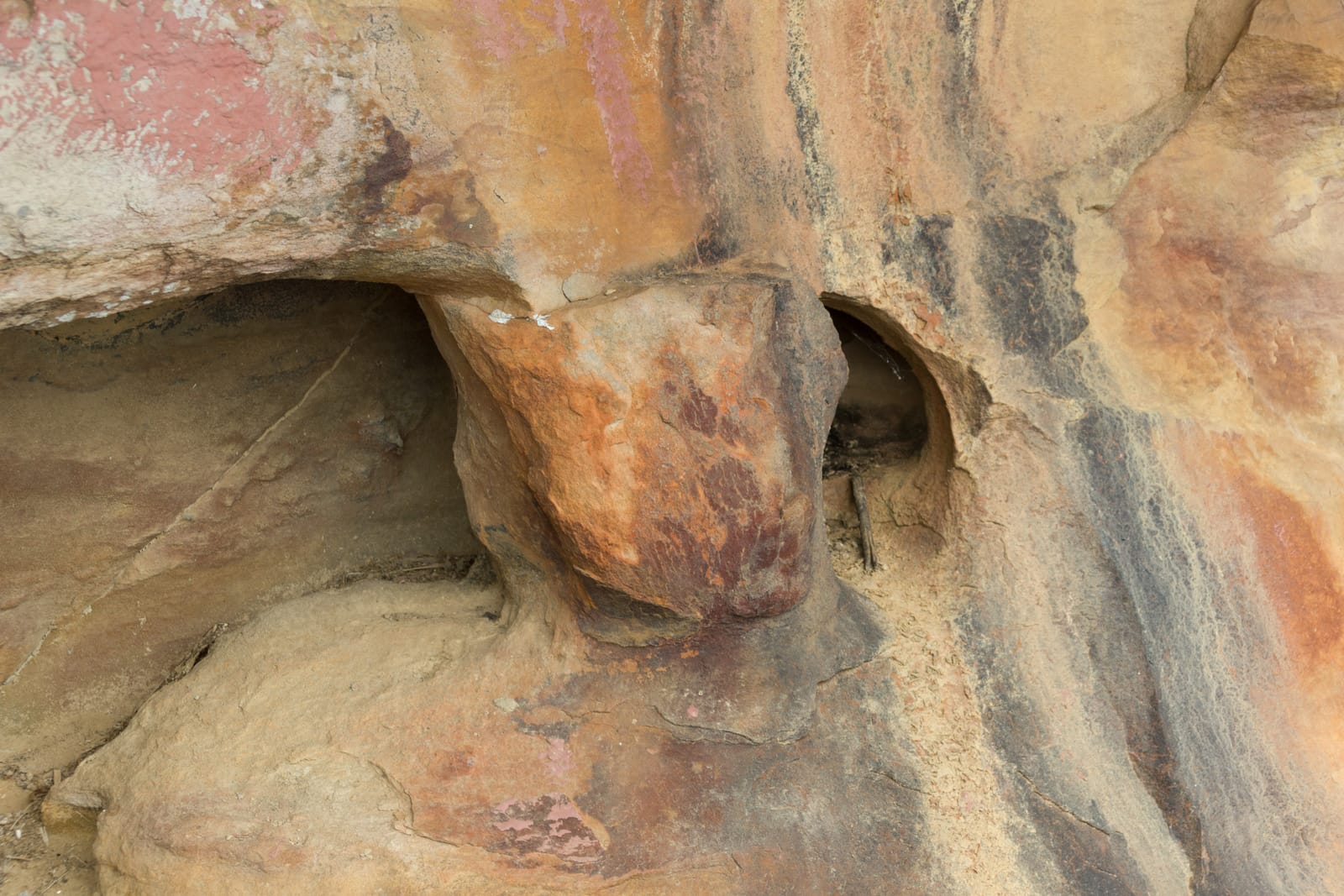
A high cliff right on the border in Sao Thong Chai, Kantharalak, looking across into Cambodia toward the Preah Vihear temple. There are ancient rock carvings on the cliff face, more than a thousand years old, and in the cool season you have a chance of morning fog. Check the border situation before you go.
Million Bottle Temple (Wat Pa Maha Chedi Kaew)
A temple that uses a million old glass bottles to decorate its buildings and walls, so the whole place glints in the light. It came out of a local monk's recycling idea, it's fun to photograph, and it looks like nowhere else. It's in Khun Han district.
Prasat Sa Kamphaeng Yai
One of the best-preserved Khmer temples in Sisaket, built from brick and laterite when the Khmer empire was at its height, with lintels and carved details to admire. It's in Uthumphon Phisai district, closer to town than the other ruins, which makes it a good first stop for a temple day.
Wat Phra That Rueang Rong
A temple with a distinctive chedi that blends the art of Sisaket's four ethnic groups, with a museum inside telling the story of old village life. It's not far from town, so it's an easy stop to pay respects and take in the local architecture.
Prasat Ban Prasat
A small cluster of Khmer-era brick towers, much of it still intact, with a quiet, uncrowded feel. It's a good fit for anyone who likes ancient sites without the tourist crowds.
Volcanic durian orchards (Kantharalak / Khun Han)
Durian grown on old volcanic soil along the Phanom Dong Rak range, with a dry, crisp-outside, soft-inside texture and a flavor that isn't sharply sweet. It's a local specialty that fruits around June–July, when many orchards open for tasting and buying fresh.
How to order your days so you're not wiped out
Sisaket's sights are spread in different directions. The Kantharalak / Khun Han side (Pha Mo E Daeng, the Million Bottle Temple, durian orchards) is to the south near the mountains, while many of the Khmer ruins are west of town. Try grouping each day around one direction so you're not driving back and forth and wasting time.
What to eat in Sisaket
Sisaket is a town for bold Isan food, with both long-running spots downtown and newer cafés. The things locals point you to range from Thai-Chinese breakfasts and a legendary noodle shop to easygoing cafés. Here are the places that are actually open and where people in town go.
Jiao Kee (breakfast)
A long-running breakfast spot that's part of Sisaket's fabric, in the center of town near the Mae Si roundabout. It opens at six in the morning and serves pan-fried eggs, congee, dumplings, steamed buns, and pa thong ko (Thai doughnuts) — it's where locals meet for breakfast.
Poemphol 2506
A legendary egg-noodle and wonton shop in Sisaket town that makes its own noodles and wontons. There's duck noodles, duck over rice, and standard noodle soups. It's been around since 1963 (B.E. 2506), as the name says.
Isan restaurants in town
Som tam, larb, koi, grilled chicken — proper bold Isan flavors are easy to find all over town, well-priced, and the kind of meal you shouldn't skip in southern Isan. Try ordering tam sua or tam pu pla ra for the full range of flavors.
Khanom jeen (Pradok / Isan-style)
Khanom jeen with jungle curry sauce and pla ra sauce, both punchy, is a popular breakfast or lunch for people in Sisaket. Shops in the market and along the road give you plenty of choice, and it's eaten with lots of fresh vegetables on the side.
SON Cafe
A café in town known for strong Thai tea and green tea, with cakes and cheesecake. The vibe is relaxed and good for photos, a nice break in the middle of the day after a morning walking the ruins.
CAFFEEINE café
An early-opening café in town serving lattes and Thai tea, with a shady, leafy corner and a cute fit-out. It's a good place to grab a coffee before you head out to your next stop.
A 3-day, 2-night plan for first-timers
This plan is built for people flying into Ubon and renting a car, or driving themselves, and it's focused on hitting all the highlights — Khmer ruins, the odd temple, the border cliff, and Isan food. If you have less time, trim it to two days by keeping Day 1 and Day 2 and you'll still get the full range. For the Pha Mo E Daeng day, always keep a backup plan since you'll need to check the border situation.
Into town + Khmer temple run
Pha Mo E Daeng + Million Bottle Temple (Kantharalak / Khun Han side)
Quiet ruins + souvenirs before you head home
Mistakes first-timers tend to make
- Not checking the border situation before Pha Mo E Daeng — the Khao Phra Wihan area can be closed or restricted from time to time, so call the park on the day you plan to go and keep a backup plan.
- Not having your own car — the sights are spread across several districts and far apart, and public transport is thin. If you don't have a car, rent one in Ubon or hire a local driver for the whole day.
- Cramming everything into one day — Kantharalak is nearly 100 km from town, so squeezing Pha Mo E Daeng, the Million Bottle Temple, and the ruins into a single day is exhausting and too rushed.
- Coming in the wrong durian season — volcanic durian only fruits around June–July. If you're set on tasting it from the orchard, check the season first; outside it there's no fresh fruit.
- Not carrying cash — local shops, fruit orchards, and many temple entry fees take mostly cash, so keep some small notes handy.
Rough budget per person
- Round trip from Bangkok — train fares across the classes run about ฿200–800 each way, or fly into Ubon round trip for around ฿1,500–3,000 depending on the season.
- Getting around the province — a car rental is around ฿900–1,500 a day, or hire a local driver for the whole day.
- Accommodation, 1 night — hotels in town start at around ฿500–1,200 per night.
- Food — ฿40–150 a meal; local Isan spots are easy on the wallet.
- Entry fees / souvenirs — temple entry is around ฿20, and for durian, shallots, and garlic, set a souvenir budget to taste.
The short version
Sisaket suits anyone who wants to see Isan without following the crowds — old Khmer ruins, an odd temple, a border cliff, and bold food all in one. For a first visit, 3 days and 2 nights is just right. Just remember to check the situation at Pha Mo E Daeng every time, and have your own car or rent one to get around most easily.
Plan a full Sisaket trip — where to stay, eat, and go, all in one place
See the Sisaket travel guide →